
Artists Gone Too Soon: A Conversation with Jonathan Bernstein
After years of intense research, Jonathan Bernstein's biography of singer-songwriter Justin Townes Earle is finally here
During his short life, Justin Townes Earle carved out a distinct career as a roving singer-songwriter. That’s not an easy thing to do when you’re the son of country legend, Steve Earle. But the younger Earle had the chops and the determination.
In his first book, What Do You Do When You’re Lonesome: The Authorized Biography of Justin Townes Earle, Jonathan Bernstein, a senior research editor at Rolling Stone, unravels the complex life of the late Justin Townes Earle, one of the most underrated songwriters of the 2000s. If you are a fan of Justin Townes Earle or roots music, you will love this book. But I think what’s most powerful about Bernstein’s writing is how he captures the archetypal contours of a life that will keep you reading whether you know the subject or not.
You open your book talking about “the myth,” or this idea that you must suffer to make great art. This is something that Justin Townes Earle seemed to believe. Do you believe in the myth?
I went into this book not wanting to glamorize or romanticize the suffering that Justin experienced in his life. This idea of the myth—that you must live this rock and roll life and sacrifice everything in pursuit of beauty and art—is complicated. In our culture, there is some acceptance of this idea. It’s a narrative that is used to market art. Justin is one of many examples of this narrative killing people.
At the outset, I wanted to write a book that would counterbalance that idea and perhaps rejected it outright. I’m not sure I achieved that, but as I went along, I realized that it’s not always completely black and white. It’s hard to tell a story like this and not glamorize it in any way. There’s a veneer of beauty just by telling the story.
I don’t think the book glamorized anything. If anything, it came across as a cautionary tale. What motivated you to want this to be the first book you wrote?
The short answer is that I was a huge fan of Justin Townes Earle. The longer answer is that after he died, I was assigned a story at Rolling Stone about him. They wanted me to report out what happened. It was my first big print feature for the magazine. I spent months on the story, interviewing so many people, including Justin’s widow Jenn Marie.
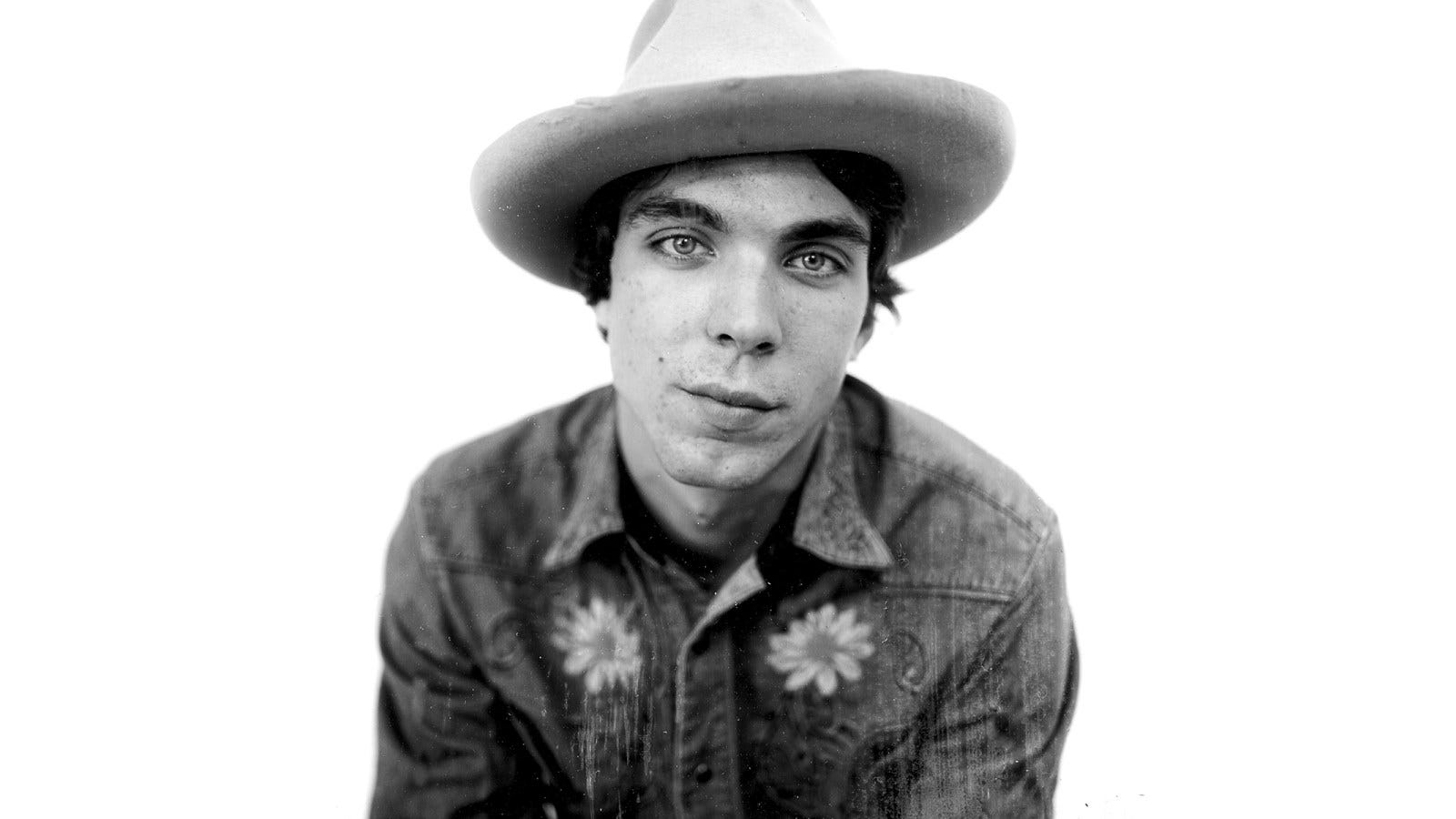
When the story came out in January 2021, I still had a hunger to learn more. I’d never written something so comprehensive. In writing it, I felt like there were threads of stories about Nashville and roots music and the 2000s, along with the main story of Justin’s life. I thought that all that had to be told.
By the end of the book, did you feel like you’d opened all those doors that were still left unopened when reporting the initial story for Rolling Stone?
I think the short, almost, existential answer to that question is no. I feel like the book was an almost magnified, drawn-out version of the article. I’ve never written a biography or anything like that before, and what I personally have learned is that while I did a ton of research, it was a humbling experience. The more I learned, the less I felt that I knew. There are just so many shades to a person.
It’s destabilizing to get to your 231st interview and have everything completely upturned. Justin was very mercurial and showed different sides to different sorts of people. In some ways, he was mysterious and private. In other ways, he was like an open book. If I had more years, I bet the book would be a little different.
Are you talking about a specific example with the 231st interview, or are you speaking generally?
I’m speaking generally, but I did have experiences like that. For example, I got to the point where I felt like I knew Justin’s time in New York very well. It was one of the most public periods of his life. He recorded his most famous album, Harlem River Blues, at that time. At the same time, he was also relapsing after years of sobriety. It’s probably the period people know most about.
I was about 100 interviews into the book when I met a man named Josiah. He very credibly told me that he was Justin’s best friend at that time. I’d never heard of him. Who Justin was close with in any given period was constantly being overturned.
It was also tricky to pin down which schools he was associated with in his youth. He had a very turbulent upbringing. I was down to the last few interviews of the book when I met a teacher who worked with Justin at a school that I had never even heard of. It was a school for kids who needed more social and emotional resources. It was also the last school he attended. I almost completely missed it. That might feel minor, but when you spend years thinking about a single person, it’s a substantial detail.
Justin’s story is very wrapped up in how much we can escape where we are from, both physically and emotionally. His father, Steve Earle, is a country music legend. Do you think it’s possible for a child to truly escape the shadow of a famous parent, or is it a fool’s errand? It seemed like it weighed on Justin his entire life.
It’s possible but difficult. One of the larger stories that I hope people take away from this book is what it means to be the child of a very famous or public person. Many people that I spoke with had a similar experience to Justin but on a smaller scale. It was a lifelong challenge to both Justin and his dad.
I often go back to this story I tell in the book of Justin playing this triumphant gig with Levon Helm in 2010. Levon was one of his heroes. His father drove up to watch. But Justin’s father is a very famous musician. So, he ends up going on the stage after. Justin saw it as his father stealing the spotlight from him. It devastated Justin even though I don’t think Steve meant it in that way.
I would never say it’s a “fool’s errand,” though. Roseanne Cash has crafted a beautiful, profound, self-contained career regardless of the fact that her father is Johnny Cash. She has fans that deeply care about her music. She’s a model for navigating as tough a path as there is. You don’t really get more famous than Johnny Cash.
You also have certain examples where a child leans in, like Dweezil Zappa making a career of preserving his father’s music. Others try to distance themselves. It feels like Justin fell somewhere in the middle.
He’s very much in the middle. Justin idolized his father. Steve was a huge influence on him, but Justin felt like he had to create distance early in his career. He could never escape it, though.
When Justin started touring, he made this rule that he would only play one of his father’s songs every night because people always asked. It was usually an obscure one. There’s this recording from 2007 or 2008 where he plays one of his dad’s songs, maybe “South Nashville Blues,” and the minute he finishes someone shouts, “Play a Steve Earle song.” Stuff like that was very difficult for him to navigate, and he dealt with it his whole career.
What do you make of his relationship with his father? At the beginning of Justin’s life, Steve was not around, but it seems like they were actually much closer than the public perceived.
Justin never forgave his father in a deep, psychological way. But one thing I wanted to get across in the book was that Steve and Justin were both cut from the same cloth. They were hard-living troubadours. They understood show business. They understood the value of a good story.
Their relationship was complex. They were fiercely close and fiercely separate. Joshua Black Wilkins told me a very illustrative story where Justin was railing on his father during a phone interview. The interview ended, and he immediately called his dad to chat. That image encapsulates a lot.
Beyond being the son of a superstar, Justin was named after the legendary songwriter Townes Van Zandt. Do you think his namesake also weighed on him? Or was it a point of pride?
Justin’s middle name was simultaneously an existential weight and an enormous point of pride. To Justin, Townes represented “the myth” in many ways. Townes embodied what he thought it required to be a genius in a complicated way. Justin lived his early life modeled after Townes, and it almost killed him. At 22, his substance abuse problem was out of control.
He always loved Townes’ music, but around the time he began to publicly denounce his father, he did the same thing with Townes. Yet when Justin released his first record, Yuma, he got the word “Townes” tattooed on his chest. If he had one button open, you could see it. It was very yin and yang.
You make the point that Justin’s career benefited from good timing. When his first album came out, rootsy music was really crossing over in the US. When he leans into a more soulful sound, you have singers like Adele and Amy Winehouse climbing the charts. He was also there during the heyday of Mumford & Sons. At the same time, he never reached the heights of those other acts despite having the talent. What do you think stood in his way?
Personal, psychological, and artistic things had a way of combining for Justin to self-sabotage repeatedly. It was all mixed together. I don’t think Justin ever felt worthy of acclaim. Each time he was doing something people liked, he would swerve the other way. If you enjoyed the upbeat, soulfulness of Harlem River Blues, his next records that leaned into a slower, jazzier feel were not going to do much for you.
At the exact same time he’s making those jazzier records in 2014 and 2015, you’ve got people like Sturgill Simpson, Margo Price, and Chris Stapleton getting huge making old school country records that Justin used to do. This happened so many times in his career that it feels more like a pattern than a coincidence.
Let’s talk a bit about the research process for this book. How long did it take to get this whole thing together?
Apart from my initial article for Rolling Stone, I think the book started when I wrote a letter to Justin’s widow, Jenn Marie, asking what she would think about me writing a book about her late husband. When she agreed to be interviewed, I knew that a book might be possible.
That was in the first few months of 2022. It came out in January 2026, so that’s about four years. The active writing and research was probably closer to two years, though.
This was an authorized biography. What does that mean?
I learned very quickly that no one knows what that means, including people who write biographies. For me it meant that I was writing an independent account of Justin’s life, and his estate approved of me doing it.
Justin’s death brought up a lot of complex feelings for people, so having Jenn Marie’s sign on helped to get other people to talk. On more than one occasion, I would reach out to someone, and they would only talk to me after they’d reached out to her. Her blessing was important in that sense.
You present a very complete picture of his life, warts and all. Did authorization mean that the estate had to approve the book?
The estate did not have final say. Jenn Marie and I shared some similar viewpoints for what we wanted this book to be, though. We didn’t want to sanitize Justin’s life. We also didn’t want an encyclopedic montage of every awful thing he did. We wanted the full picture.
I don’t think I would have written this book if I had someone breathing down my neck about how certain people and events had to presented. There are famous examples of musicians who are like that with journalists. Jenn Marie was not like that at all.
You interviewed hundreds of people for this book. I think the most glaring omissions were Jason Isbell and Justin’s father, Steve Earle. I assume you reached out to both of those parties. Why do you think they didn’t want to talk?
I reached out to pretty much everyone. I can’t give you a single reason why Steve didn’t want to talk. His relationship with Justin was complicated. Also, it’s possible he wants to tell the story at some point. He’s never really given an interview about Justin since his death.
Jason Isbell and Justin also had a complicated relationship. They were once very close, and then had a falling out. I’m sure Jason has complex feelings about Justin, but I can’t be sure why certain people didn’t want to speak. I assume they had good reasons.
I was very impressed how you were able to piece things together about Justin. Like there would be some period where not much was known, and you’d unearth some tweet from the time that perfectly captured his feelings. Given that Justin—and his dad—were prone to telling tall-tales, what was the hardest mystery for you to unravel during your research?
There were thousands. There was one incident I could never verify. Justin claimed that when he was a teenager he stuck someone up at gunpoint at an ATM for cocaine money. I’d spoken with seven or eight people who’d heard him tell this story. It was neighborhood lore. I could not substantiate it, so I reported it very carefully in the book. I don’t present it as fact.
Another mystery that I spent a lot of time on was related to his most famous song, “Harlem River Blues.” Despite being about suicide, it’s upbeat and probably the catchiest thing he ever wrote. Justin talked in a very vague way about how this song was inspired by someone he knew that died by suicide. I could never figure out who he was talking about, or if he was just bullshitting. I would have loved to sort that out.
Let’s talk about Justin’s music a little. He had a way of covering songs very powerfully. In fact, the first Justin Townes Earle song that I heard was his cover of The Replacements’ “Can’t Hardly Wait.” What do you think Justin looked for in a cover?
Justin was a student of American music, everything from gospel and New Orleans jazz to rap and punk. He studied music and really cared about it. I think covers were a way for him to say something vulnerable about himself without actually saying it directly.
Whether it’s “Can’t Hardly Wait” or a blues song by Mance Lipscomb or some 1920s standard that nobody knows, his covers were often focused on loneliness and alienation. Those themes are in his music, but I think the safest way for him to communicate those feelings was sometimes through other people’s words.
A few hours before this interview, I was listening to the albums of Justin’s rarities that they put out last year. There are a few covers on there, including one of Bruce Springsteen’s “Glory Days.” He turns a bar classic into a haunting dirge.
Oh, yeah. Justin really strips that down the way he often does.
If you were trying to introduce someone to Justin’s music with three songs, which would you choose?
I’d start with “Mama’s Eyes.” That song shows his beautiful talent as a songwriter. It also shows his honest view of his upbringing and his relationship with his parents. Plus, it’s my favorite song of his.
Number two would be “Harlem River Blues.” It shows Justin’s ability to write a character-based song about someone who is partially him but partially someone else. And it shows how he can write a standard in the lineage of the American songwriting tradition. If anyone is singing a Justin Townes Earle song in 200 years, it will almost certainly be “Harlem River Blues.”
To close out, I’d choose one of the earliest songs he wrote, “Ain’t Glad I’m Leaving.” I used to not really appreciate that song, but it’s a perfect study of an old-fashioned, 1940s honky-tonk song that Justin had mastered. You could hear it in a bar, but there’s a lot of painful stuff going on underneath. It’s particularly impressive if you believe that he wrote it at 15!
In part, I read this book as a cautionary tale. But there are many levels. It’s about the power of music to heal. It’s about dealing with the things we inherit from our parents. What do you hope people take from it?
I hope people understand that where we come from, how we are raised, and what genes we have all bear a large weight on who we are. At the same time, we have the ability to fight to become our own person. Justin’s life exemplified that.
I know you could read this as a completely cautionary tale, but I didn’t mean it to be like that. Justin’s story is one of perseverance, triumph, and beauty. He lived a deep, rich life and left a legacy that people are still connecting to. I hope people connect not only with his music but with his determination.
Want more from Jonathan Bernstein? Check out his first book, What Do You Do When You’re Lonesome: The Authorized Biography of Justin Townes Earle.
Want more from Chris Dalla Riva? Consider ordering a copy of his book, Uncharted Territory: What Numbers Tell Us about the Biggest Hit Songs and Ourselves.


Great interview Chris. I only found out a few months back that Justin had passed. We really lost a good one and I can't imagine how Steve feels.
It's also the type of thing I think of when people go on about "nepo babies." Sure they have connections others don't, but they also have to live down the shadow of their famous parent. Julian Lennon could have made the greatest album ever recorded and all anyone would say is, "Eh, it's fine but I like his dad's stuff better." I wasn't aware Justin had had such a difficult time with that.