


Chris here. Between my wedding, honeymoon, and all related matters, I will be pretty busy throughout this month. Because of that, some friends have volunteered to take over this newsletter while I’m away. Today’s piece comes from Charles Olney, a writer behind Oh That Magic Feeling, a newsletter that is discussing and ranking each Beatles song through the year.
Olney gave me the choice to share a few of his upcoming newsletters. I decided to go with the edition chronicling “Rocky Raccoon,” one of my least favorite songs by the Fab Four. Why would I choose the discussion of a song I dislike? Because the best best music writers can transform your view of something you didn’t think was worth your time.
Every Beatles Song: “Rocky Raccoon”
By Charles Olney
Is Paul McCartney cool?
At one time this would have seemed like a ridiculous question. In the winter of 1966, Paul McCartney was probably one of the five or ten coolest people on earth.
He was the guy who wrote “I Saw Her Standing There” and “Yesterday” and “Eleanor Rigby.”
The guy who could sing like Little Richard, croon like Bing Crosby, and scream like Roger Daltry.
He was a pioneer in electronic music, contributing the tape loops to the otherwordly “Tomorrow Never Knows.”
He attended happenings, listened to John Cage and Karlheinz Stockhausen, made experimental films, and basically ran an “eighteenth-century European salon” from his apartment.
He was dating a beautiful actress.
And to top it off, he was funny, charming, and devilishly good-looking.
But by the summer of 1968, you could start to ask some reasonable questions. Everyone had some good fun with his schmaltzy “When I’m Sixty-Four” on Sgt. Pepper’s Lonely Hearts Club Band, but he wasn’t going to start doing “granny music” full-time. Was he? And it was pretty wild when he described Apple Corps as “a beautiful place where you can buy beautiful things … a controlled weirdness … a kind of Western communism.”
But for all the lofty ideals, it seemed liked Paul was actually more interested in the logistics and finances than in the lark. Was he secretly just a suit? There was the Magical Mystery Tour film, which was not just the Beatles first real critical flop, it was also clearly Paul’s personal baby. He went on the David Frost show after it aired, and seemed rather hurt that people were so dismissive. Not very cool behavior.
Then came The Beatles (aka The White Album), a far-reaching excursion through musical styles, some of which were about as far away from cool as you could imagine. Most notably, songs like “Ob-La-Di Ob-La-Da” and “Honey Pie,” which are both classic examples of Paul’s tendency to dabble in genre pastiche—something that would become more and more of a punchline over the following decades. Now, I happen to like both those songs pretty well myself, but I’m not going to pretend they’re “cool.”
I will, however, make the argument for some of the other pastiche songs on the album. Specifically, “Rocky Raccoon.” Which is every bit as cool a song as it is strange.
The McCartney Pastiche
The White Album represents a moment when The Beatles were bursting at the seams with creativity and felt free to populate the record with all sorts of experiments. But while there’s a tendency to think about this experimentation as something undertaken by “The Beatles,” it was actually almost entirely a Paul McCartney phenomenon.
Sure, the most famous (and weirdest) track on the record was a John and Yoko led production (i.e., “Revolution 9”), but almost all the other genre-busting songs were Paul’s. In addition to schmaltzy reggae (i.e., “Ob-La-Di Ob-La-Da”) and music hall (i.e., “Honey Pie”), he also riffed on Chuck Berry and the Beach Boys (i.e., “Back in the USSR”), tape loops (i.e., “Wild Honey Pie”), proto-metal (i.e., “Helter Skelter”), piano-based chamber music (i.e., “Martha My Dear”), acoustic folk (i.e., “Blackbird” and “Mother Nature’s Son”), grimy R&B (i.e., “Why Don’t We Do It in the Road”), and even a bit of straightforward, riff-heavy rock and roll (i.e., “Birthday”). And, of course, a country-folk ballad about love and revenge: “Rocky Raccoon.”
It says something important about Paul that he was able to invest—genuinely and seriously—in making art across all of these different styles. Not by sending them up, but by actually trying to make something reasonably authentic. Like the kid who needs to take apart a toy so that she can learn to rebuild it, he is always looking to get inside what makes these genres work. And then reconstructing them from the ground up to make them his own. Because he’s not simply a collector or imitator; the end goal is always still to write a song that will sound totally and distinctly like the product of Paul McCartney.
Generations of beard-stroking rock critics have mocked Paul for his interest in such corny genres. But while there’s undoubtedly a superficial sort of “cool” that comes from ironic detachment or mockery, it’s far cooler to actually care about things enough to create something interesting out of them.
And “Rocky Raccoon” is a perfect example.
Rocky Raccoon: A Hero in Our Time
It starts with a “talking blues” introduction (“Now somewhere in the black mining hills of Dakota, there lived a young boy named Rocky Raccoon”) that primes the listener to expect something old-fashioned. As he winds his way through the setup, we’re provided with the inciting incident (“his woman ran off with another guy”) and Rocky’s search for justice. A light harmonica hit from John ushers in the main section of the song, and Paul shifts from speak-singing to a more traditional, lilting singalong style.
As we enter the main verse, Paul supplies us with some classic McCartney lyrical meanderings—words that don’t necessarily mean anything exactly, but which convey a peculiar otherworldliness. You get the sense that many of these were placeholder lyrics that were initially used to work out the song’s rhythm, but which he never actually changed, because it turns out that they actually enhance the song’s off-kilter vibe. There’s the appearance of Gideon’s Bible in Rocky’s room, the confusing account of his lost paramour (“Her name was Magill, and she called herself Lil, but everyone knew her as Nancy”), and Rocky’s somewhat misguided plan to “shoot off the legs of his rival.”

This slow reveal of the ascending action is built upon a circular chord progression that could in theory allow the song to extend out infinitely into the distance. Which is another perfect execution of pastiche—the song which is designed to give the storyteller the room to say all that needs to be said. In this respect, “Rocky Raccoon” is clearly inspired by Dylan and his own inspiration in those sort of folk traditions.
Then, as the action rises in the next verse, the harmonica takes on a more prominent role, pulling us toward the inevitable confrontation. The rhythm track, which started out quite sparse, and has been building slowly over the opening two minutes, finally reaches the tipping point. Rocky is shot, and the song enters its own hoedown break, accentuated by a great bit of honky-tonk piano from George Martin.
As the verse returns, Rocky is looked after by the drunken doctor, stumbles back to his room, and rediscovers Gideon’s Bible. And we are treated to one final rousing hoedown, before the fadeout into “Don’t Pass Me By.”
Earnestness and The Illusion of Cool
It’s a very silly song, and more than a bit shaggy. But it’s also utterly charming. And it’s quite an impressive achievement to produce something in a style so alien to the Beatles sound, and to have it come out so well.
Not only does it sound like a very effective bit of folk-country pastiche, the story itself has the delightful ring of loving parody: A small morality play about lost love, retribution, humiliation, and a tiny hint of redemption. Rocky is defeated, stitched back together by the doctor, and returns to his room. Where there’s perhaps some small chance he might also be stitched back together spiritually. So yes, it’s a fundamentally rather goofy song. But I think—like all the best McCartney pastiches—it has a real heart.
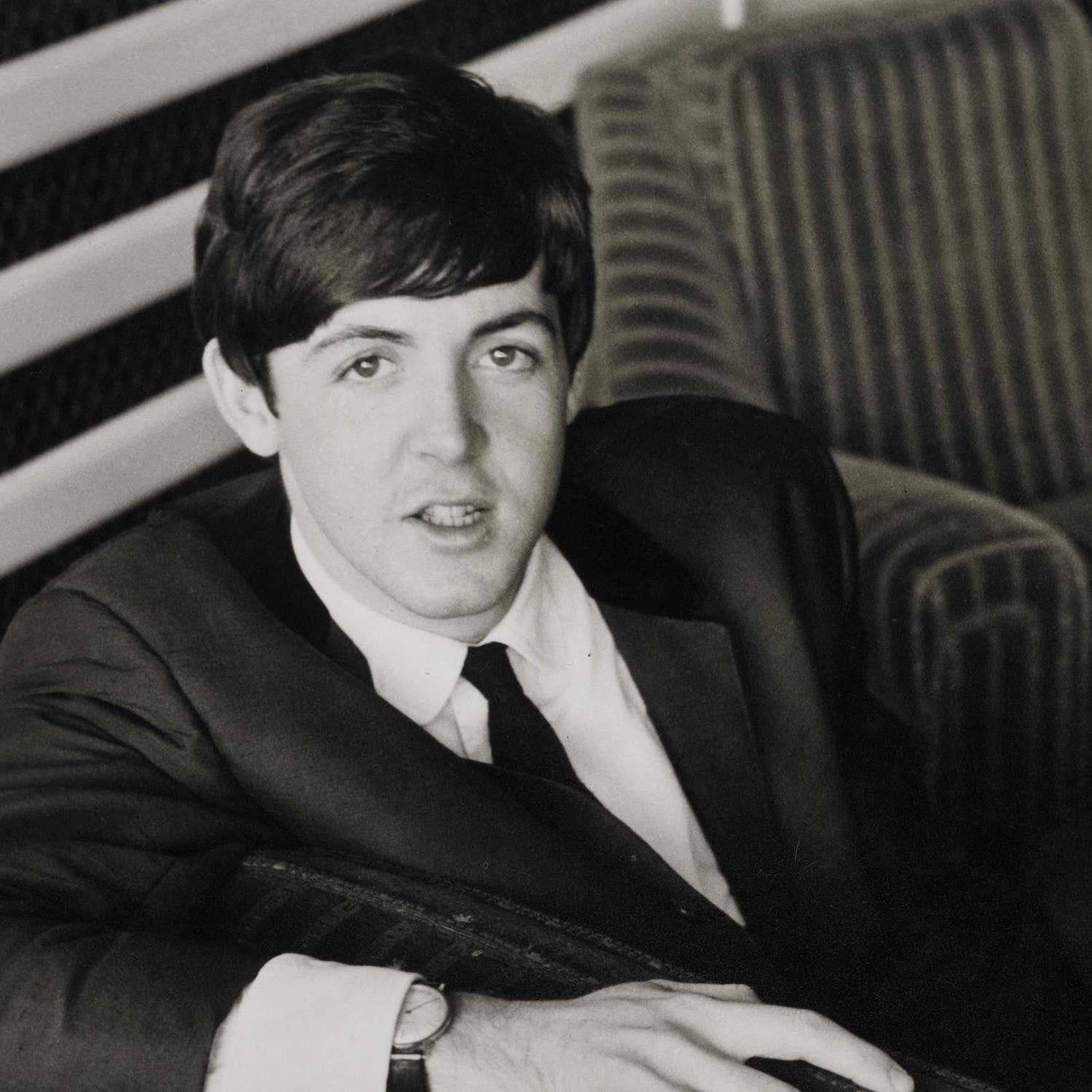
And that’s the whole thing with Paul. The indelible earnestness to his affect is a constant anchor to his cool quotient. But that earnestness is also a big part of what makes him so cool. Especially in the present era of the hard-working superstar (e.g., Taylor Swifts, Beyoncé), where Paul’s tryhardism plays a bit cooler than it might have in the 1980s or 1990s.
It’s also a surprisingly catchy song. That may not be clear the first time you listen, and I can understand the folks who might call it filler. But the more time I spend with it, the deeper it lodges itself. Of all the great songs in the history of music, there’s a tiny fraction that live regularly in my head. The songs that I find myself humming as I do laundry or wash dishes. The songs that I sing to my kids while we’re out for a walk. “Rocky Raccoon” is one of them.
I always felt a bit self-conscious about that. In my mind, it was correctly understood as a marginal Beatles track. A bit of fun, perhaps, but not something you could appreciate in a serious way. Fortunately, as the years passed and I grew a bit more comfortable in my own taste, I settled into an unabashed appreciation.
That has also been bolstered thanks to some covers and alternate versions, each of which provide a bit more insight into the construction and beauty of the song. The version from Anthology 3, for example, demonstrates a bit more dynamic range. That’s especially true in the back half of the track, largely thanks to Paul’s vocal flub (“sminking of gin”) which ruins the take and leaves him free to play around a bit.
You can also really grasp the song in a new way through the Richie Havens cover, which actually was a minor hit in 1969.
It’s so good! And really makes the line about Rocky’s revival hit a bit harder. This performance is a bit of musical revival.
There’s also a lovely Phoebe Bridgers cover, which feels like a lost alt-folk classic that highlights how beautiful the chord progression actually is.
One final bit of fun is that Andy Partridge of XTC was called “Rocky” when he was a kid because he always carried a guitar around but the only song he could play was “Rocky Raccoon.” And, as quite a few folks have noted over the years, “Dear God” (maybe my favorite XTC song) sounds quite a bit like Rocky Raccoon.
Want more deep analysis of Beatles songs? Subscribe to Charles Olney’s Oh That Magic Feeling to follow along on his Beatles journey.
Want more from Chris Dalla Riva? Get a copy of his debut book, Uncharted Territory: What Numbers Tell Us about the Biggest Hit Songs and Ourselves.

Great piece of writing, and I couldn't agree more. Paul's willingness (and ability) to experiment with so many different styles (Helter Skelter and Blackbird on the same album too for example) is up there with reasons why he's so special. I always think of his reply when the other Beatles mentioned the drudge of doing Maxwell's Silver Hammer - 'I recorded it because I wanted to do it'. I'm paraphrasing, but it's a fair enough statement.
Love this take! This experimentation is no doubt a massive part of why the Beatles remain so intriguing.