


Right at the beginning of my conversation with Grammy Award–winning music historian Ashley Kahn, I noted, “I find that it’s not always enjoyable to read about albums that I love.” This is a strange thing to say when talking to someone who just wrote a book about an album. But Kahn was writing about Paul Simon’s Graceland, an album whose story will suck you in even if you hate every song.
I assume you don’t hate Graceland, though. I sure don’t. “You Can Call Me Al” is a staple in cover sets I play with my cousin, and the title track can get me near tears. Ashley Kahn is the best guide you could ask for to take you through this album. Over an hour, we talked about the international recording process that brought the album together and why it was steeped in such controversy. If you enjoy our conversation, celebrate the 40th anniversary of Graceland by picking up a copy of his book, Days of Miracle and Wonder: Paul Simon and the Trials and Triumphs of Graceland.
Graceland is a touchstone in the Paul Simon catalog, but it was quite different from everything he’d done up to that point. First, can you tell me a bit about how Graceland stood apart musically in the Paul Simon catalog at that time?
Graceland stands apart in myriad ways both in terms of the music that was popular in 1986 and from what Paul Simon had done up to that point. Pop music at the time was driven by new technology, like synthesizers and drum machines. And to that point, Simon’s music had been going in a jazzier direction. Think of Still Crazy After All These Years and even Hearts and Bones, the album before Graceland. These were introspective songs from a middle-aged creative. That’s what Paul Simon was known for.
In one sense, Graceland was a return to roots as he was looking back to the song structures and ideas he’d fallen in love with when he was much younger. Elvis Presley. Little Richard. Chuck Berry. Early doo-wop groups. He was returning to that form and energy but through South African rhythms and western Louisiana zydeco groups and the norteño rock.
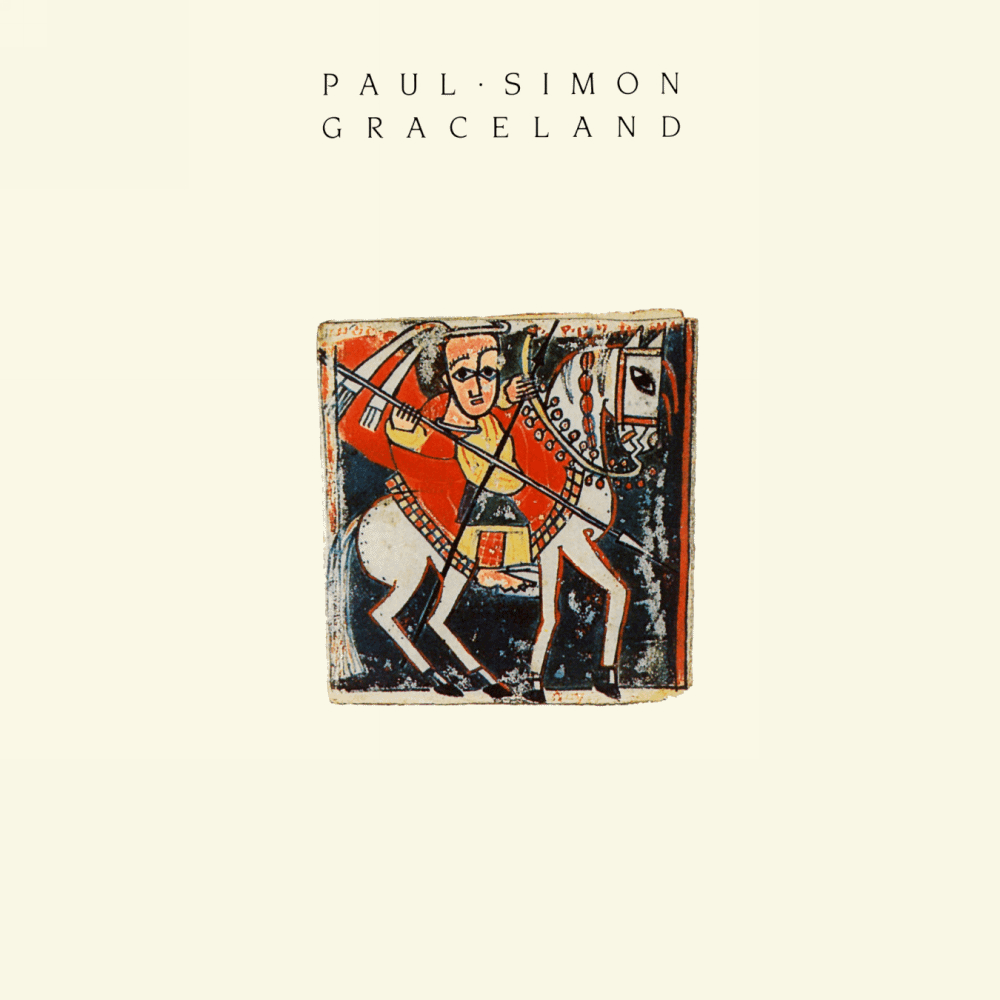
So, sonically Graceland was quite different. But it also represented a shift in songcraft. In the past, Simon always started with chords on the guitar and words. From there, he’d develop the rest of the music and the rhythm. On Graceland, he was often starting with the rhythm track. It was kind of a hip-hop approach. You make a beat and then write harmonic material around that. This approach probably wouldn’t have been possible without the emergence of digital technology of the 1980s.
Writing a book about an album is no easy job. I find that it’s not always enjoyable to read about albums that I love. The process isn’t always as interesting as the music itself. But Graceland is interesting because the actual process of constructing it was so unique. Can you talk a bit about the process of making the album?
Every track is the result of collaboration, and I don’t mean collaboration in the sense of like Phil Spector going into a studio and saying, “Hey, you do this.” Simon is actually creating the music in the moment with the artists that he’s with. His collaborative approach would differ. Sometimes it was in the control room listening to what the band is doing. Other times he’s in the studio directing the flow of the musicians.
This was an approach he’d used in the past to some degree. For “Mother and Child Reunion,” he’d gone down to Jamaica. But he’d never taken this approach for an entire project. So, this was risky, especially when you consider the politics in South Africa at the time.
I’m glad you bring up “Mother and Child Reunion” because I want to ask if you think there were seeds of Graceland’s process in Simon’s earlier work?
It’s a good question. “Mother and Child Reunion” is probably the closest we get to the Graceland approach, but he’d also brought in a gospel group for a song like “Love Me Like a Rock.” He definitely always found some appeal in working with other musicians.
The seeds of Graceland were in a bootleg cassette that a friend gave him of a style of music called “township jive.” It’s very upbeat with blues-type chords. It’s got rock and roll energy. He was listening to it in the car and coming up with lyrics. He’d never done something like that before. It put his creative machine into hyperdrive.
He later went to his record company and said he didn’t want to recreate this sound with New York studio cats. He wanted the actual musicians who were on the cassette. That was really the idea that birthed Graceland. He wanted to go to South Africa during the height of apartheid to work with the musicians on that tape.
And that was controversial, right?
Of course. This was the time of economic and cultural sanctions against South Africa. Simon was very, very meticulous about how to make this project work. It was a political minefield. He started by talking with Harry Belafonte and Quincy Jones about this idea. He then got word through a South African producer named Hilton Rosenthal that the local musicians wanted to work with him. Simon then said he’d pay them triple scale U.S. union musician rates. He wanted to do this and to do it right.
Another piece of controversy around this record was the songwriting credits. As it was very collaborative, there was a fluid nature of who did what. Many of the African artists got credits, which I’m sure was appreciated, especially when the album sold millions of copies. But there was some tension with Los Lobos because they didn’t get songwriting credit on the album’s final track. Do you think credits were doled out fairly?
The controversial aspects of this are very unique across Paul’s discography. To answer your question, I’m going to do what I do in the book and just lay out the facts and let the reader decide. Pinpointing exactly what happened is very difficult, and it’s frequently worked out in legal battles.
So, the argument between Los Lobos and Paul Simon is nothing new in the music world. It’s unfortunate that it has come down to name-calling. Paul has remained mum on the subject, but there is a lot of vitriol around that track. Paul’s stance has mostly been that if they felt a certain way they could sue him.
But, like I said, I just wanted to lay out the facts for the reader. There were witnesses to those sessions, and they noted how the sessions did not go smoothly. It just seems like there was a lot of miscommunication. No one’s a perfect sinner or saint, but I choose to judge Graceland as a complete record. The right intentions were there the whole time.
The songwriting credits actually make Graceland feel very contemporary because credits are doled out more liberally these days. When you combine that with the fact that he was writing to a track, which—to go back to what you said before—is similar to how hip-hop is made, it really feels like a process people are going through right now.
What comes to mind for me is Motown. That’s how they used to do it. They had different departments. One group would lay down a rhythm track. The tape of that groove would get shipped to songwriters who would write to it. That was Paul’s approach on Graceland.
There were additional questions around songs like “Gumboots.” That was a Boyoyo Boys song that Paul wrote lyrics too. Interestingly, that ended up being the song he was least happy with coming out of the Johannesburg sessions. Since it was part of what birthed the album, he had a sentimental attachment to it.
Of course, the songwriting credit controversies were all a sideshow to the real controversy: Paul Simon went into apartheid South Africa to make this album. Do you think any of the criticism levied at Simon was deserved?