


Robert Christgau is arguably the most important music critic of the 20th century. He’s also still active. The Dean of American Rock Critics is still publishing multiple pieces per month in his newsletter, And It Don’t Stop. Most people don’t have the stamina to write 18,000 reviews over 55 years. Christgau, as Matty Wishnow notes, “is one-of-one.”
Wishnow’s Robert Christgau documentary The Last Critic is set to premiere at South by Southwest next week. I was lucky enough to get an early screening a few days ago. As someone who has watched a ton of music documentaries, this one blew me away. Not only did Wishnow get full access to Christgau, but anyone and everyone sat down for an interview. Last week, Wishnow and talked about how this documentary came together, what music criticism means in the 21st century, and the long career of Robert Christgau.
There’s this quote I often see floating around online. It goes something like, “There’s never been a statue erected to honor a critic.” Of course, this quote isn’t strictly true. There’s a statue of Roger Ebert in Champaign, Illinois. Making a documentary about a critic is sort of like building a monument to that critic. What compelled you to make a documentary about Robert Christgau?
There’s some truth to that quote. I asked everyone in the movie, “Why does criticism still matter?” That’s not exactly what you’re asking me, but I must say that when I posed that question, I didn’t get many great answers, even from critics themselves.
My reason for making this movie was not to celebrate criticism broadly but to take a portrait of what I would call “a master in sunset.” This is someone who has honed a craft for almost 60 years and is considered to be one of the most important to ever do it. And he did that all functionally from the same location. He still writes from his apartment on a very outdated word processor. He’s used the same process for 55 years.

I wasn’t really interested in what made Christgau important in 1974 or 1984. I was interested in how he has sustained himself for so long and what it means to do this work at such a high level for all that time. Frankly, he has probably listened to more popular music than any human being ever. I don’t mean that in terms of the breadth of music he’s covered. I also don’t mean it hyperbolically. I mean he has literally spent more time listening to music than anyone else ever. He will listen to an album 6 or 7 times before he distills it into a 150-word review.
Having spent time with him, I can tell you that he is the real deal. He is taking in music all the time like some sort of music processing machine. When you find somebody who is sort of one-of-one, I think it’s important to tell their story. He wrote a memoir, but that stopped in middle age. The modern master in sunset is something that is very interesting to me.
You said that few of the people you posed the question “Why does criticism still matter?” gave a satisfying answer. How did people respond to that question?
The two best answers that I got were from Amanda Petrusich of The New Yorker and Ann Powers from NPR. Petrusich told me that a great review makes an album that might at first seem like a bud come into bloom. Great reviews bring music to life and allow you to appreciate that music more deeply.
I like that. But I think it’s only true of great critics. Most writers are not great critics. So, this still begs the question, “Why is music criticism important?” Ann Powers talked to me about the passionate uselessness of music criticism. What she meant is that critics are not significantly changing the commercial outcome of a record. There might have been a time when that was the case, but it’s not really true anymore. On the other hand, humans love talking about music. It’s an emotional imperative for most people.

If you ask people what they love, they’ll probably say their family and freedom and money and a few other things. But music is often near the top of that list. Music is serious business. Music writing, on some level, is not. It’s commercially useless. Yet we’d feel compelled to do it even if the job didn’t exist.
I find that perspective very compelling. We feel the need to explain our relationship to music and why it matters to us. Nobody else that I spoke to really got to the heart of the matter quite like that.
I was shocked and impressed how many people you got to participate in this project. Along with a who’s who of music criticism (e.g., Greil Marcus, Kelefa Sanneh, Yasi Salek, Rob Sheffield), you had artists like Thurston Moore and Randy Newman get screen time. Could you tell me a bit about how this project came together and how you got all of these people to sit down and talk?
The way the project came together was pretty serendipitous. I’m not a filmmaker. I just had a log-line. I went to a friend that was a documentary filmmaker and pitched it to him. “What if I told you,” I remember asking him, “that the person who’s listened to more music than anyone who’s ever walked the face of the Earth is still doing it at 84 and hasn’t had his story told?”
He was intrigued. He was familiar with Christgau. He then remembered he had a friend name Paul Lovelace who had interned for Christgau in college. Lovelace did a short film as a senior thesis that was about Christgau. I reached out to him, and he not only told me that he knew Christgau but that he had hours of archival footage of him. That is rare. Christgau isn’t a celebrity. It’s not like he was always on TV.

So, I sat down with Paul, my coproducer, and Ben, my cinematographer, and we agreed that this would be an interesting documentary. 30 days later, we were in his East Village apartment asking if he wanted to do it. At the same time, we were secretly asking Carola, his wife, to get Christgau to agree to participate. She is really the way to get to Christgau. 45 days later, he was locked in.
After that, it was about gathering resources and figuring out what kind of story we wanted to tell. Honestly, nearly every person I emailed agreed to participate. Whether you love him or hate him, Christgau is respected. Even the people that hate him kind of seem to love him. Like Thurston Moore of Sonic Youth very famously hated Christgau, but even he agreed to sit for an interview. Christgau inspires big feelings from people. But as a writer and editor he has engendered a wild amount of loyalty.
Was there anybody that you couldn’t get?
There were two. First, Questlove. He’s a big Christgau-phile. I’m sure he would have loved to sit down, but he is a very busy guy. Honestly, he might be the busiest person on the face of the planet.
The other person who I couldn’t get was Billy Joel. There are famous stories about Billy ripping up Christgau reviews on stage at Madison Square Garden. There were many artists that hated Christgau. Sonic Youth. Lou Reed. But Billy Joel was just so mainstream, and he could never bring himself to have a sense of humor about critics. Christgau also never really warmed to his music.

It’s funny you say that because while I was preparing for this, I dove into Christgau’s archive. His website is somehow both archaic and usable. And I noticed that he really wasn’t kind to either Billy Joel or Queen. But then when he reviewed their respective greatest hits records, he gave them both an A-.
In the 1970s and the 1980s, the idea of the album was very revered. Critics believed that a great album had to be a cogent work. But in truth, many of those classic albums have a bunch of shitty songs on them. Christgau was one of the first people to be like, “Hey, Piano Man doesn’t have very many good songs, but if you just put his best singles on one album, it’s pretty good.” I think that’s a testament to how Christgau will swallow his pride if he does like something.
Now, let’s talk a bit more specifically about the documentary. Christgau notes how criticism “helps people hear music.” I’m sure you’re very familiar with his writing at this point. Can you think of any examples where he helped you hear music?
I wouldn’t even know where to begin. He opened my ears to so much different music. At first, it was just the stuff that predated me. I was born in the 1970s, but I wasn’t listening to punk or post-punk as an 11-year-old. I listened to the radio. Christgau showed me how something that initially sounded abrasive could be pleasurable. And I’m not talking about hardcore. I’m talking about the Ramones and The Clash and the Sex Pistols.
He also introduced me to so much soul and funk that wasn’t on pop or rock radio, like Al Green and Parliament. He also turned a ton of people onto African music in the 1980s. His review of The Indestructible Beat of Soweto really made a lot of people curious about world music.
Some people liked Christgau for how he described sounds and rhythms. Other people liked him for his short, epigrammatic one-liners that were hard to unpack. Still, others were just there for his letter grades. Like if he gave something an A, you’d go out and buy it.
The documentary makes it clear that his letter-grading system was kind of revolutionary. We expect most record reviews today to have a grade, but that really wasn’t a thing at the time.
He’s very serious about his grading system. I think the origins are a bit cheekier, though. They’re rooted in his thinking about pop art, or the idea of commercial art warranting serious evaluation. He was coming from a post-Warhol school of thought, toiling with the idea that art and commerce are the same thing. But his rubric was important because he wanted to help people discern what to buy.
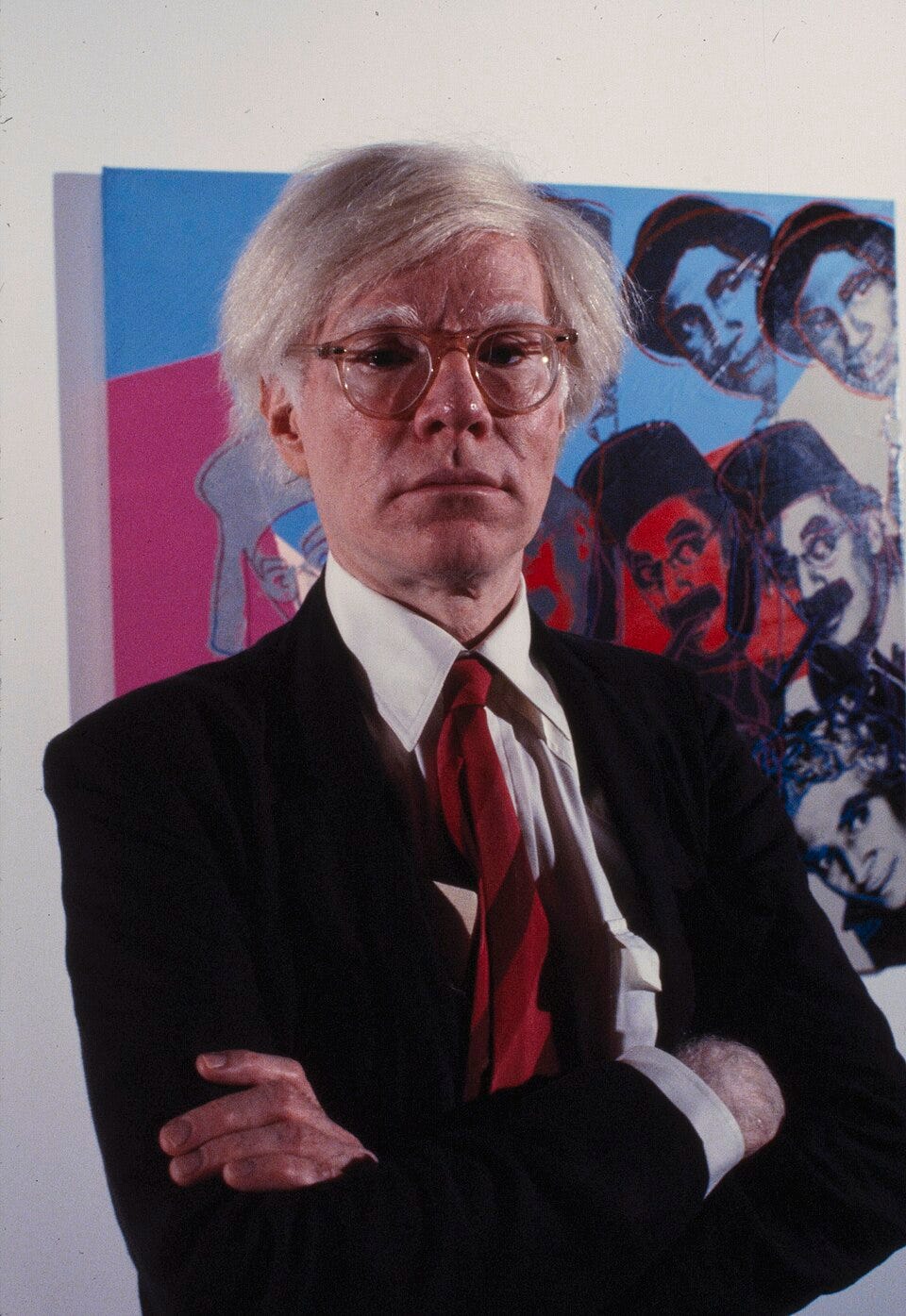
So, there’s a little bit of Andy Warhol in his grading system. He’s also poking fun at what would become the David Geffen-ish idea of elevating songwriters to God status. In other words, it’s serious, but it also kind of started as a joke. He would say that if you could put a price on it, he could put a grade on it.
It’s important to remember that he didn’t think of these scores as an objective evaluation. He is there to give an accurate reflection of his experience listening to an album. He rarely goes back and regrades something. The grade is a snapshot of what his experience was as an expert witness to that album when he was listening to it
I think the documentary does a great job at balancing the different sides of Christgau and how he wasn’t trying to be objective. Like he never hides the fact that he hates metal music.
He had three or four famous “deaf spots.” He wouldn’t call them that because he has a rationale for his feelings, but they were progressive rock, heavy metal, and depressive singer-songwriters. Christgau contains multitudes, so it’s often hard to reconcile with his hatred for these genres.
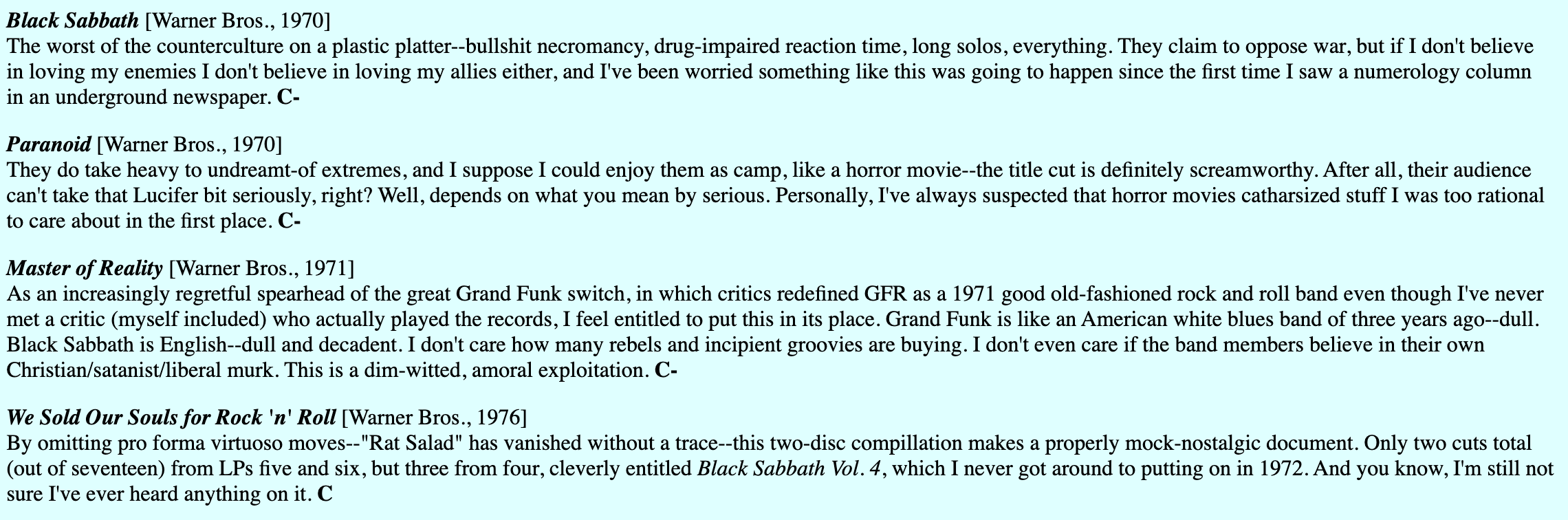
His disdain for metal and prog is actually rooted in a strange patriotism. Christgau is a real leftist progressive, but he also loves America. He isn’t nostalgic for European tropes of grandeur. He basically dislikes anything that feels too English or Wagnerian.
He’s also an optimist and romantic. He loves romantic albums, but hates depressive, woe-is-me singer-songwriters. In the 1970s, it was not en vogue to hate James Taylor and Cat Stevens. Same thing with hating The Smiths in the 1980s or Radiohead in the 1990s. He wasn’t alone, but it did set him apart.
We spoke about this earlier, but Christgau’s longevity is astounding. In the documentary, he claims to have listened to 250,000 hours of music, which would account for a third of his life, including sleep. What do you think keeps this man going? He’s still writing reviews today.
I think that estimate undersells it. I’ve spent a lot of time in his apartment, and music is always playing. I’m talking 14 hours a day. Even setting that aside, I think the answer to your question is twofold.
First, the simple answer is his wife, Carola. She makes all of this possible. The only thing Christgau loves more than music is his family. When he is writing, he’s writing for his readers or a publication, but he’s also writing for Carola. She pays witness to everything he does. She helps him edit, and her reaction significantly influences him. He loves the rhythm of that relationship. So, saying goodbye to reviewing would be like saying goodbye to his family.
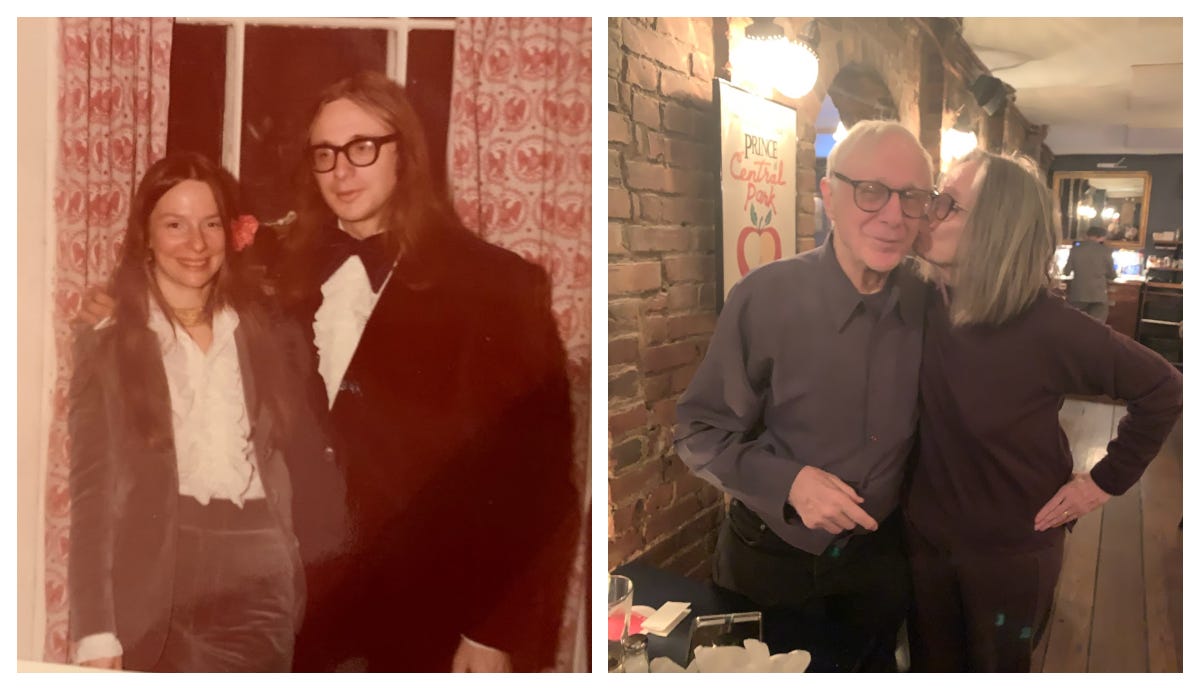
Second, I think he is so physically enmeshed with listening. He is intellectually different from most people. He’s brighter, faster, and more obsessive. When music isn’t playing in his apartment, he’s uncomfortable. At the end of the documentary, Ann Powers says that Christgau is like a Borges character. His curiosity has trapped him in a listening labyrinth that he cannot leave.
The title of the documentary is The Last Critic, which alludes to the fact that music criticism as we know it might be at the end of its life. What is the point of the critic when you can listen to anything immediately? I’m curious where you think criticism is going.
I’m not a good prognosticator, but I think your assessment is right. The idea of criticism as a vocation is functionally dead. When I was growing up, there was a job called “music critic.” Maybe you wouldn’t get rich doing it, but it was a job. Pitchfork has recently supplemented their critical evaluation with crowdsourced ratings. To me, that signals how the individual voice is being subsumed by the crowd, by various algorithmic systems.
Will people continue talking about music? Of course. But the idea of someone putting their qualitative and quantitative reactions to an album down in print is a thing of the past. While Christgau will not technically be the last critic, it will be the end of something when he stops writing. And although he wasn’t the first pop music critic, he has seen the full arc of this thing. That’s why we went with the title.
To finish up, tell me where people will be able to watch the documentary.
It will make its world premiere in Austin at South by Southwest next week. It will show three times during the festival. Then we will be running at festivals for the rest of the year, most of which aren’t announced yet. That said, we will be all over the US and Europe during the fall and winter. Actually, the only thing we’ve also announced is that we will be in Knoxville two weeks after South by Southwest for Big Ears.
After the festivals, we’re hoping to do a small theatrical run. Honestly, there’s been even more interest than we were expecting. Christgau might be more renowned these days than when he worked for The Village Voice. His writing is just so ubiquitous. He’s cited all over Wikipedia. So, we are hoping for a nice theatrical run and then to put it on a streaming service.
Want more from Matty Wishnow? Check out his documentary about critic Robert Christgau, The Last Critic.
Want more from Robert Christgau? Subscribe to his newsletter, And It Don’t Stop, where he continues to review records.
Want more from Chris Dalla Riva? Get a copy of his debut book, Uncharted Territory: What Numbers Tell Us about the Biggest Hit Songs and Ourselves.
Of all the critics I regularly read, Robert Christgau makes the best recommendations. I strongly agree with his general sensibilities. I felt that this aspect of evaluating his great career needed to be mentioned.
I've been reading Dean Christgau since the early eighties and I've read all of his books, which range from autobiographical to literary criticism. His intelligence is complemented by a great sense of humor. I can't wait for the movie.