


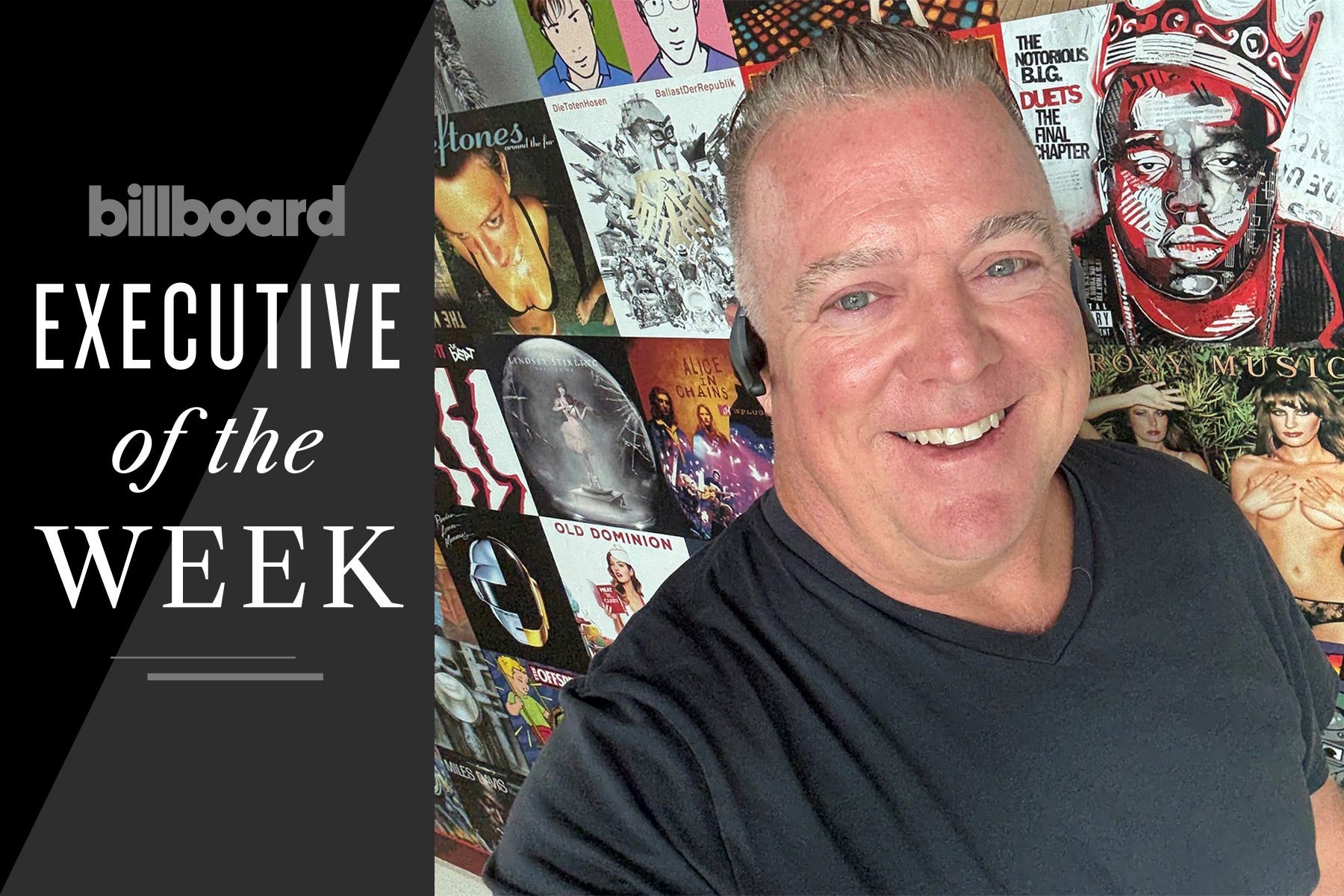
Every interview I’ve done in this newsletter has been either over the phone or video chat. And that’s fine. With a travel budget of zero dollars, modern communication makes it possible to talk to so many interesting people. But when this interview was pitched to me last week, I was asked if I could do it in person. Jeff Walker was in Midtown Manhattan, not far from where I live.
I was happy to oblige. Jeff Walker is a big deal. Over the last few decades, he’s turned a CD store he opened in Southern California into one of the world’s largest distributors of CDs, DVD, vinyl, and all things physical media. The company, now called Alliance Entertainment, trades on the Nasdaq and did over a billion dollars in revenue last year. Walker and I sat down over coffee to talk about what’s driving the vinyl revival, how he’s survived decades of tumultuous change in the entertainment industry, and why physical media just won’t go away.
One of the big stories in music over the last decade has been the resurgence of physical media. First it was vinyl, but now CDs are surging too. What best explains this physical trend in an increasingly digital world?
Starting with vinyl, that was about the cool factor. As it progressed over the last 10 years, younger people started to get interested, and their parents said, “Oh, you’re interested in something I used to be interested in. We can connect on this.” I think that helped along the way. We also had Record Store Day, which was created 19 years ago and has been super successful. That started driving people into record stores, and the labels were making limited-edition vinyl for Record Store Day, which meant you had to go that day to buy it. You also see a lot of vinyl on social media now.
As it’s moved into CDs, you have some of the same concept. CDs are definitely a cheaper way to own a piece of your favorite artist. There’s also a smaller conversation about ownership: On digital platforms, you don’t own the music. Only about 5% of people really think about that, but those people say, “I’m paying for this, but I don’t own anything.” So, there’s a bit of “own your favorite things.”
Taylor Swift’s album last year is a good example. She sold 2 million vinyl records and a million CDs, and nobody had to buy it to listen to her music. Everybody has a digital platform. People bought it only because they’re a fan or they want to collect something from their favorite artist. There’s an overlay of fandom and collecting in music right now, as well as in video, trading cards, and all sorts of other things.
You don’t just deal in music. Have you seen similar surges across the other verticals you work in, like movies and games?
We’re heavy in the movie business. We’re also in gaming and collectibles, and we’re working our way into trading cards right now. The DVD business declined rapidly over the last 15 years, but we’re definitely starting to see it flatten out. In parts of our business, we’re seeing growth come back on DVD. I project that DVDs will start moving up, similar to CD,s in either 2027 or 2028.
Video really messed up distribution. You need a lot of different services to watch a wide range of stuff. It’s all fragmented. Music did better. Everything’s on Spotify and Apple Music, so you have one service and can listen to it all. With video, something comes off a streaming service and might be gone for a while as the studio figures out what they’re doing with it. So, there’s definitely a social media movement right now around having a collection.

We used to say we were a distribution company. Then I started saying we were an entertainment company. Now I’ve fully swung over to saying we sell collectibles. People have a vinyl collection. They have a CD collection. I have a DVD collection at home. We also sell Funko and all sorts of other collectibles. Ultimately, everything I’m selling is something people collect.
Do you work in sports at all? That seems like a big collectibles area.
We’re very limited in sports. We have a little bit, like Funko-type characters. But from an acquisition perspective, we could completely go into sports. It’s collectible and a licensed product. It fits exactly with what we already do. It’s just another direction.
Going back to vinyl, I’ve heard that when they survey young people who buy records, a large portion don’t even own a record player. It’s truly a collectible, something you put on the wall. Does your company care whether people actually listen?
It doesn’t matter. I’ve heard that number before, and it seems a little high. Maybe they buy one or two, but if they start buying a few more, they’re probably going to get a turntable. There are also a lot of people who buy two copies. They open one and keep one sealed. I’m not too worried about it.
You mentioned Taylor Swift moving millions of physical units. How dominated are these markets by the biggest pop stars in the world? Or do smaller artists do well in the physical market too?
In music, you have a lot of historic catalogs, and then you have new releases. On vinyl, you sell tons of Bob Marley, Pink Floyd, and Prince—all those evergreen titles. Those sell lots of units every year. Then you have a deeper catalog. We’re stocking 55,000 unique vinyl titles, brand new, in the warehouse right now. CD is well over 100,000. So it’s definitely a long tail too.
Your website says you have hundreds of thousands of items available. Is all of this a big exercise in supply chain management, or is any of it made to order?
It’s all supply chain management. We have a little division that does some manufacturing on demand, but it’s mostly ordered. We have almost 350,000 SKUs in stock and three times that many in our database. Stock quantities go from one or two units up to multiple pallets of a particular title. It’s all determined primarily by sales velocity, or how many we sell per week.
A few years ago, around COVID, when Adele’s album 30 was coming out, people were saying that one album was constricting the entire vinyl manufacturing industry. Do big artists still need so much production that it locks smaller artists out for a while, or is that not an issue anymore?