


Because I’m at a wedding this week, I decided to have my friend Matthew Campbell stop by to take over the newsletter for the day. Campbell is the man behind the popular Wedding Music Newsletter, an indispensable resource for wedding DJs. And he has a new book out about the wedding music canon.
The thing I like about Campbell’s writing is that it is interesting whether you’re spinning tunes at a wedding or not. I’m genuinely intrigued by what people want played at their wedding reception. I hope you are too.
The 10 Best Wedding Albums Ever Made
By Matthew Campbell
I spent the last two years building a hand-curated resource of the best wedding songs from the 1950s through the 2010s. Songs were not selected by sales or by the number of streams alone. The songs were chosen by how likely a professional DJ would still play them in front of a room of 150 strangers spanning three generations with confidence.
The finished book totals 1,875 songs from 1,333 artists. Every track was selected from DJing hundreds of weddings and decades of researching wedding music.
When I had a DJ friend review my first finished copy, he asked me an obvious question to him but not so obvious to me. Which album produced the most wedding songs?
My first guesses came to light. There are so many hits by the Bee Gees. Plus, popular songs exist from what are considered the greatest albums of all time. Two include Thriller by Michael Jackson and Stevie Wonder’s Songs in the Key of Life.
The beginnings of the album versus singles
Before I could rank anything, I had to deal with a singles versus albums dilemma.
Of the 252 songs in the index, 13.4% of the total were released before 1965. The album existed by then. Many artists in the adult pop genre had their songs produced on albums. Frank Sinatra alone accounts for twelve of those songs. During his time at Capitol Records is where the album became an artistic form in the first place. Nat King Cole, Dean Martin, Johnny Mathis, and Harry Belafonte are all in this group. All of them were album artists working in a market that bought albums.
The rest of the era was a singles business and made up a larger piece of the pie. “Rock Around The Clock” was not an album track. Neither were the popular hits “In The Still Of The Night,” “Tutti Frutti,” “Love Is Strange,” or “Come Softly To Me.” The doo-wop groups, the rock and roll bands, and the R&B labels sold mostly 45s. The album was where the hit got reprinted afterward, if it got reprinted at all.
So, the early index splits between albums and singles. The majority were singles. The albums were typically assembled a decade or more later for a compilation. As a result, albums released before 1965 were left off of my findings because they had an unfair advantage.
The ranking
I scored albums by the number of distinct song index recordings on the original release. If the index lists Dolly Parton’s “I Will Always Love You,” Whitney Houston’s version does not count, and The Bodyguard gets omitted from the results.
Studio albums, soundtracks, and compilations all counted. It was based on the theory that if you handed the album to a wedding DJ, what matters is how many usable songs come out of it. Box sets of three or more discs were excluded.
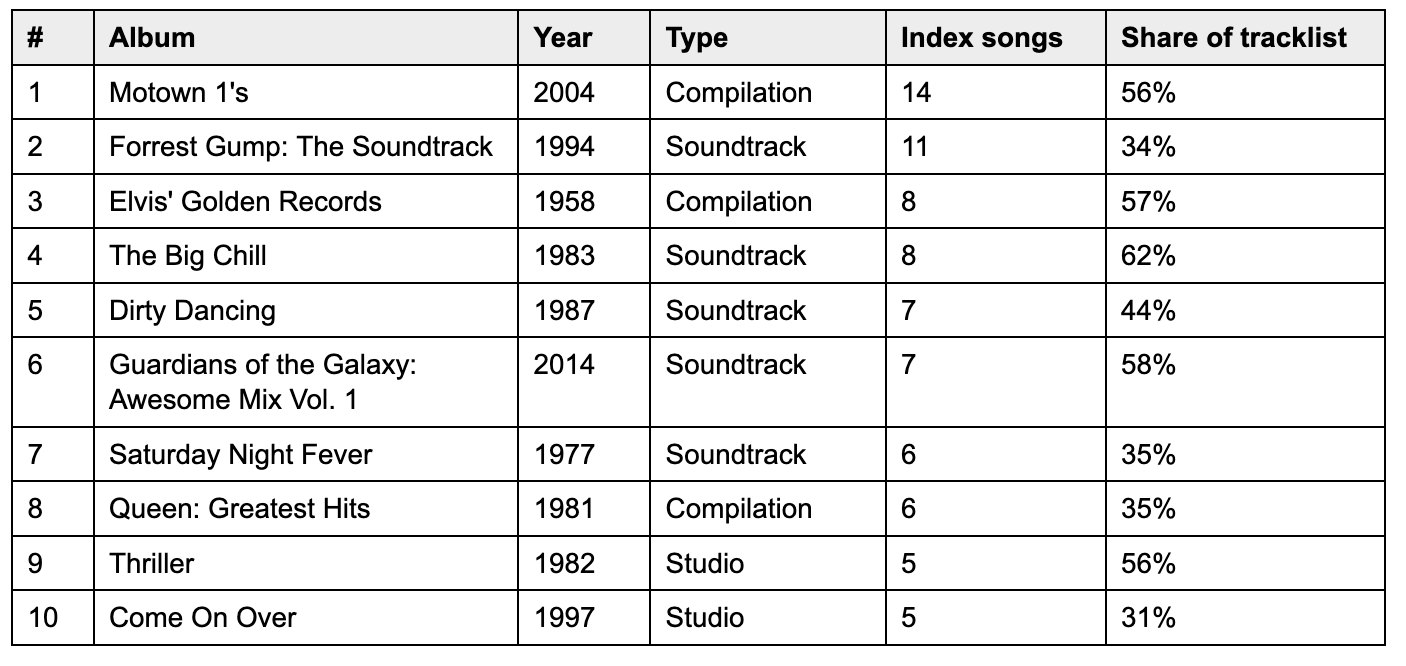
Look at the Type column. Then look at how far you have to go down before you reach a studio album. Nine spots! Nine spots before you find an album that a group of musicians made as a single album.
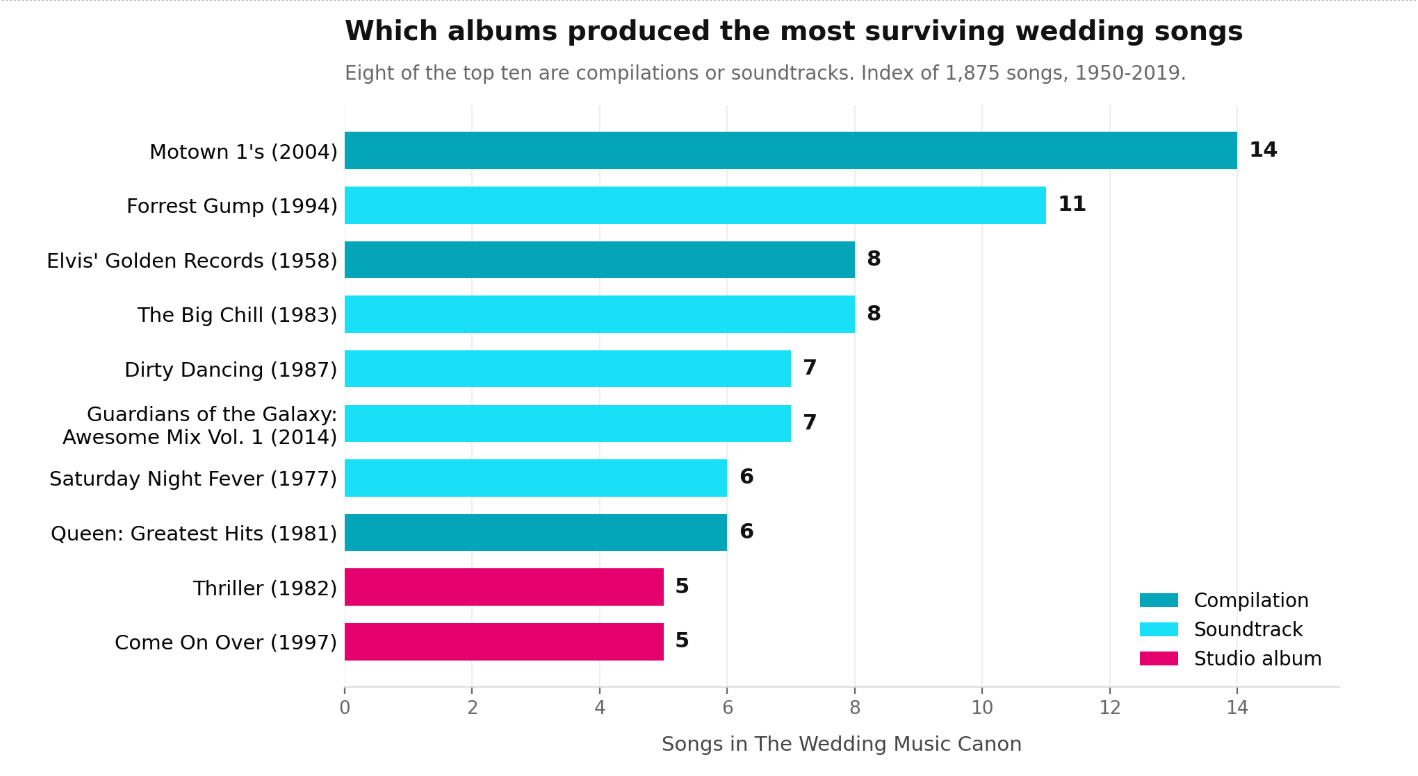
The studio album ceiling is five songs
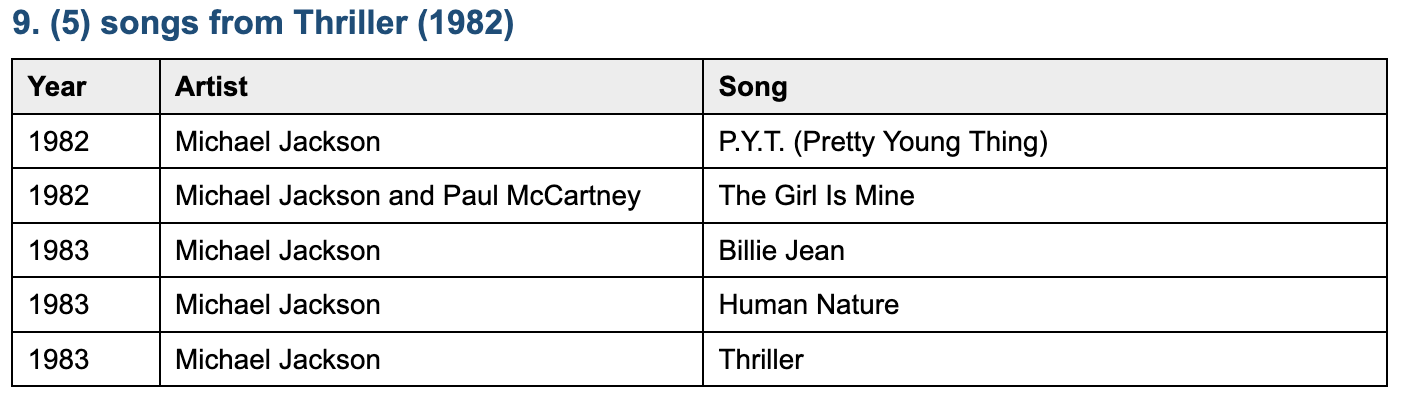
Thriller is the best-selling album in history. It contributes five songs to the index.
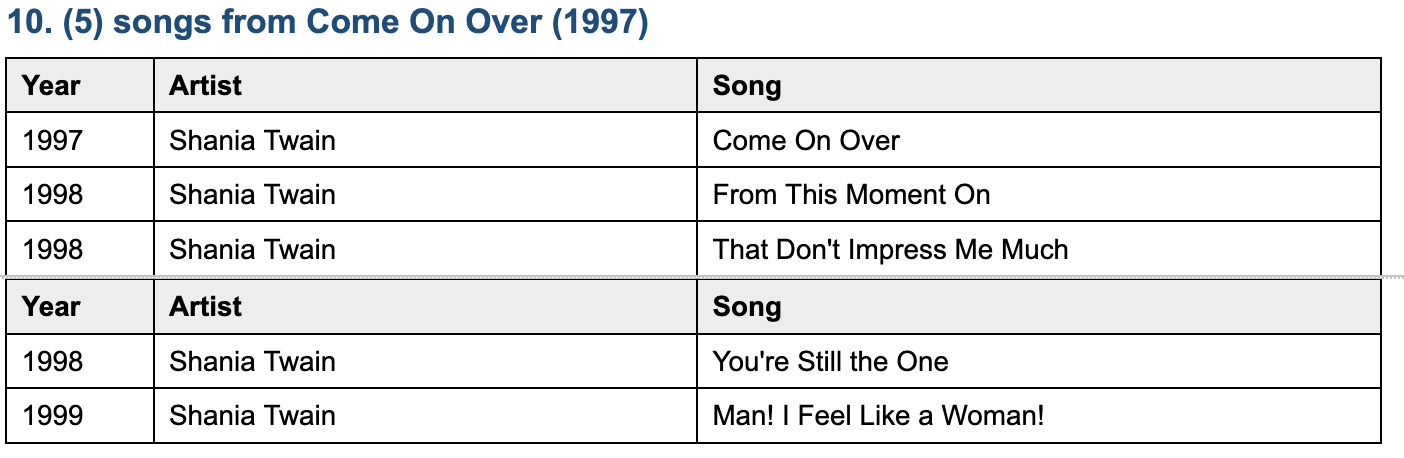
Shania Twain’s Come On Over is the best-selling country album ever made and the best-selling studio album by a woman in any genre. It has five singles in the index. Plus, it needed sixteen tracks to get there, which is the lowest conversion rate on the entire list at 31%.
Come On Over is the closest thing the album era produced to a purpose-built wedding record. “You’re Still The One” and “From This Moment On” are first dance and anniversary dance standards. “Man! I Feel Like A Woman!” is a reception party song banger to this day. “That Don’t Impress Me Much” and the title track are vibe setters for cocktail hours. Yet, it still cannot beat Thriller, which needed only nine tracks to reach the same number.
Those are the winners. Below the top two studio albums, the numbers fall off a cliff. They fall off to the point that no other studio album can be considered a wedding album at modern weddings.
Rumours contributes only two songs. One of the most-owned albums in American history. It is considered one of the greatest albums of all time by Rolling Stone and Time Magazine. It is a masterpiece. Yet, a wedding professional pulls exactly “Dreams” and “You Make Loving Fun” off it. (“Songbird” is a popular love song but not on every wedding playlist.) Escape by Journey contributes one, and you already know which one (i.e., “Don’t Stop Believing”).
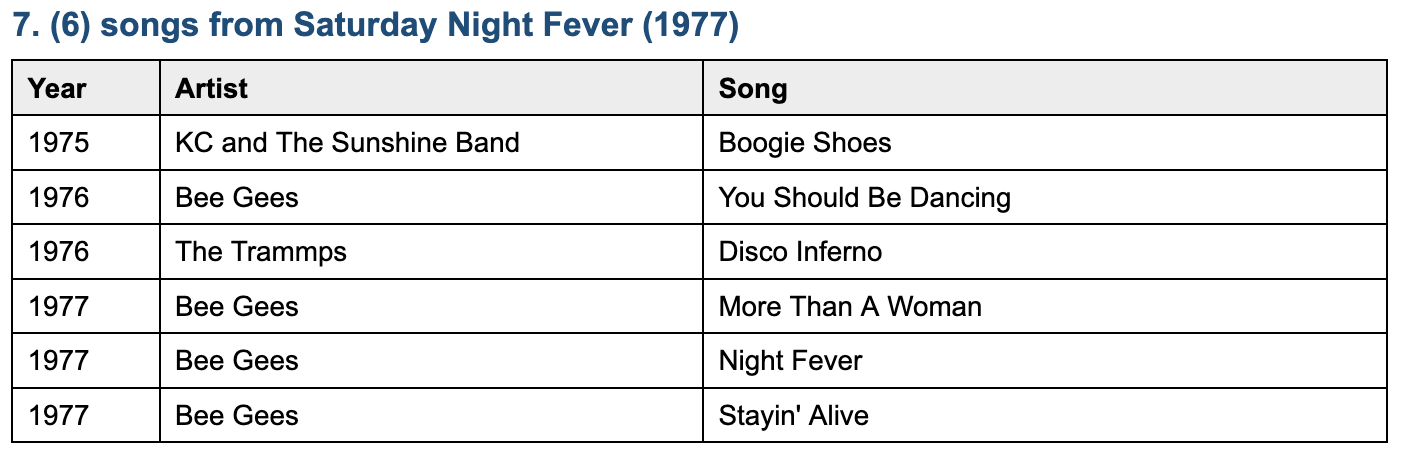
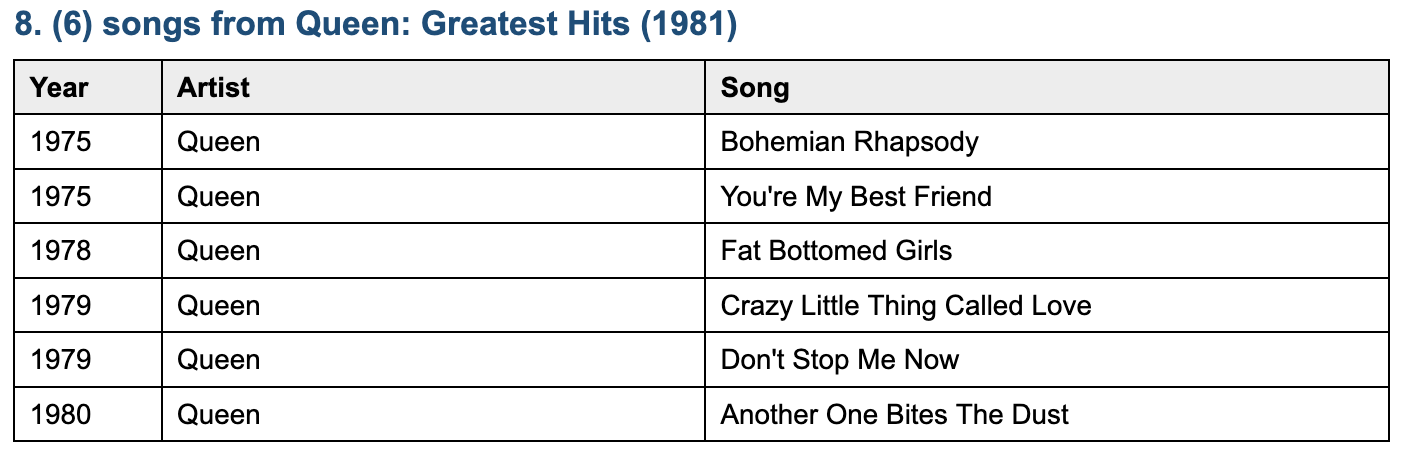
Saturday Night Fever is full of hits. It sits at number seven with six songs. I would have bet money it would win outright. It didn’t, because it is padded. Seventeen tracks, and many of them are David Shire instrumentals and disco filler nobody has played on purpose since 1979. Six of seventeen songs is 35%. The most famous dance album ever made converts at roughly the same rate as Queen: Greatest Hits.
Why compilations win
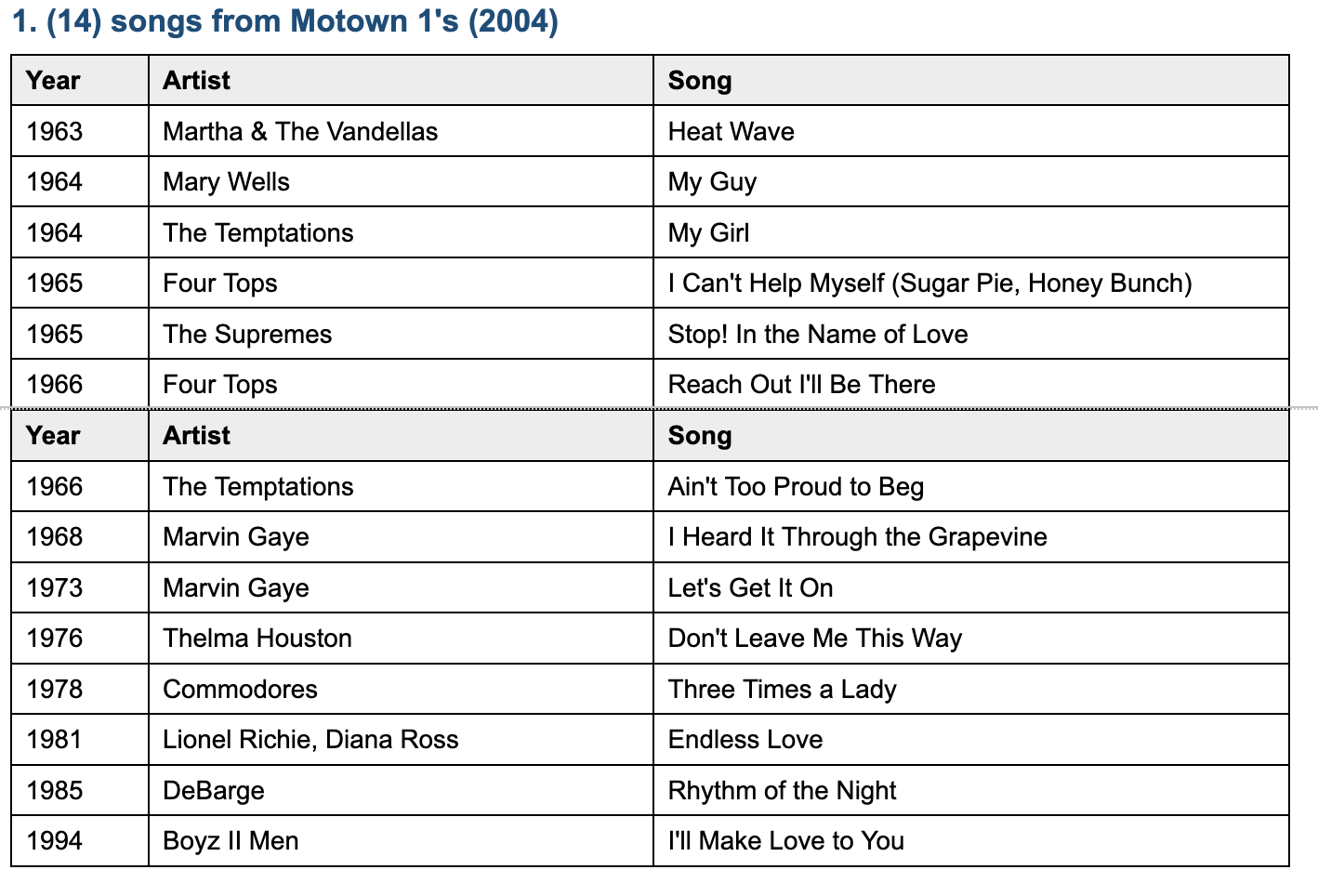
It feels obvious that compilations would dominate this list. A compilation is what you get when somebody goes back through a catalog and pulls out only the songs that survived. That is precisely the same system a wedding professional performs, just done by a label instead of a DJ. Motown 1’s wins this ranking because Motown already did the filtering. Fourteen of its twenty-five tracks still work in a room in 2026. No studio album in seven decades has come close to matching across a comparable span.
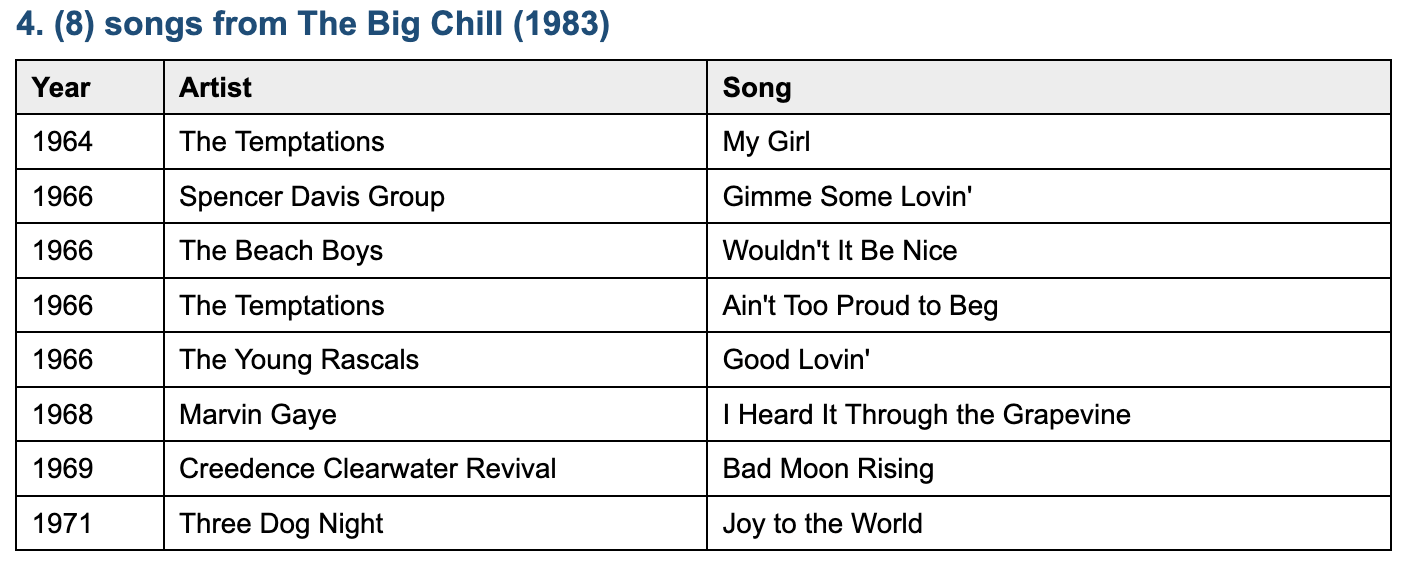
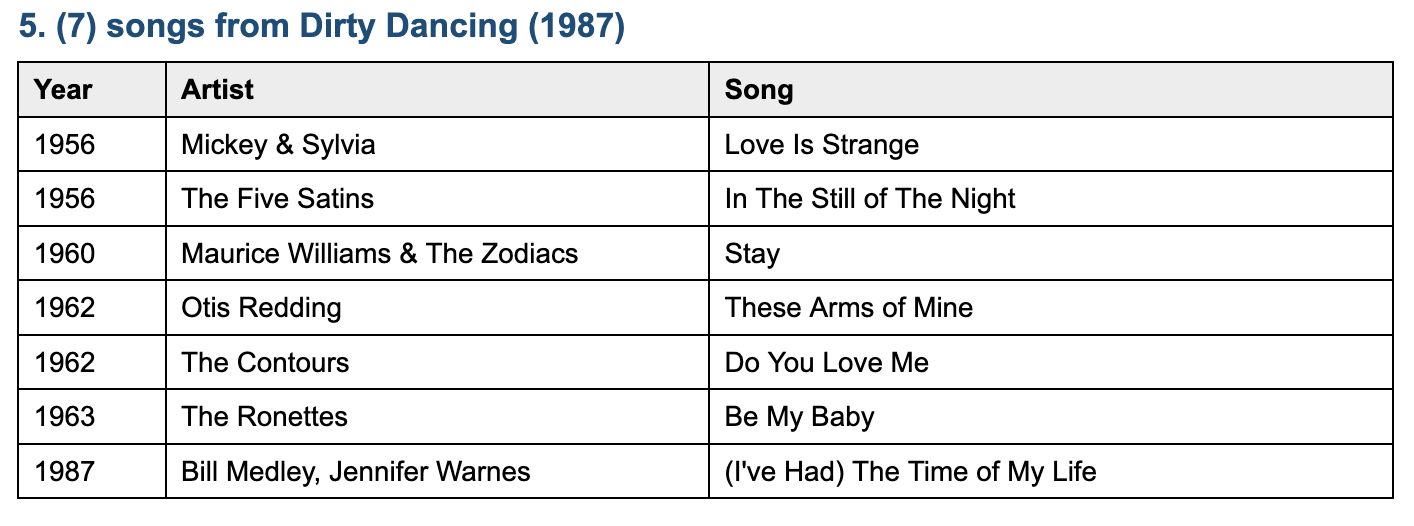
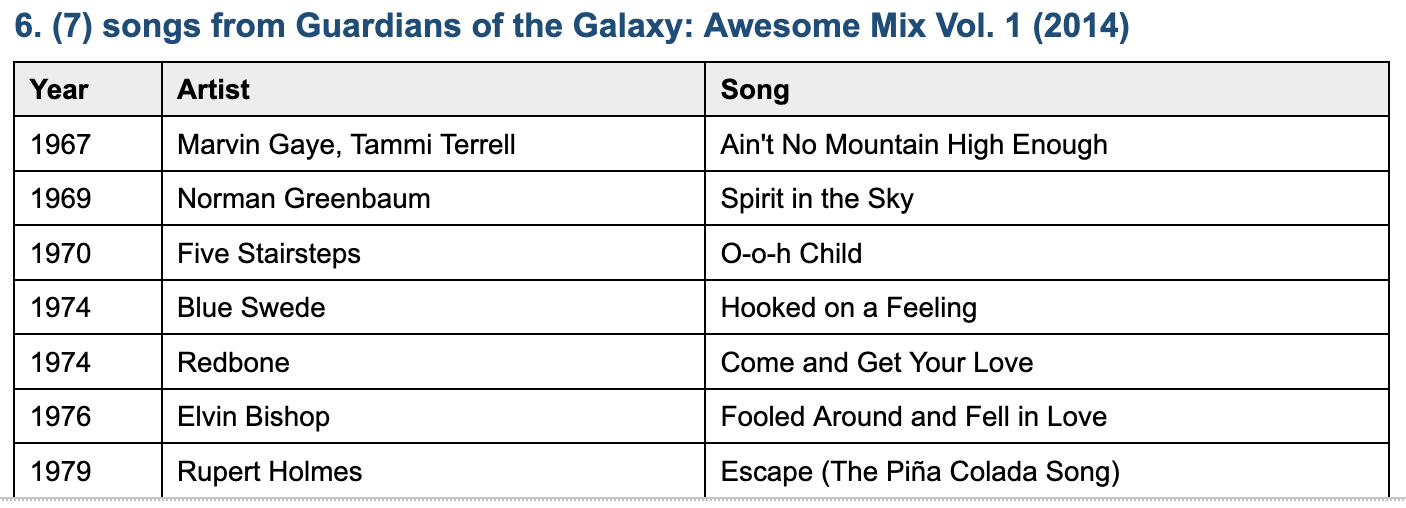
The soundtracks win for a similar reason. A music supervisor building The Big Chill or Dirty Dancing or Guardians of the Galaxy: Awesome Mix Vol. 1 is not curating for coherence or for an artist’s statement. They are curating for immediate emotional legibility in a room where the audience did not choose the music. That is effectively the wedding music job description. It should surprise nobody that The Big Chill converts at 62%, the highest rate on this entire list.
James Gunn built Guardians of the Galaxy: Awesome Mix Vol. 1 in 2014 out of songs from the 1970s. It’s a movie about a man who never let go of a cassette his mother made him. Seven of its twelve tracks are in the index. That is a better hit rate than Thriller.
The number that actually matters
Here is the statistic that reframed this whole exercise for me. Of the 1,333 artists in the index, 77% appear exactly once. In short, popular music does not survive on the dance floor in bodies of work. It survives in fragments. One song pulled from its parent album outlives the artist’s career, the genre, the format it was pressed on, and keeps working in a room where nobody remembers what album it came from. Nobody would recognize the second-best song on that album if you played it.
Which is why the honest answer to “what is the best wedding album” is that the question contains a bad assumption. The album is the wrong unit. It was the wrong unit in 1958 for most of this material, when the teenage market bought singles. The LP was where a hit got reprinted. It became the wrong unit again in 2005 when the single detached and floated free. The album era is a window into this data. It doesn’t capture the whole thing, though.
The chart-history version of this is that Billboard measured which songs sold in a given week. The album chart measured which collections sold. Neither one measured which songs kept working. It turns out those are radically different questions with radically different answers. 77% one-hit representation is what durability actually looks like.
What I would tell you to buy
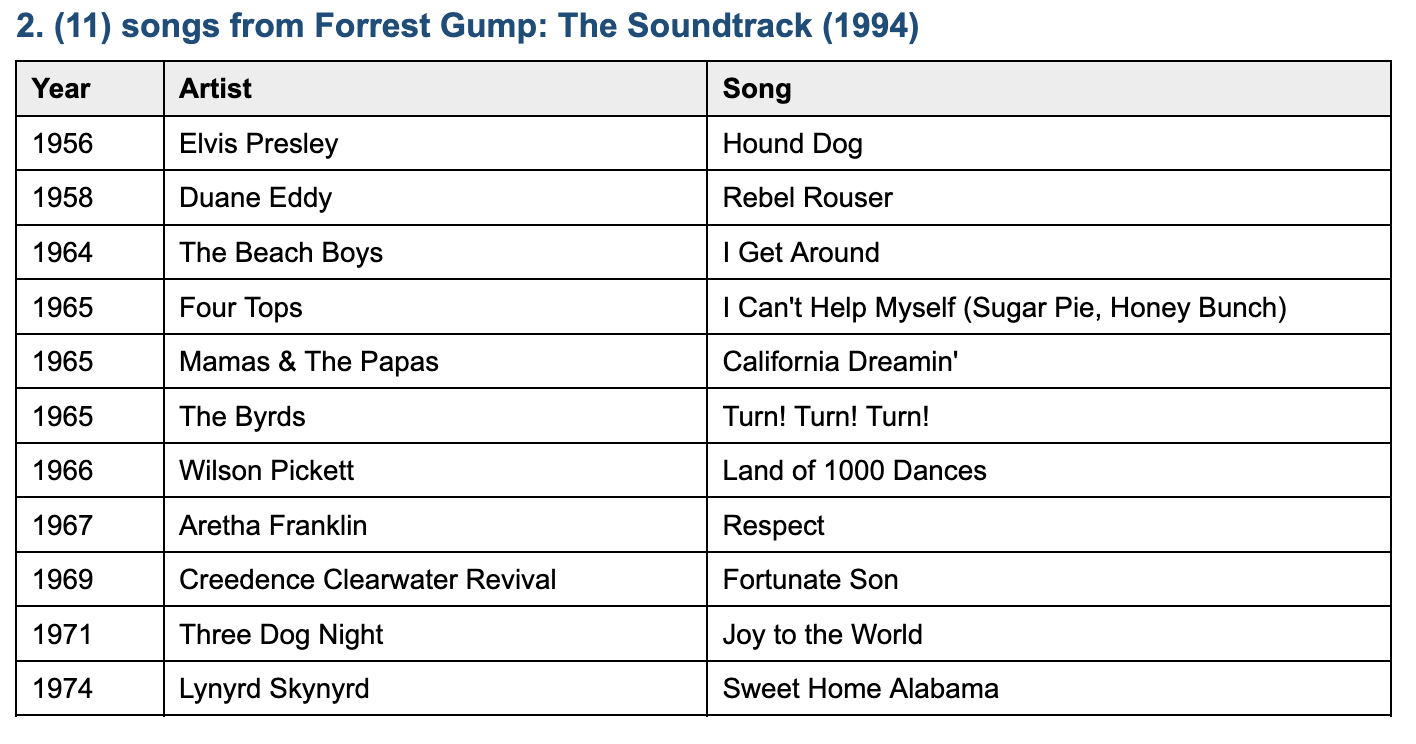
If you wanted to hand somebody one physical album and give them the highest concentration of functional wedding music per dollar, the answer is Motown 1’s, and it is not close. Fourteen songs spanning 1961 to 1994. Second place is a soundtrack to a movie that touched the hearts of many named Forrest. Ninth place is Thriller.
I have been doing this since 1993, and I would not have guessed that order. The data does not care what any of us would have guessed, which is generally the best argument for collecting it.
Final thought from a wedding DJ
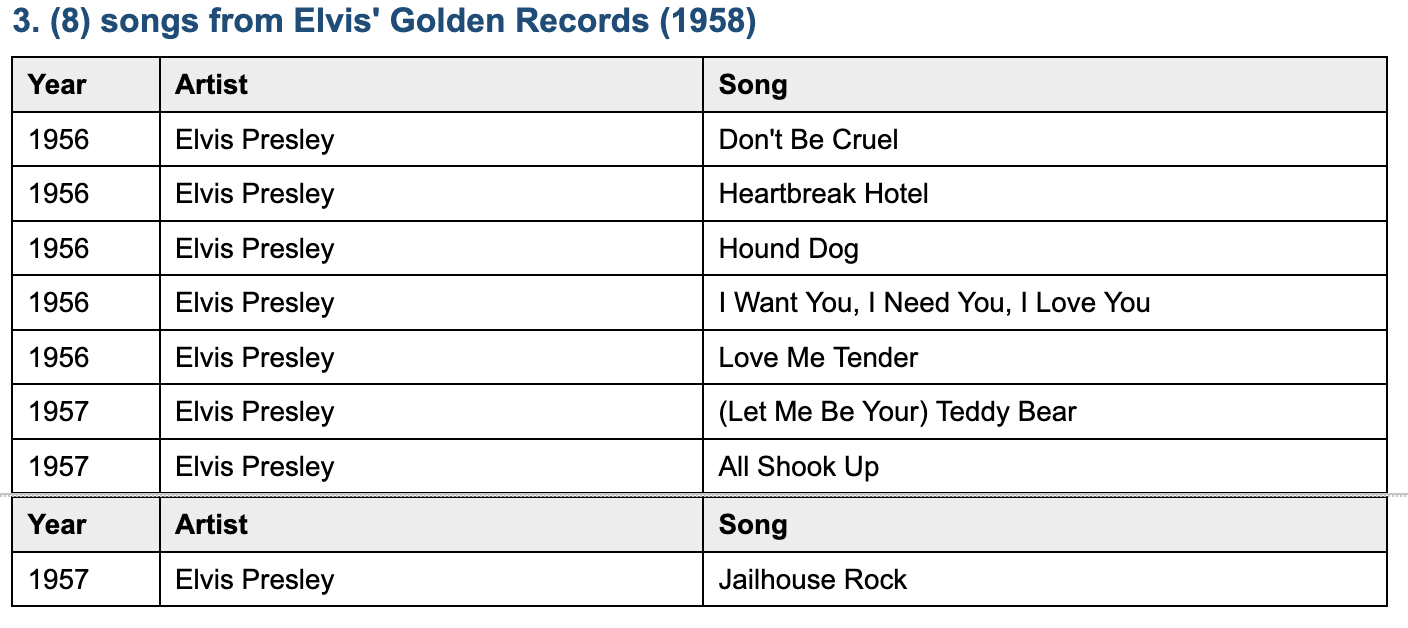
Just because a song is on the list or in the book doesn’t mean that it will work in every scenario. I see from the list that there are 8 songs by Elvis. I always say that the worst song you can play as a DJ is the one that no one knows. If the guests are a younger audience, “Teddy Bear” would never get played.
Matthew Campbell is the founder of Wedding Hit Records and the author of The Wedding Music Canon, a 360-page hand-curated index of 1,875 wedding songs across seven decades. The rankings above were computed from that index.

Chris, thanks.
Thanks Chris for having me. Loved writing the article.