


If you enjoy this newsletter, consider ordering a copy of my debut book, Uncharted Territory: What Numbers Tell Us about the Biggest Hit Songs and Ourselves. It’s a data-driven history of popular music covering 1958 to 2025.
I was surprised how much Michael Angelakos and I had in common. We were both born in New Jersey. We both went to college in Boston and spent time living in Cambridge. We both have been making music since we were kids. The big difference? As the front man of Passion Pit, Angelakos has sold millions of records and written smashes for other artists. It was a pleasure to talk to him about his musical influences, the corruption of the music industry, why he wants to shed parts of his past, and so much more. If you want to keep up with him, consider subscribing to his newsletter.
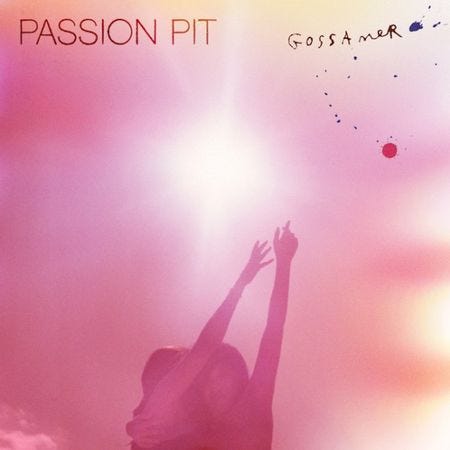
During my senior year of high school, my friends and I loved Gossamer. We were all supposed to take the train from north Jersey to Madison Square Garden to see you on tour in support of the record, but there was a crazy snowstorm, so our parents wouldn’t let us go. Instead, we went sledding and blasted the album through some speaker. This became a foundational memory for me and my friends. I’m sure you’ve heard countless stories like this over the years, but do you ever get used to your music touching so many people?
No. You never know how your songs will play out in other people’s lives. I’ve always thought that I make emotional music. It’s for sensitive people. It’s for people who feel a lot.I didn’t write the music for those people, but I’ve always exposed my guts to people.
When I hear stories like this from people, it sometimes makes me cry. I’ve had people tell me that my songs have saved their lives. So, my music attracts a certain type of person, but it also repels a certain type of person. If you are scared of sincerity, you will not like my stuff. Music has helped me in so many ways that it’s always meaningful when people tell me how impactful my songs have been on their lives.
Which artists do you think impacted you the most?
Probably Brian Wilson. He hit me at a very young age. He had an imagination and sensitivity that was unmatched. I tried to carry his torch into my music.
Did you ever cross paths with him?
I had the opportunity a few times, but I didn’t take it. It’s hard for me to see people who are really struggling mentally. There are many people that I know who would say that I reminded them of Brian Wilson. It would sort of freak me out, like I was seeing the ghost of Christmas future. I didn’t think I would be able to handle meeting him. Randy Newman, on the other hand, I’d love to meet.
Newman’s Good Old Boys is one of my favorite records of all-time.
He’s fantastic. I cry every time I see him. He’s one of those songwriters that can tap into characters like nobody else. It’s like he doesn’t know any other way to write. I’ve always been attracted to those people.
In preparation for this interview, I was listening to some of your music and was reminded what a great pop sensibility that you have. A song like “Carried Away” is as exquisite a pop record as you can make. Where did you learn that sensibility?
I grew up on the Great American Songbook. My dad also had fantastic taste. From a young age, I remember being inundated with melody. We also went to a Lutheran church where we sang beautiful hymns. And, honestly, those hymn-like melodies are very connected to The Beach Boys. There was a group that influenced Brian Wilson that sang stuff like that.
I believe they were called The Four Freshman.
Yes! I’ve always loved that older music. My parents exposed me to so much stuff, and it all shaped who I am. My parents were also very sweet people. They always supported me. I think the tenderness from my childhood really shaped my sensibilities. I think beauty and tenderness is what people really connect to in a pop record. So, that stuff just makes logical sense to me.
During the Gossamer sessions, I was deep into Cole Porter again. I also studied jazz. My teacher, who had worked with Pat Martino, had to come up with a new system to teach me jazz because I can’t read music or focus well. I had to learn things backwards. At the end of the day, it all comes by to melody. I’m a melodist. Lyrics come after that. I always felt like I was kind of neutered with Passion Pit because of the radio potential of my music. That’s not a bad thing, but I felt like it backed me into a certain position musically and lyrically.
The other day I saw you post, “I’m doing my best to persuade the internet that I’ve graduated from indietronica.” Before addressing what you meant by that, can you tell me how you became interested in that style of music?
Well, my real issue is that indietronica is not a thing. What the fuck is that? Nobody else was called “indietronica.” It made no sense. If you listened to us live when we came up, we sounded more like musical theater. We had the longest lead lines. Everything was played super seriously. I don’t know what about that was “indietronica.” It’s still on our Wikipedia page, which is honestly the worst Wikipedia page ever. It’s barely half correct.
Is your goal to get people to get people to understand that your sonic interests are much wider than whatever baggage “indietronica” carries?
That’s a good question. I never set out to explicitly clarify that. But my friends who have known me since high school and have heard all my stuff, usually tell me that my best music is the stuff that nobody has heard. The Passion Pit cycle of releasing a record and touring it just got boring. I think this new record I’m working on — and I know everyone says this — is the most honest record I’ve ever made. But most times when artists say that, they are working with a label. Nine times out of ten, if you are saying that, it is a lie. It just can’t happen on a label.
Labels are gatekeepers. Radio is gatekeepers. Distributors are gatekeepers. I’m obviously grateful that the brand name Passion Pit has generated millions of dollars and had millions poured into it. It’s been an interesting run. But I want to be able to express myself honestly. As Passion Pit went on, it became really fuzzy where I ended and where the project began. I was losing track of myself. I needed to break up with my former self.
Is that scary?
Yes because it’s probably not going to work out commercially. But I’m willing to bet on myself.
It doesn’t seem like you’ve completely rejected those earlier records, though.
No. If I had my druthers, I would probably rework those earlier albums. At the time, I had to work with other people to get those records released. And a lot of those people helped me make sense of that music at that time.
I don’t have some delusion of grandeur. I’m just happy to finally put out some stuff that doesn’t have the Passion Pit baggage attached. With Passion Pit everything felt like it needed to be smash hit. That’s a terrible way to operate. In fact, I think it often leads to the worst art you could possibly make.
Along with re-listening to many of your older records in preparation for this interview, I also revisited some early reviews. Here is what Pitchfork wrote about your first EP:
Defined as much by its lyrical prism and Angelakos' falsetto (more on that later) as its gooey textures, Chunk of Change walks the line between beat-driven, Hot Chip floor geeking and twee atmospherics. And while he gave his band the name of a 1980s skin flick, Angelakos' production mirrors the more cuddly bent that sparked the project: synths are Downy-soft, blankets of melodic skin that expand alongside their oversized choruses. More significantly, it suggests a certain level of un-self-conscious pop versatility. You can gyrate. You can navelgaze. You can shiver. You can cringe.
This passage gets at many things, but it got me thinking about your lyrics. Did you feel as constrained lyrically by the Passion Pit project as you did musically?
I think music and lyrics are often one in the same for me. When I go into a song, I don’t have a grand plan. I don’t know what I’m writing about. It takes months or years to understand what I’ve actually written. I almost always start with sonics and then extract my feelings from that.
I also kind of do that cope thing where I work through my problems in my music. That can be a very dangerous thing. Kindred, for example, was written during a very difficult period of my life. That record has ambition, but it’s also reserved, which means that I was scared about it. Because of that, I think lyrically it is one of my worst records. That’s when I felt the least free.
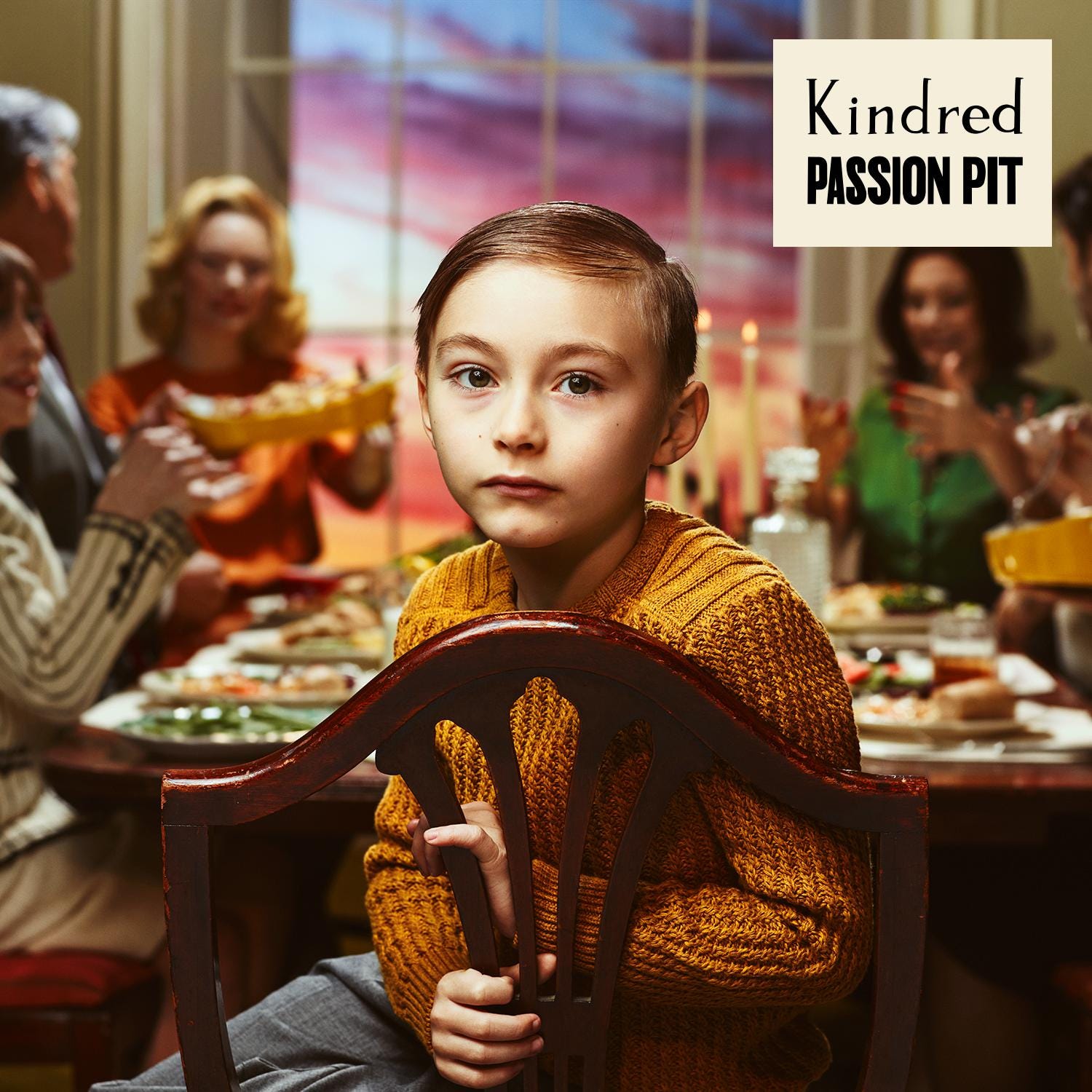
While you write most of your music alone, I noticed that Benny Blanco has some writing credits on Kindred. Was it a different experience working with an outsider?
I have my opinions about Benny. There are lots of different types of people in the music industry. There are producers that are good at business. Benny is one of those dudes that knows what works and knows how to finish songs. On the other hand, I don’t really work on a timetable. It pisses everyone off.
I enjoyed working with Benny on the Ryn Weaver album The Fool. I really enjoyed that. Kindred was a different experience. Most of the record was done. He came in to do some drums and finish it off. I actually fought him on getting a writing credit. That’s part of his thing. He always gets a writing credit. But I was like I’m not giving you 50% of the publishing on this record. I think I’m one of the only artists to ever push back. I think I got him down to 20%.
I’ve gotten to meet a lot of cool people working in sessions. I worked with Charli XCX. That was fun. But you talk to a lot of these really successful songwriters, and they’re all miserable. They’re trying to get paid. They’re looking for the next artist or trend. Every time someone tells me to come to LA to write, I’m like, “Why? You’re all miserable.”
In that Pitchfork review, they also mentioned your falsetto, which I’ve always loved. How did you learn your falsetto? What singers inspired you?
I mean there are lots of bands that have beautiful falsetto singing. Of course, The Beach Boys come to mind, but even something like “Teenage Dirtbag” by Wheetus. I guess by the time my voice started to change, I was really listening to Jeff Buckley. He brought me right to Nina Simone. She sings in a lower range for women, but she had a huge impact on how I sing.
I do remember when I first started recording on my computer, I had no idea what I was doing. I had bought this little Ableton controller and RadioShack mic. I didn’t know about EQing or compression. And I realized that when I sang in my falsetto, it really cut through. So, it was part of my lack of technological experience that led to that. But then I used that voice at one of our first shows and people started screaming along. It is just effective emotionally.
I remember when “Take a Walk” came out, I was surprised that you were using your chest voice more.
I was actually really nervous about that. I never liked my mid-range voice. Now, everybody tells me that they love that song. I do remember one old review where a critic said, “All helium, all the time.” That’s one of those lines that is seared in my memory. I know a lot of critics were tough on me at certain points, but I think they had me pegged right. I agree with a lot of that old criticism now.
When you first came up, music was defined by indie blogs and MySpace. Now, the music industry is a different beast. Artist development isn’t really a thing. You need to come with an audience to get a deal. Do you think labels have a use at this point?
I see almost no pros to being signed to a label and participating in the music industry. Even back when I got signed, I remember my parents telling me that people were trying to take advantage of me. I’m a sensitive guy, and you have all these people just telling you how great you are all the time. Everyone loves to hear that! But they usually don’t have your best interests in mind.
Things went so fast for us. Like the Vampire Weekend guys worked harder than we did. For us, it was literally overnight. Basically, the lights came on, and we were half-dressed. Honestly, if you did the things that the music industry does in any other industry, you would be in jail. You push artists to the brink physically and mentally without providing them with any healthcare, and then they take at least 40% of your income. Even the indies are only doing 50:50 splits. People get mad at me for saying stuff like this, but I would rather go broke than be dishonest. And I did go broke.
I feel like sometimes I learn something about how record contracts work, and it sounds so egregiously bad that it can’t be true. It almost always is.
It’s hilariously bad. It would be cheaper to get an SBA loan and work with a distributor, but then you won’t get radio play or added to the right playlists. It’s a mob-based business. Basically, we’re all selling our IP to companies that will use it to train LLMs to make music without having to deal with artists.
And I’m saying all this having had a pretty good deal. I think I got the same terms as Adele on my original deal. I had full creative control. I don’t think the label heard Gossamer until the end of mixing.
Also, to go back to something you said a minute ago, you went broke?
Yes. I had to sell my catalog to Primary Wave in 2021. When we did that, we found out that Sony had made hundreds of millions of dollars on my music, and I never saw any of it. But you only have a three year window to audit them. But usually by the time you have the money to do the audit, the window has closed.
How exactly did you go broke?
I had several catastrophic things hit at the same time, none of which had to do with my mental health. I basically had to sell my publishing to pay taxes. I do like working with Primary Wave. I don’t have much attachment to that music, but I do still have 25% retention. I also still have creative control. Plus, I was able to carve out some projects.
You’ve been doing a ton of cool stuff with your newsletter on Substack. Can you tell me a bit about that?
I’m trying to experiment with new ways to interact with my fans. It’s a challenge. I don’t like how other platforms work. Like I’m not going to be posting on TikTok. But I’ve got a lot to say. I like to perform. I can make that work on Substack. I can livestream. I can give my fans access to stuff. It gives me a good way to start over.
Could you also tell me about these short residencies you’ve been doing?
My live show hadn’t changed in ages, so I wanted to try something different. It was weird at first. I set the bar low. It was hard for people to understand at first, but they got it by the end. It’s been so much fun. I have no idea what’s going to happen on any night. But we’re recording it all live. It sounds insane.
To finish up here, what should people expect from you throughout the rest of the year?
I am slammed. I tell everybody, if I’m not working, then you should worry about me. I’m begging to work. I want to play more small pop-up shows, hopefully at least four times a week. I want to push myself.
I’ve also got a ton of music coming out. I actually think we are going to put out a total of 99 songs, not including bonus tracks. I really love the idea of getting live feedback from my audience and building something in real time. I’m really excited. You would think you’d be done growing by 38, but this is the first time I can say with any authority that I am growing. It feels really special.
Want more from Michael Angelakos? Subscribe to his newsletter on Substack to keep up with new music and upcoming shows.
Want more from Chris Dalla Riva? Pre-order his debut book, Uncharted Territory: What Numbers Tell Us about the Biggest Hit Songs and Ourselves.
i love MA with all of my heart and know conversations with him are FULL to say the least, so I know how hard it must have been to distill this interview down to the best bits ;) gave up and just pressed publish on our video like the lazy unprofessional hack that I am. great work.
So good man