


A few years ago, I learned that John Denver was very popular in China. I was kind of surprised by this. Of course, John Denver is well known in many places. But why would the “Rocky Mountain High” singer find more success than other artists that have sold millions of more records?
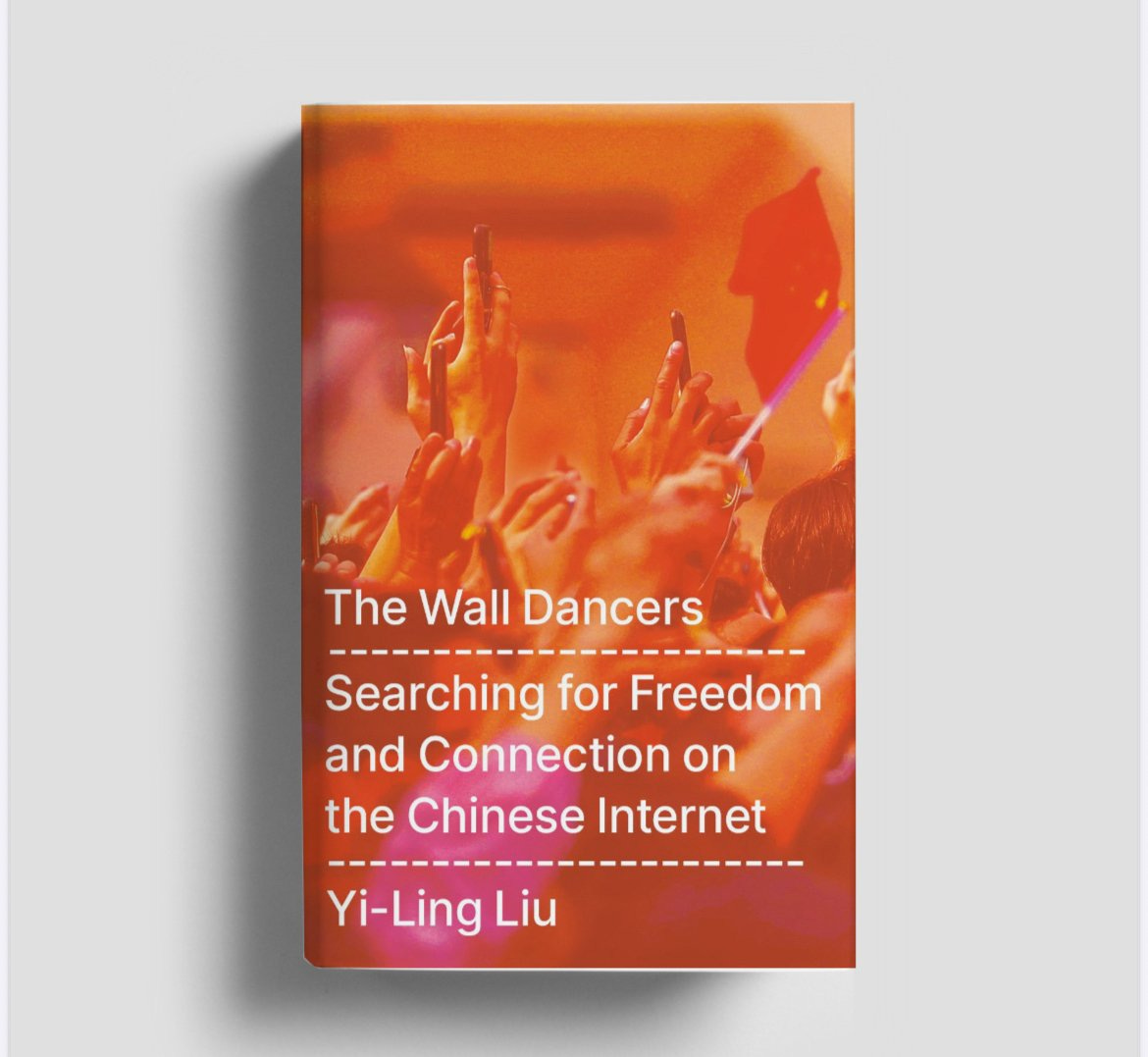
During a conversation, Yi-Ling Liu enlightened me on Denver’s popularity in China. But that was only a small piece of the conversation. Lu just wrote the book The Wall Dancers: Searching for Freedom and Connection on the Chinese Internet where she investigates how the internet in China has reshaped culture and society. Over an hour, we talked about how Chinese rappers navigate censorship, why very few Chinese artists crossover in the west, how Chinese and American culture will interact in the coming decades, and (of course) why John Denver found such a huge audience in the country. If you enjoy our conversation, grab a copy of her latest book.
At the beginning of your book, you write, “Outsiders have reduced China to simplistic narratives at opposite extremes. China is at once an unstoppable economic juggernaut of boundless opportunity and an omnipotent techno authoritarian regime of repression.” How do you think these dual perspectives manage to exist at the same time, especially in Western media?
I guess the biggest issue with that kind of lens of looking at China is just they’re kind of reductive, right? You see videos of dancing humanoids and high- speed rail in China. At the same time, you hear about the extreme COVID controls and human rights violations.
When people focus on one side of this, it strips away all of the complexity and contradictions. I feel that China often ends up being a mirror, especially for American readership. We project our own fears, envy, and aspirations onto whatever they are doing.
The title of your book, The Wall Dancers, alludes to the fact that people inside and outside of China dance between these two perspectives. You write, “To live in China is to participate in a dance, a dynamic push and pull between state and society censor and censored Tango to an erratic rhythm of supervision and acquiescence. Artist acts as both critics and collaborators of the state.” How do artists act as critics and collaborators of the state?
In my book, I focus on hip-hop in China, but it really affects every genre. Artists change their behavior based on how closely the state is watching and what they think they can get away with. They can make one song that is critical of something the state is doing and then try to make money based on some new directive.
A good example of this is the rapper GAI. In 2017, he won this hip-hop television competition called The Rap of China. It’s kind of like American Idol. Before he was on that show, he was making controversial music. This one song “Gangster” comes to mind. In the video, he is shirtless, waving knives around, rapping about “thug life.”
After the government implemented a hip-hop ban in 2018 and slapped him on the wrist, he started making songs about the Great Wall of China and China’s 5,000-year history. He also started wearing traditional Chinese garb and talking about how great it was to be Chinese. That’s a really extreme example of someone playing both sides.
How did his fans feel about that?
They had mixed feelings. Many said he sold out, but I’m sure he picked up a bunch of new fans in the process. The state can really amplify certain voices that are closely aligned with their patriotic vision.
When you said that GAI got a “slap on the wrist” when hip-hop was banned in 2018, what did you mean by that?
All of his music was taken off of every major Chinese streaming feed, so you just couldn’t access their music anymore. Then state media, like Global Times or People’s Daily, will just say stuff to the effect of “This artist sucks” or “This artist doesn’t adhere to core socialist values.”
Throughout the book, you discuss the idea of the “firewall” extensively. The firewall is a state-sponsored project to censor the internet. Part of the “dance” you describe in the book is how people get past the firewall. If someone went outside the firewall, could they access, say, GAI’s older music?
It depends on the music. If it were older music that is not Chinese, certainly. You just need a VPN, and you can find it on the normal world wide web. Older Chinese music is much harder to find. If someone didn’t save it to the Internet Archive or a non-Chinese site, you probably can’t find it.

So, things can truly disappear?
Yes. Some very famous songs have disappeared. There was a popular band in 2008 called In3. They had a whole slew of tracks that were very popular and critical of the government. One of those songs, “Beijing Evening News,” was so popular that you can get it on YouTube. So, you can still listen to that as long as you get past the firewall. More niche music could simply disappear.
How common is it for people in China to hop on a VPN and get past the firewall? Is it an open secret?
It’s not a secret at all. You just need to download a VPN. Many domestic companies and even state-owned companies need VPNs. The state knows that in order for China to innovate, people need to be able to get to the normal web in some way.
Still, VPN usage is not high. There’s no clear estimate, but I think in 2010 a paper out of the Harvard Berkman Klein Center estimated that like 3% of people in China had used a VPN. So, VPNs aren’t really hard to access or expensive or illegal. They are just inconvenient. When people feel like they have access to everything within the firewall, there is no reason to go elsewhere.
I’ll often talk to people who got a VPN in 2010 to use Instagram. But then a year passed, and they stopped using it. None of their friends were on Instagram. So, they went back to the social media services within the firewall.
How often do you think Western culture interacts with Chinese culture? And are those interactions becoming more or less common?
Crossover has existed since the 1980s. Once Deng Xiaoping introduced a market economy and opened the doors to the west, Western culture came flooding in. This was a huge moment for Chinese listeners. If you were a young Chinese person who grew up in the 1960s or 1970s, all you had to listen to was Soviet music and patriotic party hymns. Then overnight you got decades and decades of music at once.
John Denver became huge in China. Chinese people who are in their 40s or 50s will know the lyrics to all of John Denver’s big hits. It honestly must have been crazy for those people.
I’ve always been fascinated by John Denver’s popularity in China. I mean he was big in the US, but why did he have so much crossover success?