


Today’s newsletter is another mailbag edition of Can’t Get Much Higher, or the newsletter where I answer reader questions. We’ve got a bunch of juicy questions this time:
Was the Michael Jackson biopic any good?
Who are the greatest living American songwriters?
What’s the deal with hideous horns in the 1970s?
Has the time between artists putting out albums shrunk?
Who are some artists that completely changed their sound while remaining poopular?
If you enjoy this newsletter, consider ordering a copy of my debut book, Uncharted Territory: What Numbers Tell Us about the Biggest Hit Songs and Ourselves. It’s a data-driven history of popular music covering 1958 to 2025.
Did you see the Michael Jackson biopic? If so, what did you think of it? - Marshall
I did see it. If you’re looking to spend two hours listening to some of the most famous songs of the 20th century, you’re in for a treat. If you want a deep look at a talented, troubled, strange, and (possibly) criminal entertainer, then you should save your money.
Why is that NY Times “30 Greatest Living American Songwriters” list so bad and why can’t they get better people to do these lists? Technically that’s two questions, sorry. - Bob
In case you missed it, The New York Times released a list of the 30 greatest living American songwriters. Like all musical rankings, this set off a firestorm of complaints online. I actually think that’s a good thing. Anything to get people talking about the craft of songwriting is good with me. Here’s the list in case you missed it:
Nile Rodgers. Lucinda Williams. Stevie Wonder. Jay-Z. Paul Simon. Taylor Swift. Brian & Eddie Holland. Missy Elliot. Lionel Richie. Dolly Parton. Young Thug. Diane Warren. Joshua Osborne, Brandy Clark, and Shane McAnally. Fiona Apple. Babyface. Stephen Merritt. Romeo Santos. Carole King. Outkast. Mariah Carey. Willie Nelson. Kendrick Lamar. Valerie Simpson. Bob Dylan. Lana Del Ray. The-Dream. Jimmy Jam & Terry Lewis. Bad Bunny. Bruce Springsteen. Smokey Robinson.
So, what’s the problem with lists like these? First, 30 songwriters is a short list and necessitates leaving someone off. Second, the methodology is opaque. The Times started by surveying hundreds of “critics, historians, industry executives, D.J.s, music supervisors, [and] choreographers,” but ultimately relied on their critics to winnow down the list.
We don’t know exactly how they went about this winnowing. Why, for example, are country songwriters Joshua Osborne, Brandy Clark, and Shane McAnally grouped together? They sometimes write together but aren’t a team in the same way that, say, Burt Bacharach and Hal David were. Their inclusion as a three-headed Nashville beast is likely to represent the contemporary country scene.
Additionally, why is Outkast thrown in among a list mostly focused on solo artists and career songwriters? I know they are a duo, but were musical groups in serious consideration? If so, where are groups like Aerosmith and R.E.M.? It’s unclear.
For those reasons, these lists are often doomed from the outset. But now let’s talk about the list more specifically. Before you start asking where Brian Wilson and Joni Mitchell are, remember that this list had rules. You had to be a living American songwriter. Brian Wilson is dead. Joni Mitchell, despite honing her craft in America, is Canadian.
Even so, questions still loom. Does it really make sense to count Valerie Simpson when she wrote her greatest work with her deceased husband Nickolas Ashford? Same goes for honoring brothers Brian and Eddie Holland despite the third piece of the Holland-Dozier-Holland triumvirate having passed to the next life. I don’t think this makes sense. The New York Times does.
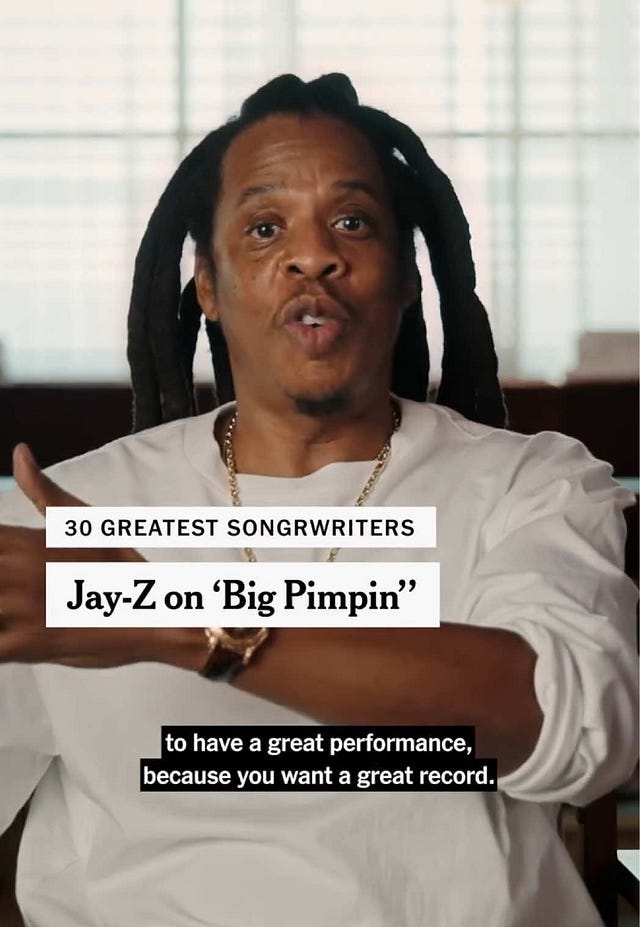
Additionally, is what Paul Simon does really the same as what Jay-Z does? Are rapping and beatmaking the same as sitting with a guitar and setting lyrics to music? In Jay-Z’s case, I think so. This becomes especially clear when you listen to him talk about his creative process.
 Tiktok failed to load.
Enable 3rd party cookies or use another browser
Young Thug, on the other hand, doesn’t make as much sense to me. Young Thug undoubtedly reshaped how the voice is used in hip-hop. But I think his contributions are more related to production and performance than actual song craft.
All of these rules and regulations still leave us with the same question: Who are the greatest living American songwriters?