


Chris here. Between my wedding, honeymoon, and all related matters, I will be pretty busy throughout this month. Because of that, some friends have volunteered to take over this newsletter while I’m away. Today’s piece comes from AJDeiboldt, the musician and writer behind The High Notes.
This piece tells the oft-misreported tale of the development of the concept album, or an album focused around a particular story or theme. Given that at the end of this piece, Deiboldt asks for people to submit their favorite concept records, I’ll submit an obscure one originally recommended to me by Will Friedwald: Manhattan Transfer by Gordon Jenkins. That goes back to 1946, further in the past than you probably thought the concept album went. But I’ll let AJ Deiboldt tell you the full story.
Who Really Invented The Concept Album?
By AJ Deiboldt
When The Beatles released Sgt. Pepper’s Lonely Hearts Club Band on May 26, 1967, it was almost immediately hailed as an artistic watermark for popular culture. Seen as a soundtrack to the hippie movement, it was an advocation of psychedelia and the culture surrounding it. It was also a means to bridge older fans and new as well as the first shot in rock music being taken seriously as an art form. It was the first album to have printed lyrics, and its cover photo was innovative in many ways.
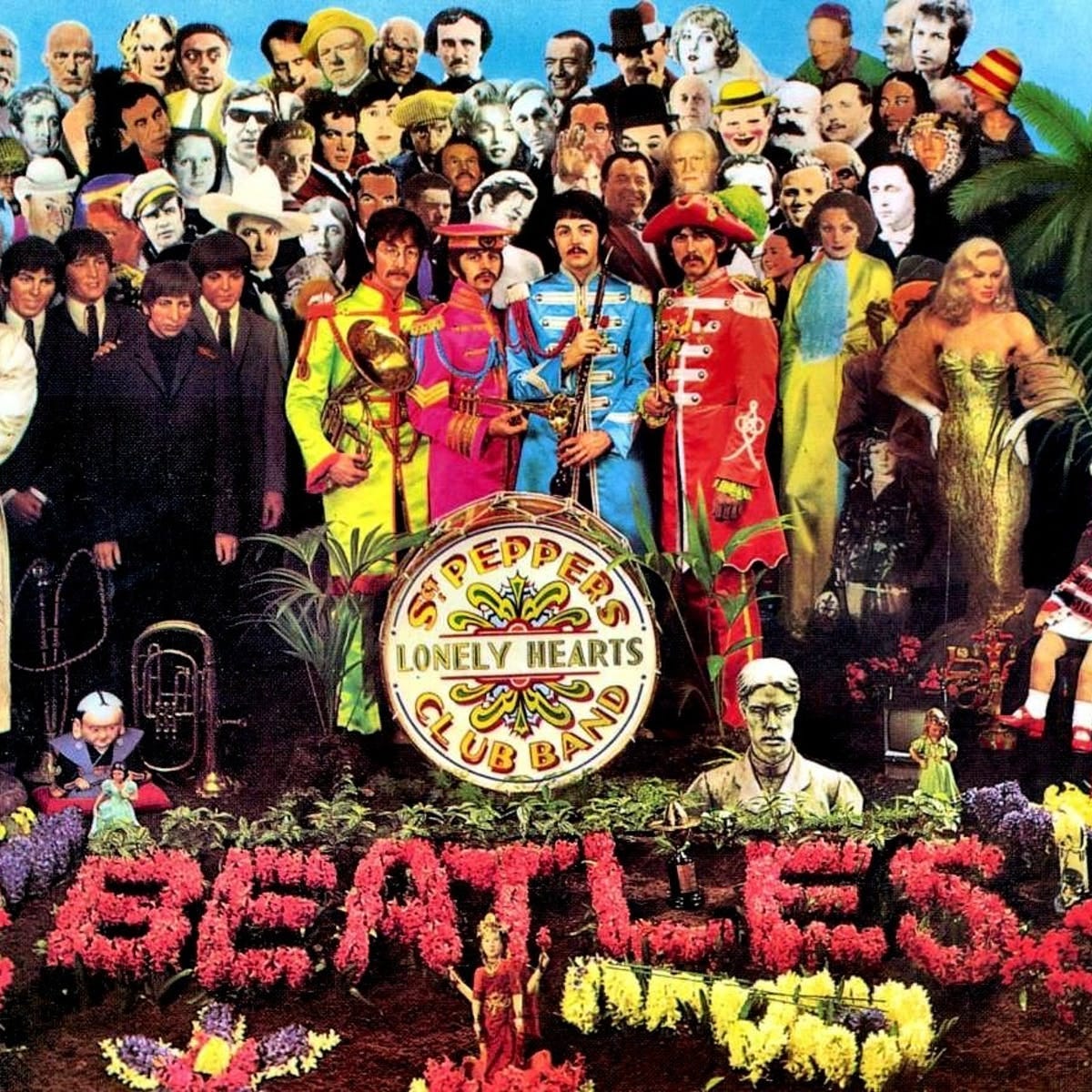
But the other thing Sgt. Pepper’s gets credit for is for allegedly being the first “concept album.” For those uninitiated, a concept album is a record where all the songs tell an overarching story or consciously relate to a particular theme. When rock critics, fans, and scholars talk about concept albums, Sgt. Pepper’s Lonely Hearts Club Band is often one of the first albums mentioned. But what’s interesting about this is that while The Beatles had talked about the possibility of it being a concept album, depending on who you ask, it either is or it isn’t. According to producer George Martin:
“Sergeant Pepper” itself didn’t appear until halfway through making the album. It was Paul’s song, just an ordinary rock number ... but when we had finished it, Paul said, “Why don’t we make the album as though the Pepper band really existed, as though Sergeant Pepper was making the record? We’ll dub in effects and things.” I loved the idea, and from that moment on it was as though Pepper had a life of its own.”
John Lennon however had a different take:
Sgt. Pepper is called the first concept album, but it doesn’t go anywhere. All my contributions to the album have nothing to do with this idea of Sgt. Pepper and his band; but it works cause we said it worked … But it was not as put together as it sounds, except for "Sgt. Pepper introducing Billy Shears and the so-called reprise. Every other song could have been on any other album.
Regardless of whether Sgt. Pepper is a concept album or not, it couldn’t have been the first because there were previously released concept albums that McCartney used as inspiration when he first conceived of the idea of a fictional band playing a show. Among them were Frank Zappa’s Freak Out! (1966) and Frank Sinatra’s Songs For Swinging Lovers! (1956.)
Ol’ Blue Eyes & His Concept Albums
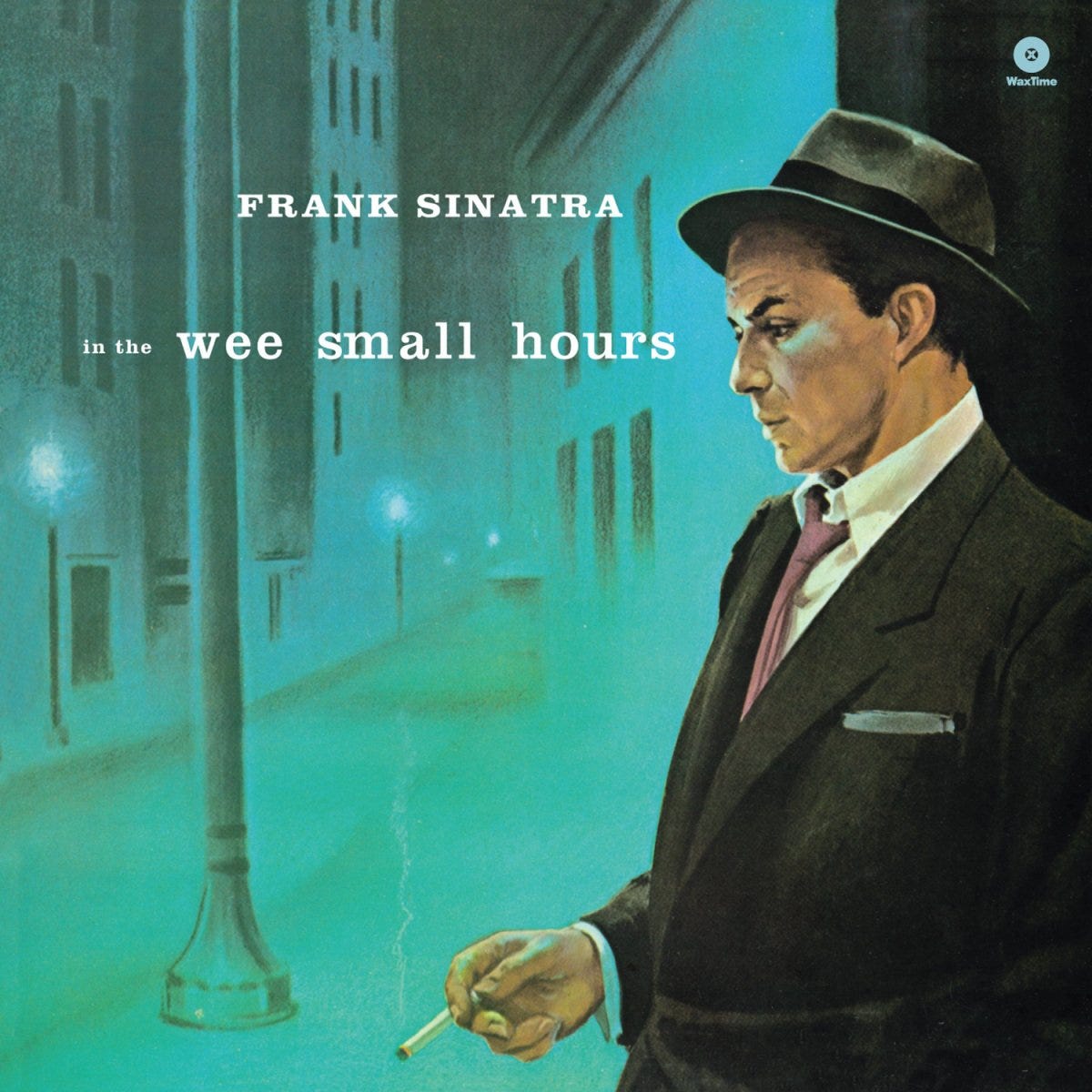
When I started this piece, I’d intended to show that while the Beatles are the ones who get credited with inventing the concept album, the actual inventor was an unlikely one: Frank Sinatra. His excellent concept record In The Wee Small Hours from 1955 is the lovelorn flip side to his previous Songs For Swinging Lovers! with a moody cover painting to match.
Sinatra had a knack for creating thematic moods with his song choices and vocal performances, ones that often reflected the circumstances of his life, and these would be only two of several concept records Sinatra would release throughout his life.
But as much as I love the idea of something that helped shape rock n roll into a serious art form being invented by an artist that rock helped push to the cultural margins, in this case, even Sinatra himself was beaten to the punch by another contender in 1940.
Woody Guthrie and the Dust Bowl
Enter the OG working class hero Woody Guthrie. Influenced by things he’d seen growing up in Oklahoma, as well as John Steinbeck’s seminal The Grapes Of Wrath, Dust Bowl Ballads remains Guthrie’s most popular record. On it, Guthrie alternates between delivering almost news report style accounts of the events of the Great Depression-era conditions in the American Midwest and telling tales from the perspectives of the people who were victims of the Dust Bowl heading West for a better life.
What many of the characters on the album find, much like their real life counterparts, is that even after a hellish journey from the Dust Bowl back east, money, cultural differences, and health issues would still make their lives difficult even in the “promised land” that was California. It’s a heart wrenching listen from beginning to end, in part because Guthrie isn’t making it up. Even the somewhat comedic moments like “Talkin’ Dust Bowl Blues” and “Dust Pneumonia Blues” still have a dark undercurrent to them.
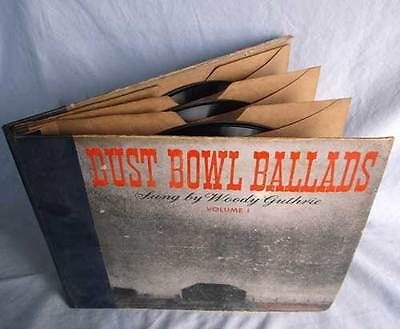
Originally released on RCA Victor Records in July of 1940, Dust Bowl Ballads was issued as two three-record sets of 78 rpm discs that contained a single song on each side. The exception to this was “Tom Joad,” which was too long to fit on a single side in its entirety and as such was broken up into two separate parts. As you can see from the picture above, this type of package is where the term “album” comes from.
Eventually it went out of print leaving Guthrie to unsuccessfully petition the label to reissue it as an LP. Upon their refusal, Guthrie permitted Folkways Records to reissue it as an 8 song LP with an altered track listing that was split into two parts, furthering the concept of the record: “Dust Bowl Ballads” and “Migrant Worker’s Songs.” Folkways decided to reissue the album again in 1964, a move which evoked a protest from the record’s original label, RCA Victor. The label eventually backed off after Guthrie gave Folkways his blessing to do the reissue.
Different from their previous offering, this reissue would recreate the original track sequence while combining “Tom Joad” into a single number. A final reissue in 2000 from Buddha Records would reshuffle the track sequence again and add a previously unissued take of “Talking Dust Bowl Blues.” I created a playlist that recreates the original track sequence from the RCA and 1964 Folkways releases while adding in songs that weren’t included on the original.
Non-Concept Record Concept Music
Even though Woody Guthrie made the first ever concept album, there were musicians thinking along those lines before him. The only problem was that technology wasn’t advanced enough in their time to be able to make albums out of their works. One of my personal favorites is Hector Berlioz’s Symphonie Fantastique, which follows a lovesick young man’s dream-become-a-nightmare following a non-fatal opium overdose.
After attempting unsuccessfully to poison himself due his feelings of love being unrequited, he dreams of meeting his love interest at a ball, jealously murdering her, being executed for his crime, and subsequently being condemned to Hell. It’s an example of what’s called “programmatic music,” or music that tells a story.
There’s also Richard Wagner’s The Ring Of Niebelung, which sees Wagner’s epic tale unfolding over the course of four separate operas that ideally would be performed over the course of multiple days. The entirety of this epic work took Wagner 26 years to write.
Lighter but no less compelling examples of concept music include Prokofiev’s Peter & The Wolf, Richard Strauss’ Don Quixote, and Gustav Holst’s ‘The Planets.’
Epilogue
So there you have it! I was always curious about where the concept album came from, who originated it, and when, so if you’ve gotten this far, thanks for taking this epic journey with me. But do me a favor and let me know what your favorite concept albums!
Want more stories like this? Subscribe to The High Times, the wonderful newsletter from musician and writer AJDeiboldt.
Want more from Chris Dalla Riva? Get a copy of his debut book, Uncharted Territory: What Numbers Tell Us about the Biggest Hit Songs and Ourselves.

Thank you Chris for letting me do this, I much appreciate it!
I would put in a vote from some of Willie Nelson’s 1970’s albums like “Red Headed Stranger”, and my favorite “Phases and Stages”.