


7 years. That’s how long it took me to listen to ever number one hit song in history, turn the listening journey into a book, and find someone to publish it. It’s due out in two weeks under the title Uncharted Territory: What Numbers Tell Us about the Biggest Hit Songs and Ourselves. (Reminder if you send me proof of purchase before the release date, you get 6 months of a free premium membership to this newsletter!)
As you’d imagine, when you spend that many years listening to and writing about popular songs, you pick up a few things. I packed much of that knowledge into my book, but other information just didn’t fit. So, here are 101 things that I learned while listening to every number one hit in history. Enjoy!
101 Things I Learned Listening to Every Number One Hit: Part 1
By Chris Dalla Riva
Though your average number one hit spends about 3 weeks in the top slot, 36% only get a single week of glory.
One of the 64% of number ones that lasted more than one week was “Come Softly to Me” by The Fleetwoods. It was also the first song to blow my mind on my listening journey.
On the topic of mind-blowing music, The Beatles are indeed worth the hype.
The Beatles are usually credited with starting the British Invasion. And, sure, that is true, but two British acts actually got to number one in the US before them: Mr. Acker Bilk and The Tornadoes. The former’s “Stranger on the Shore” and the latter’s “Telstar” were both instrumentals.
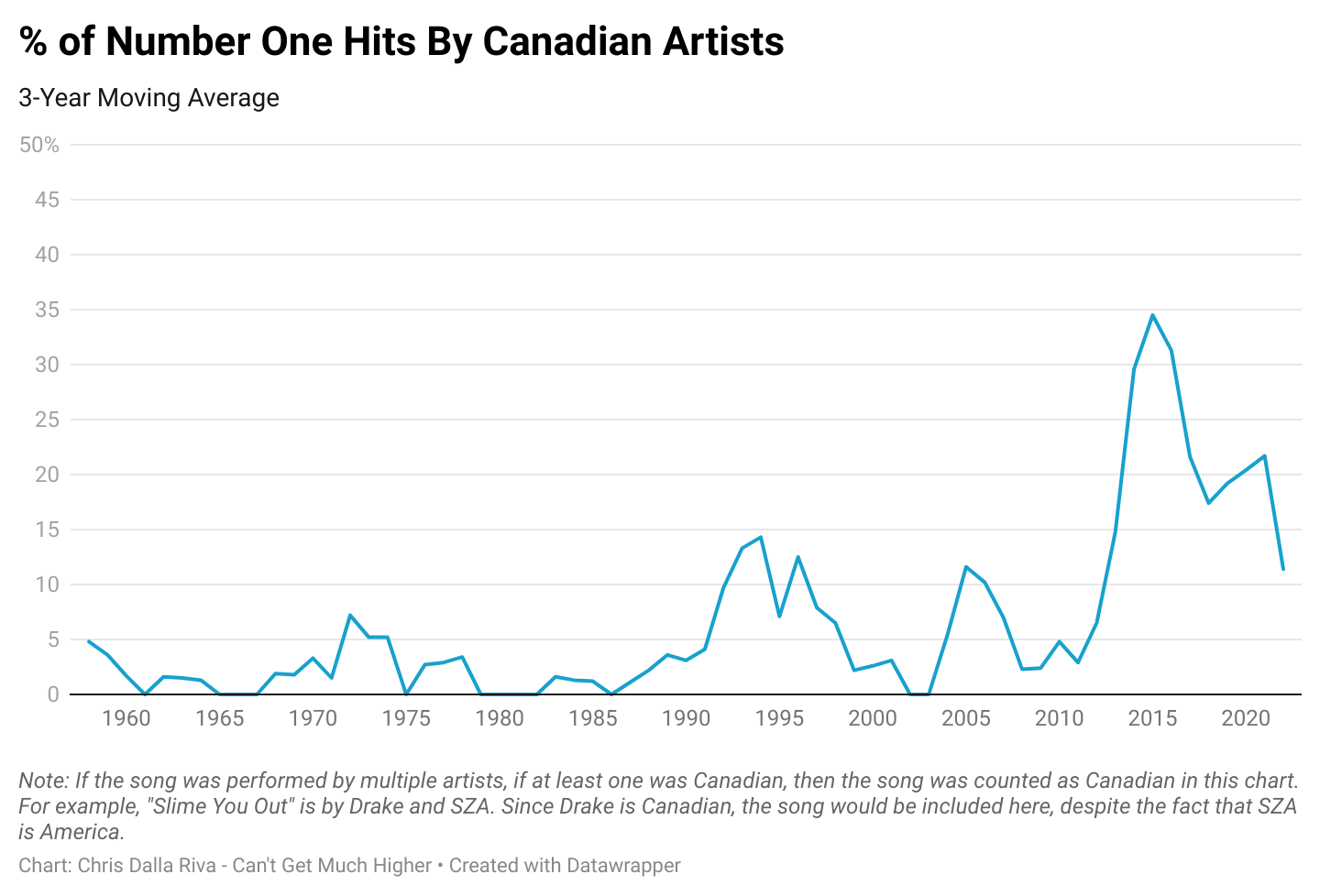
Lots of people talk about the British Invasion in the 1960s. Fewer people talk about the second invasion in the 1980s (see Chapter 7 of my book). But nobody talks about the Canadian Invasion of the 2010s. Drake. The Weekend. Justin Bieber. Carly Rae Jepsen. Shawn Mendes. Even that horrible one-hit wonder Magic!
Speaking of birthplaces, artists from 27 countries outside of the US, UK, and Canada have topped the charts. But what most fascinates me is that in the 20 years after WWII, music by artists hailing from each of the Axis Powers got to number one in America: Germany (“Wonderland by Night” by Bert Kaempfert), Italy (“Volare” by Domenico Modugno), and Japan (“Sukiyaki” by Kyu Sakamoto). Make music. Not war.
Mark Ronson, the producer behind such number ones as “Uptown Funk” and “Shallow,” is the stepson of Foreigner guitarist Mick Jones. Jones wrote one number one hit, Foreigner’s “I Want to Know What Love Is.”
Though Ronson and Jones don’t share any DNA, some number one hitmakers do. Ricky Nelson (i.e., “Poor Little Fool”) and his twin sons (i.e., “(Can’t Live Without Your) Love and Affection”) both topped the charts. So did Pat Boone (i.e., “Moody River”) and his daughter, Debby (i.e., “You Light Up My Life”), along with Brian Wilson (i.e., “Help Me, Rhonda”) and his two daughters (i.e., “You’re in Love”). That said, the only parent and child to top the charts in the same year are Frank Sinatra (i.e., “Strangers in the Night”) and Nancy Sinatra (i.e., “These Boots are Made for Walkin’”). The year after their respective numbers ones they would also duet on one, namely “Somethin’ Stupid.
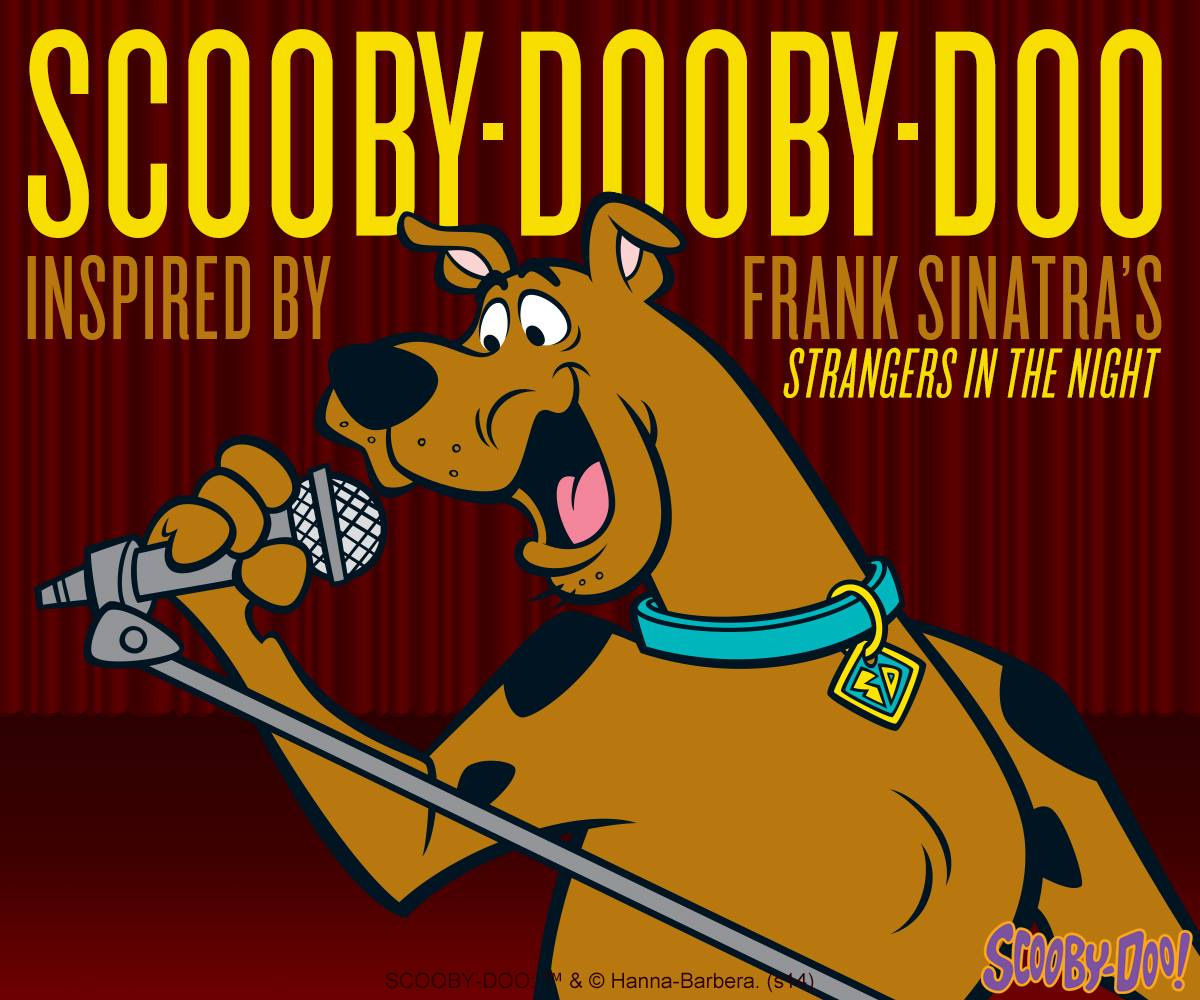
Speaking of Sinatra, though I’d always thought the television show Scooby-Doo got its name from Sly & the Family Stone’s number one hit “Everyday People” (“Different strokes for different folks / And so on and so on and scooby-dooby-dooby”), it was actually inspired by Ole Blue Eyes scatting at the end of “Strangers in the Night.”
“Wine” is mentioned more than any other alcoholic beverage in number one songs.
Sadly, “What’s My Name?” by Rihanna and Drake contains the most advanced use of mathematics in the lyrics of a number one hit: “The square root of sixty-nine is eight somethin’, right?”
That said, I’m relatively confident that the craziest lyric in any number one song is “If you wanna be happy for the rest of your life / Never make a pretty woman your wife / Cause from my personal point of view / Get an ugly girl to marry you” in Jimmy Soul’s “If You Wanna Be Happy.”
If you trust my math, the most lyrically unique number one hit in history is Billy Joel’s “We Didn’t Start the Fire.”
Lyrics that told a discernible story were somewhat common from the late-1950s (e.g., “Teen Angel” by Mark Dinning) to the early-1970s (e.g., “Brandy” by Looking Glass”). Now, the pop song with a plot is pretty irregular.
If you want to talk about more things that have died lyrically, turn to the church. While religion is not common fodder for number one hit song lyrics, there were songs with religious undertones topping the charts every once in a while for decades (e.g., “My Sweet Lord” by George Harrison). That said, there has not been one for a long time. To my ear, the last was U2’s “I Still Haven’t Found What I’m Looking For” in 1987.
Only one Halloween song has ever topped the charts, namely the “Monster Mash.” This is a good time to remind you that, we don’t actually know what the “Monster Mash” sounds like. The song we know as the “Monster Mash” is just a tribute to whatever the monsters were listening to that made them dance.
In terms of holidays, Christmas obviously gets more musical representation than Halloween. Still, only three Christmas songs have gotten to number one in the Hot 100 era: “The Chipmunk Song” by The Chipmunks, “All I Want For Christmas is You” by Mariah Carey, and “Rockin’ Around the Christmas Tree” by Brenda Lee.
Speaking of Christmas tunes, when her “Rockin’ Around the Christmas Tree” finally got to number one in December 2023, Brenda Lee was 78, a record for a chart-topping artist. If you limit to number ones that topped the charts within a year of being released, it is Louis Armstrong with “Hello, Dolly!” Satchmo was 62 at the time of release.
The youngest artist to top the charts was Michael Jackson. He was 11 when the first few Jackson 5 hits got to number one.
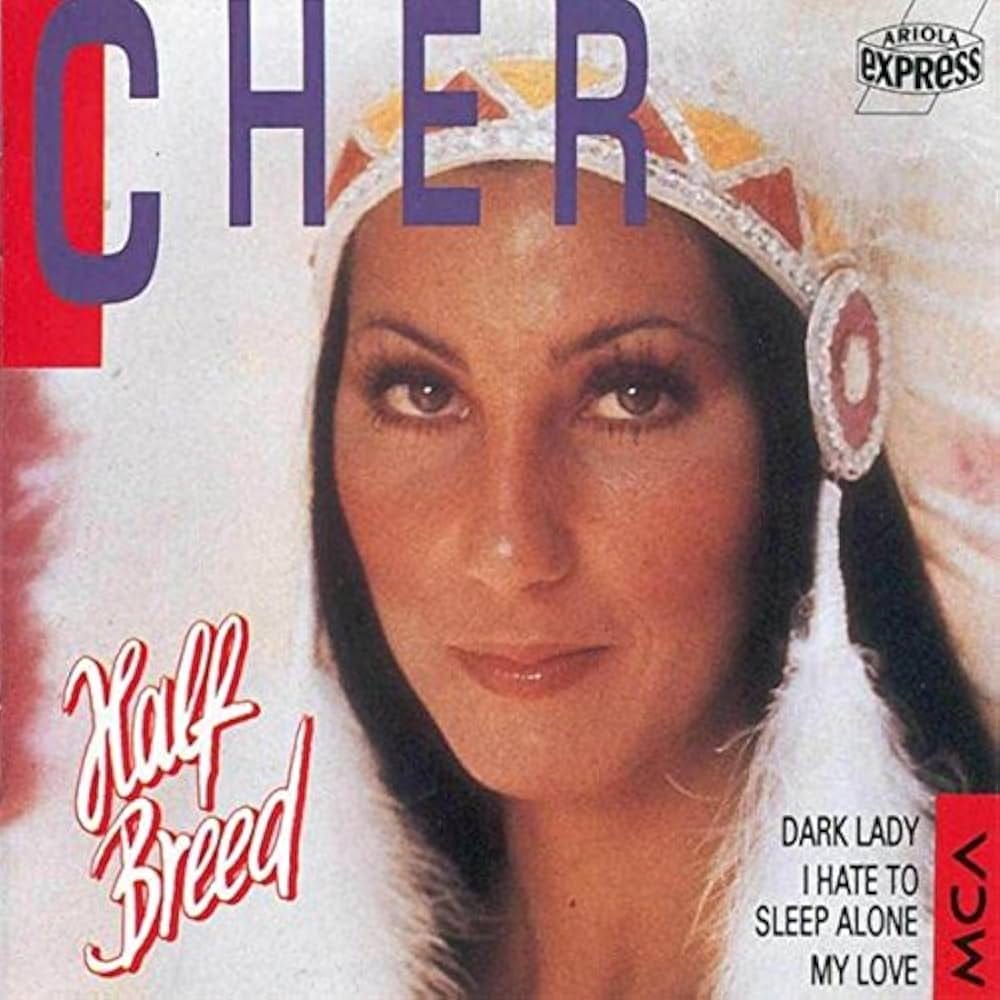
The artist with the longest gap between number ones was again Brenda Lee. “Rockin’ Around the Christmas Tree” made its ascent 63 years after her last number one, “I Want to Be Wanted.” If we ignore holiday hits, Cher wears the crown. “Believe” led the charts almost 25 years after her last number one, “Dark Lady.”
Speaking of Cher, she loved playing the role of a discriminated minority on many of her hits. Her number ones “Gypsys, Tramps and Thieves,” “Half-Breed,” and “Dark Lady” illustrate this well.
The only songs to top the charts multiple times are “Please Mr. Postman” (The Mavelettes & The Carpenters), “The Loco-Motion” (Little Eva & Grand Funk), “Go Away Little Girl (Steve Lawrence & Donny Osmond), “When a Man Loves a Woman” (Percy Sledge & Michael Bolton), “You Keep Me Hangin’ On” (The Supremes & Kim Wilde), “I’ll Be There” (The Jackson 5 & Mariah Carey), “Lady Marmalade” (LaBelle & Christina Aguilera, Lil’ Kim, Mýa, Pink), “Venus” (Shocking Blue & Bananarama), and “Lean On Me” (Bill Withers & Club Nouveau). In almost all cases, the original version is better.
What I find more interesting than covers are chart-topping songs that have the same title but are not the same song. For fun, I’ll list the artist whose song with that title that I prefer first: “Bad Blood” (Neil Sedaka & Taylor Swift), “Venus” (Shocking Blue & Frankie Avalon), “Hello” (Adele & Lionel Richie), “Good Vibrations” (The Beach Boys & Marky Mark), “Family Affair” (Sly Stone & Mary J. Blige), “Rockstar” (DaBaby & Post Malone), “One More Night” (Phil Collins & Maroon 5), “I’m Sorry” (Brenda Lee & John Denver), “Stay” (Maurice Williams & The Kid LAROI), “Jump” (Van Halen & Kriss Kross), “Honey” (Mariah Carey & Bobby Goldsboro), “One More Try” (George Michael & Timmy T), “The Power of Love” (Huey Lewis & Céline Dion), “Wild Wild West” (The Escape Club & Will Smith), “Take a Bow” (Rihanna & Madonna), “Best of My Love” (The Emotions & Eagles), “My Love” (Paul McCartney, Justin Timberlake, & Petula Clark), and “Big Girls Don’t Cry” (Fergie & Frankie Valli).
There are also a few songs with titles that are very, very close. For example, “Stuck With You” by Huey Lewis and “Stuck With U” by Justin Bieber and Ariana Grande. Also, “Stay” by both Maurice Williams and The Kid LAROI almost form a trio with “Stay (I Missed You)” by Lisa Loeb. “Stronger” by Kanye West and “Stronger (What Doesn’t Kill You)” by Kelly Clarkson don’t have the exact same title, but they are both inspired by philosopher Friedrich Nietzsche’s adage, “That which does not kill us makes us stronger.”
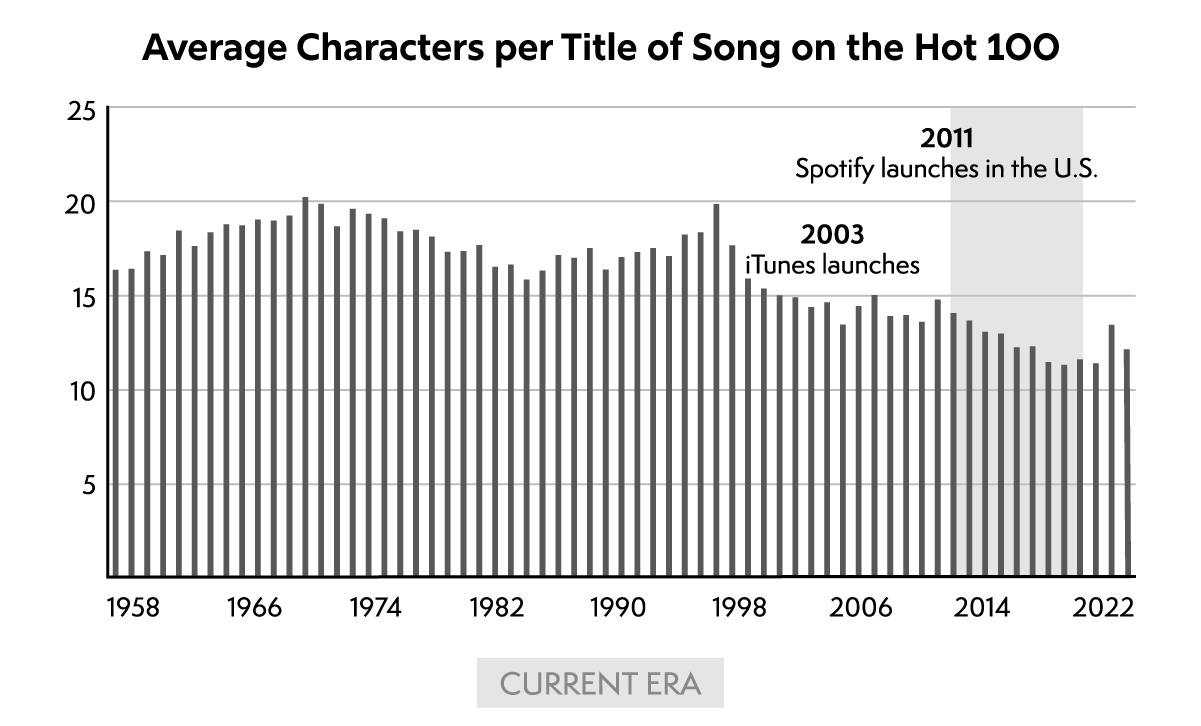
You often hear people talk about how pop songs have gotten shorter in the last few decades, but you hear fewer people talking about how pop song titles have also gotten shorter. More on this in Chapter 12 of my book.
While we’re talking about titles, the only number one hit with two possessives in the title is Connie Francis’s “Everybody’s Somebody’s Fool.”
Only 9 number one hits have ever had a question mark as part of their name (e.g., “yes, and?” by Ariana Grande).
Relatedly, there have only been 12 number ones using an exclamation mark in their name (e.g., “Help!” by The Beatles).
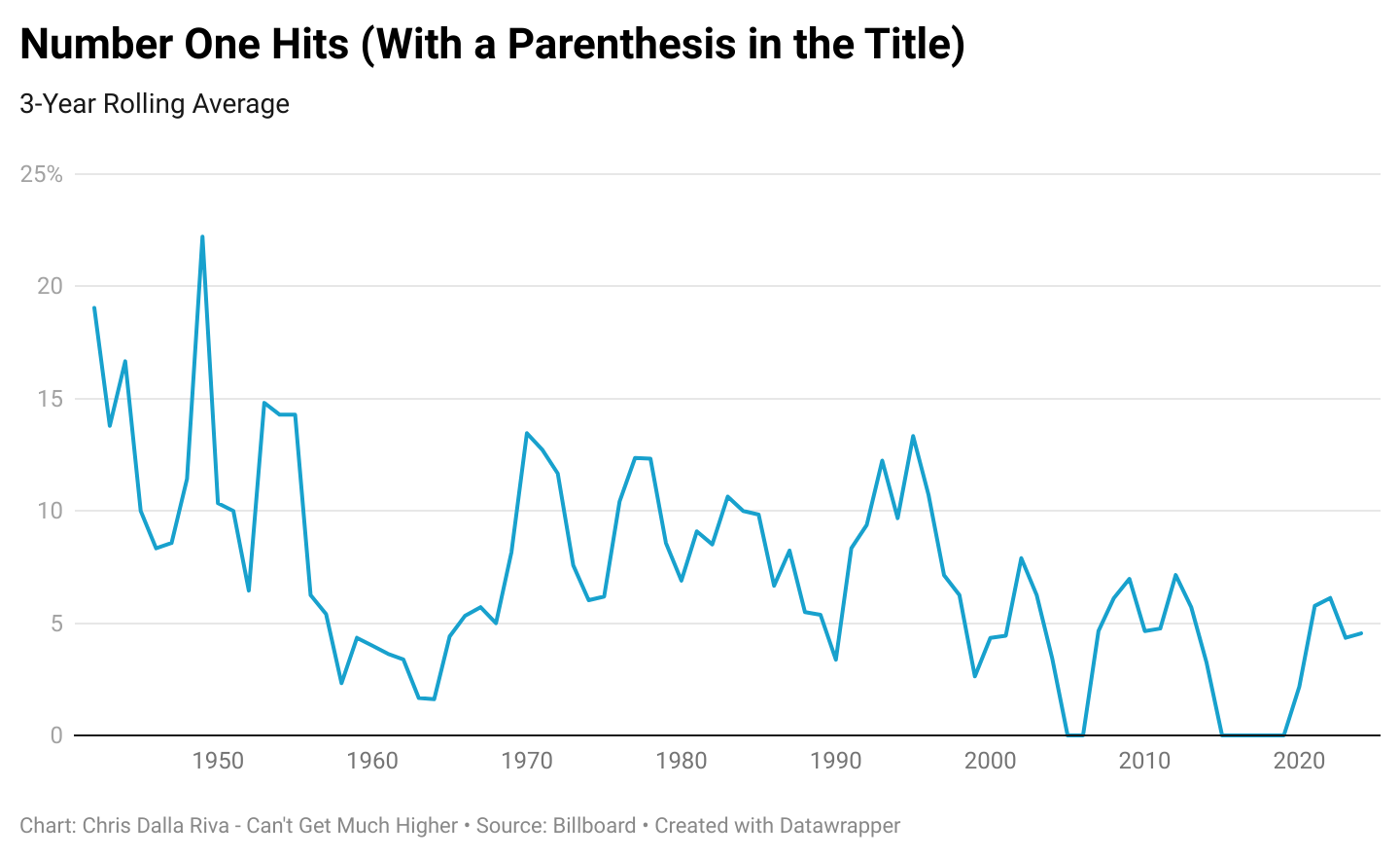
Over the last 80 years, there’s also been a relatively steady decline in songs using a parenthesis in their title (e.g., “Roses are Red (My Love)” by Bobby Vinton)
The most common song title to chart on the Hot 100 in US history is “Hold On.” For the UK’s pop chart, it is “Stay.”
For those same countries, the titles shift if we just look since 2000. In the US, it is “Home.” In the UK, it is “Beautiful.”
California and Georgia have been mentioned in the titles of more number one hits than any other US state.
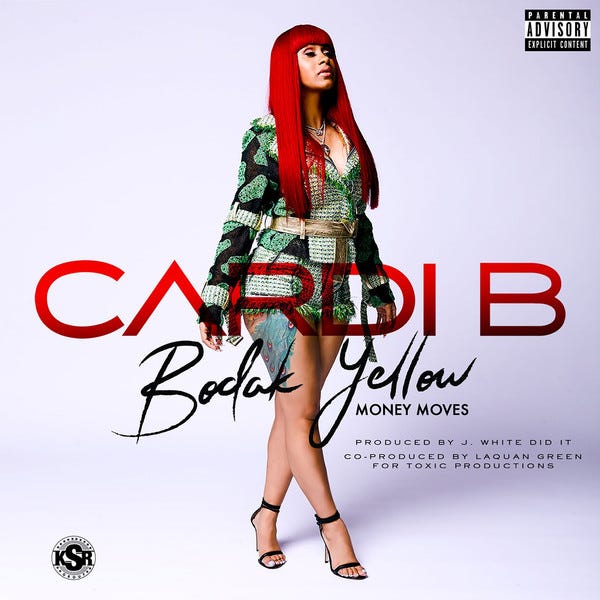
The most common color in a number one song title is “black,” appearing 8 times. If you are a physicist wagging your finger at me because black is actually the absence of color, then the answer is “blue,” which has appeared in 6 chart-topping song titles (i.e., “Mr. Blue,” “Blue Moon,” “Blue Velvet,” “Love is Blue,” “Wedding Bell Blues,” “Song Sung Blue”). If you’re just looking since 2000, it is “yellow,” with two entries: Cardi B’s “Bodak Yellow” and Wiz Khalifa’s “Black and Yellow.”
The number one hit with the most plays in Spotify history is The Weeknd’s “Blinding Lights,” which is also the most played song in the history of the platform. If we just look before the year 2000, the most played number one hit is The Police’s “Every Breath You Take.” It’s nearing 3 billion streams.
The two least played number one hits in Spotify history are the two that have never made it to the service: Divine’s “Lately” and Michael Damian’s “Rock On.” The former is much more sorely missed than the latter.
In the last month, the number one hit that’s generated the least traffic on Wikipedia is Connie Francis’s “Don’t Break the Heart that Loves You” with only 220 views. By contrast, the most viewed number one, “We Are the World,” has generated 321 times more traffic.
The only number one hit where both listed artists have two capital letters in each of their last names is “On My Own” by Patti LaBelle and Michael McDonald.
The most common first name for solo male topping the charts is “John” and its various nicknames (i.e., Johnny Horton, Johnny Preston, Johnny Rivers, Johnny Nash, John Denver, John Lennon, Johnnie Taylor, John Sebastian, John Cougar, John Waite, John Parr, John Legend.) If you accept different spellings, then you can include Jon Bon Jovi too.
Women’s names are much less clustered. The most common first name for a solo female topping the charts is “Mary.” Unlike the 13 Jo(h)ns, there are only three Marys: Mary Wells, Mary MacGregor, and Mary J. Blige. This aligns with research that parents are more experimental with daughters’ names.
On the topic of names, “Another One Bites the Dust” is apparently about a man named Steve: “Steve walks warily down the street / With the brim pulled way down low.”
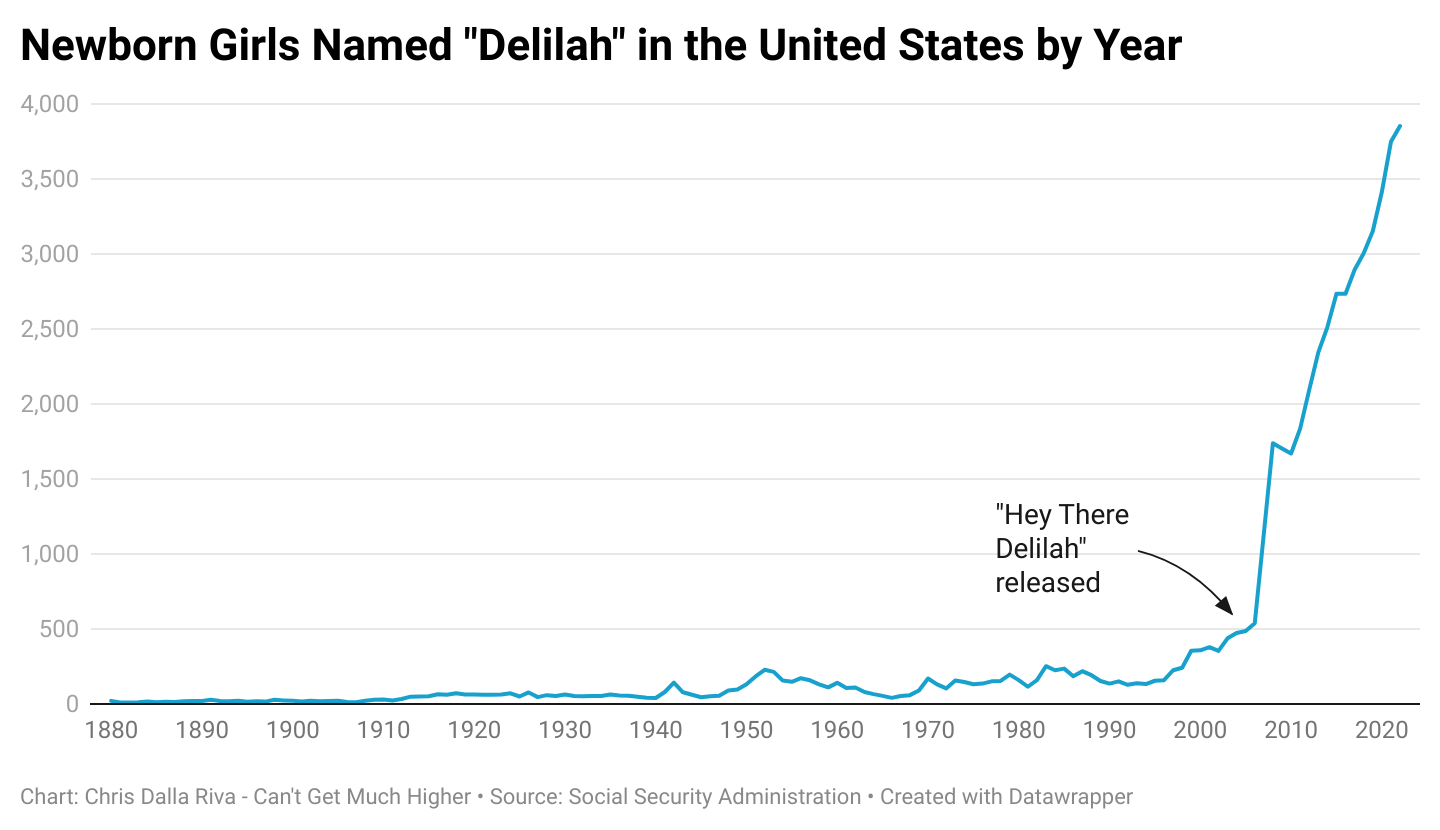
Additionally, though it has ancient origins, the Plain White-T’s “Hey There Delilah” reinvigorated the popularity of the named Delilah among newborns.
The harmonica has been used on 24 number one hits. For a little instrument, it’s quite versatile. It can bring you to tears on something like “Oh Girl” by The Chi-Lites and force you to your feet on something like “Timber” by Pitbull and Kesha.
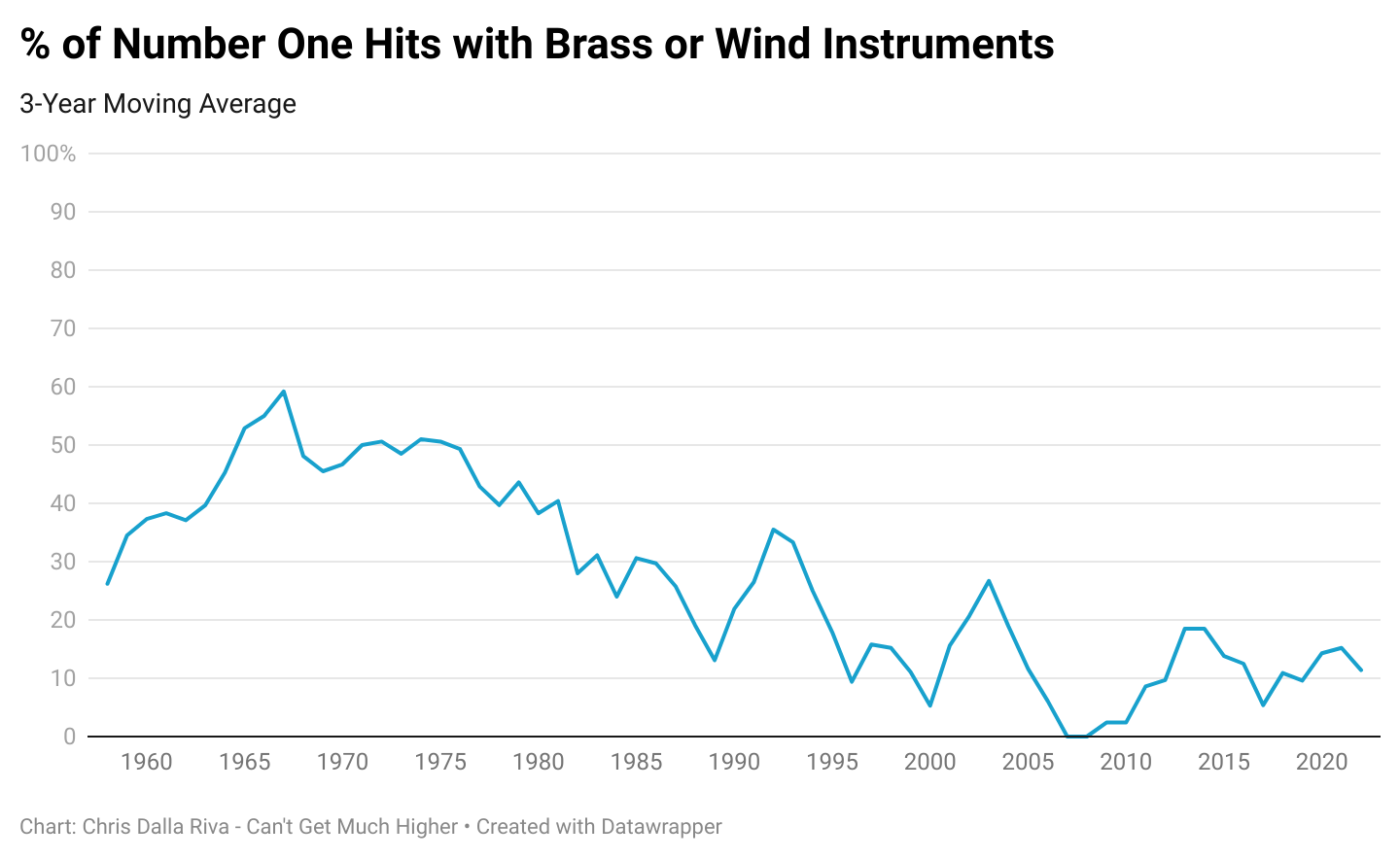
Beyond a few outliers (e.g., “Uptown Funk,” “Shake It Off”), the saxophone is dead at the top of the charts. Since the start of the Hot 100, the height of its power was the 1980s.
Honestly, brass and wind instruments in number one hits have become rarer as time has gone on. (Shout out to Lizzo for including a flute on “About Damn Time.”)
You can hear Mick Jagger on Carly Simon’s “You’re So Vain” if you listen closely for his faux-twang back-up vocals.
Speaking of unexpected collaborations, John Lennon cowrote and sang back-up vocals on David Bowie’s “Fame.” Also, Michael Sembello—later of “Maniac” fame—plays guitar on Stevie Wonder’s “Sir Duke.” Joe Walsh played guitar on a few of Andy Gibb’s number ones. David Crosby sang back-up vocals on Phil Collins’ “Another Day in Paradise.” And future American Idol judge Randy Jackson slapped some bass on Whitney Houston’s “I Wanna Dance with Somebody (Who Loves Me).”
On the topic of American Idol, no television talent contest has a better track record at producing hitmakers in the United States. In fact, four contestants have topped the charts. By contrast, The Voice, which has aired more seasons, has only spawned one chart-topping artist, namely Morgan Wallen.
On the topic of musical contests, two Eurovision song entries have gotten to number one: Domenico Modugno’s “Nel Blu Dipinto Di Blu” (Italy) and Paul Mauriat’s “Love is Blue” (Luxembourg).
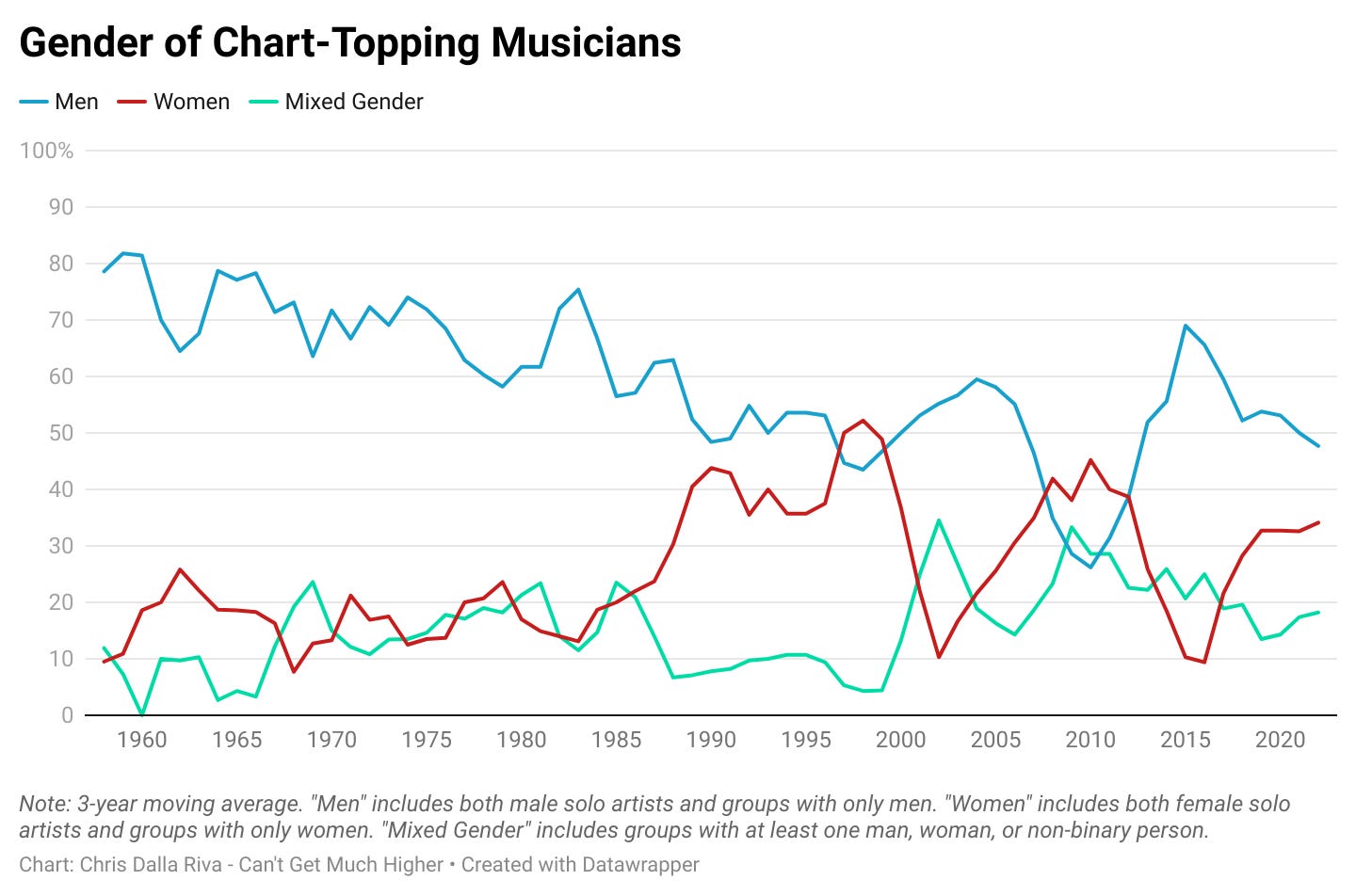
The divergent nature of these contests (i.e., one focused on singing, one focused on songwriting) segues to my next topic. Despite making strides as lead artists, women remain woefully underrepresented in songwriting and production communities. Though I discuss gender representation in the songwriting and production communities in Chapter 11 of my book, you can see the changing gender representation among performers below.
Now for some personal facts. Tommy Page, the singer behind the forgotten 1990 number one hit “I’ll Be Your Everything,” graduated from my high school.
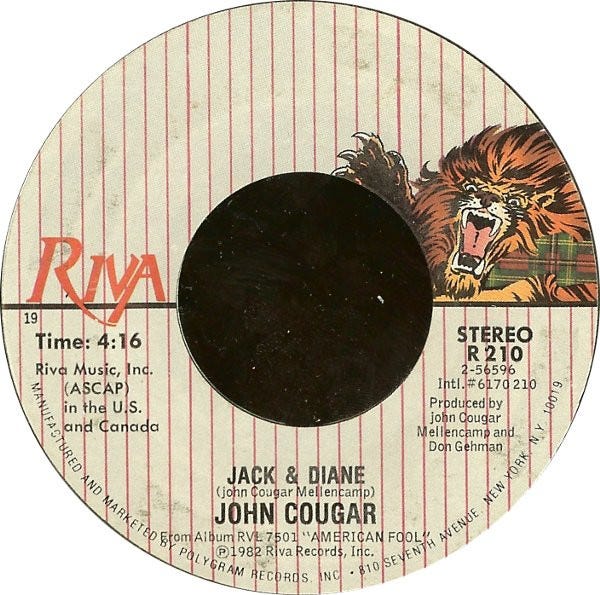
Additionally, John Cougar’s “Jack & Diane” was released on the short-lived Riva Records, the record label that most resembles my last name (i.e., Dalla Riva).
I once told my friend Andrew that certain words are nearly impossible to use in a song because they call attention to themselves. He asked for an example, and I said “cancer.” While I still stand by that statement, the word “cancer” is used in a number one, namely “The Sound of Silence.” In verse four, Garfunkel and his singing partner croon, “‘Fools,’ said I, ‘You do not know / Silence, like a cancer, grows.’”
Speaking of “The Sound of Silence,” it also contains the word “tenement,” another word that I would expect to be unique to that number one. It’s not, though. A few years later, it was used in The Supremes’ “Love Child” (i.e., “I started my life in an old, cold run-down tenement slum”).
If we want to talk about random words in songs but get a little saucier, Neil Sedaka’s “Bad Blood” was the first to contain the word “bitch.”
I always like to remind people that pop songs can be impactful even if they don’t stand the test of time. In his classic “Life on Mars,” David Bowie alluded to a lyric from the largely forgotten 1960 number one “Alley Oop” (i.e., “Look at that caveman go” → “Look at those cavemen go”).
“Alley Oop” was performed by a group called The Hollywood Argyles. The weird thing? The Hollywood Argyles didn’t exist in the traditional sense. They were mostly an assemblage of studio musicians that got together for one session.
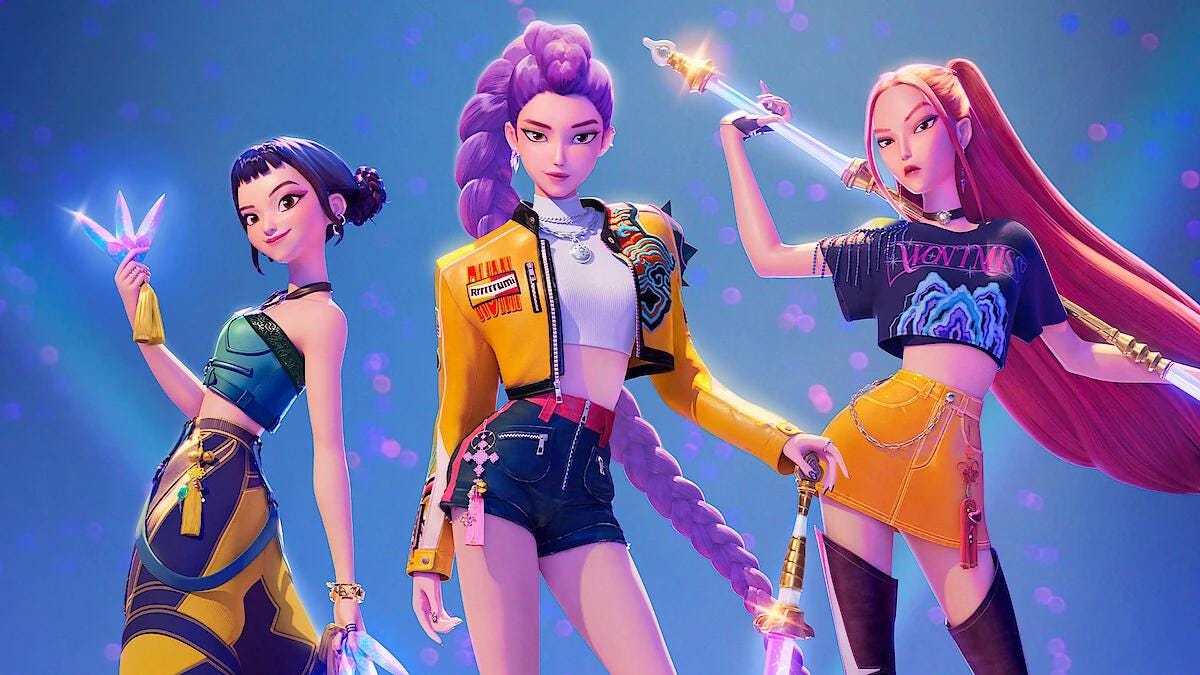
There have been other fictional groups to top the charts (see Steam), but those groups that are completely animated might be even more interesting. The Chipmunks and The Archies took animated music to Hot 100 glory decades ago, but Huntr/x has joined the party more recently. The animated band from the Netflix smash KPop Demon Hunters, their “Golden” has been one of the biggest hits of 2025.
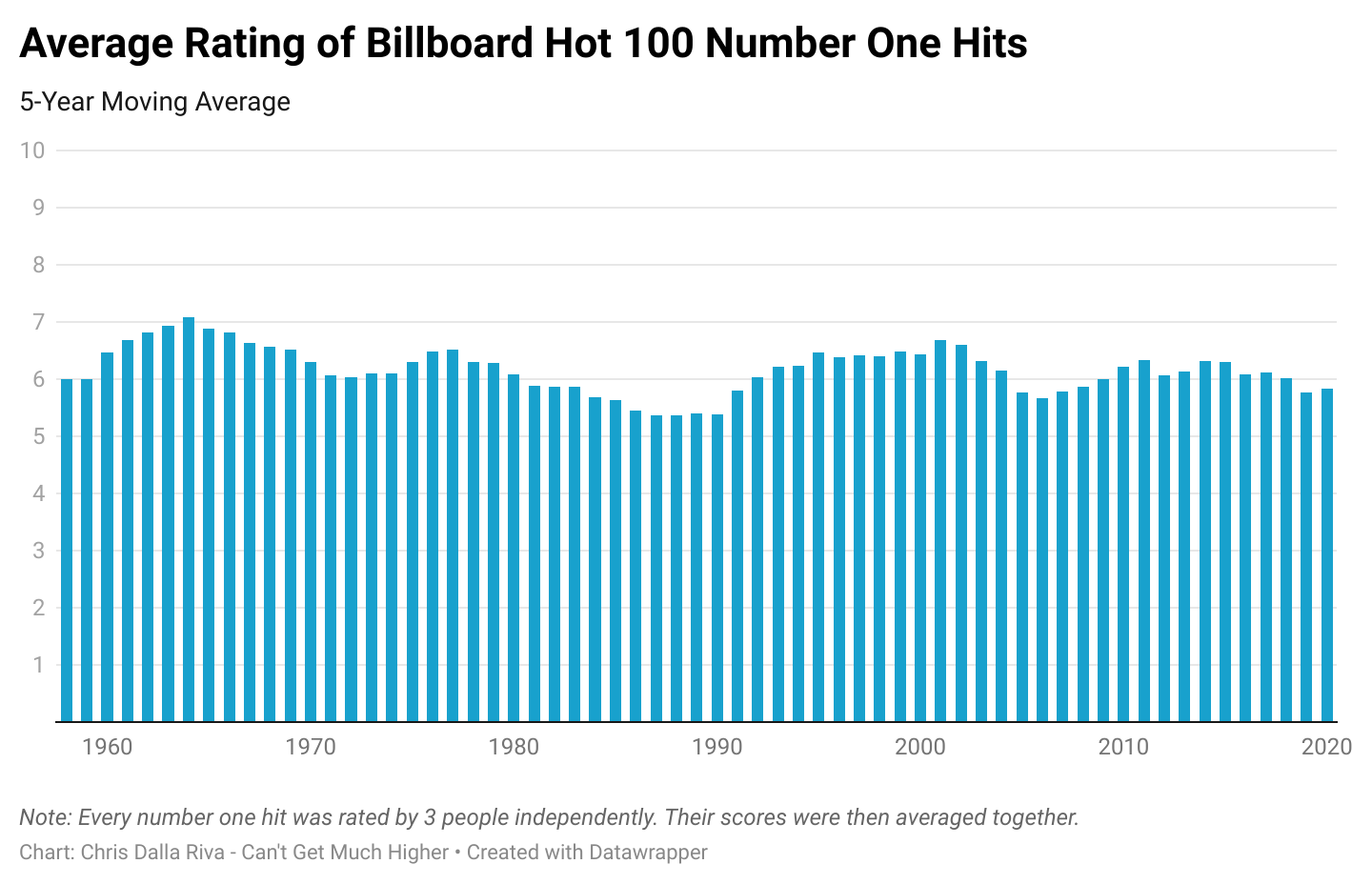
Along with two other people who tagged along with me, I rated every number one on a scale from 1 to 10. If you trust our ears, there isn’t tremendous variation in the quality of number one hits over the decades. In 73% of 5-year periods, the average song rating is between 6 and 7. That said, the highest rated half-decade was 1964 to 1968 (i.e., 7.1). The lowest rated was 1987 to 1991 (i.e., 5.4).
Despite these ratings, I need to be clear that every era has fantastic and terrible songs.
Thanks for reading. I’ll be back with Part 2 of this piece next week. If you enjoy my work, please consider ordering a copy of my forthcoming book Uncharted Territory: What Numbers Tell Us about the Biggest Hit Songs and Ourselves. It’s a data-driven history of popular music that follows my journey listening to every number one hit from 1958 to 2025.
One of my favourite posts that I've read. Great job!
This is a fantastic post!! Thank you. So fun and interesting.