


For those readers in the New York City area, I want to invite you to come out to the release party for my book, Uncharted Territory: What Numbers Tell Us about the Biggest Hit Songs and Ourselves, on November 14, 2025. This is going to be a super cool event. I will be sitting down for a conversation with Walter Hickey, one of my favorite writers. Along with running the incredible daily newsletter Numlock News, Walt has won a Pulitzer Prize and authored You Are What You Watch: How Movies and TV Affect Everything. Walt and I will be talking about some of the most interesting insights from my book. (We’ll probably play a few songs too.)
Anyway, I’d really love if you grabbed a ticket. They are going fast! Please note that books will not be sold at the event. If you want one, you should place your order beforehand. I hope to see you there.
“Happy Birthday” Stinks
By Chris Dalla Riva
Before the website Tedium published a short excerpt from my book about the debates that surrounded the rise of the drum machine, the site’s proprietor, Ernie Smith, read the entire book. And he liked it! Though I traverse decades of popular music, he noted that he laughed at very brief aside I make in Chapter 6:
“Happy Birthday” stinks. Next time we write a song that we force people to sing in groups many times a year, let’s not put an octave leap in the melody.
I think one of the fun parts about the book is that while it is filled with serious discussions, those discussions stand side-by-side with weird observations and irreverent quips.
That said, I really do have distaste for “Happy Birthday.” No, I’m not going to protest singing it at a party. In fact, I’ll probably give you a rousing rendition. I really just hate when society picks a song to sing in groups with any degree of regularity that I don’t think is very good.
This is also why I’ve complained about “The Star-Spangled Banner” in this newsletter. While “Happy Birthday” is much easier to sing than “The Star-Spangled Banner,” as I noted, the octave leap in the melody (i.e., “happy birth-day”) isn’t doing the tone-deaf public any favors.
Though I’m happy to continue lambasting the musical merits of “Happy Birthday,” I think my real hatred for the song is how it spent decades as an undue financial burden on society.
How “Happy Birthday” Stole Your Money
Before Natalie Cole left the set of The Wendy Williams Show on February 5, 2010, Williams stopped the famed singer. “One last thing before you go,” Williams began. “We had extra money in the budget this week. We paid $700 to say happy birthday. You got to pay for the song. Come on, audience. Let’s not waste the money.” The audience then proceeded to sing “Happy Birthday” to Natalie Cole.
This exchange suggests a handful of questions. Who was Wendy Williams paying to allow her to sing “Happy Birthday” on national television? Why did it cost $700? More importantly, why did she have to pay anyone anything? To understand, you need to go back to 1893, 119 years before Natalie Cole sat down on Wendy Williams’ couch.
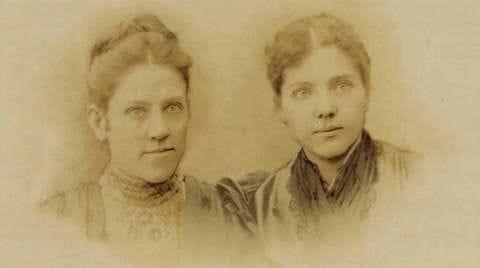
Around that time, two sisters named Patty and Mildred Hill decided they were going to compose some songs for children. This made sense. Patty was a kindergarten teacher interested in new educational methods and Mildred was a composer. By teaming up, the two could write songs, Patty could share them with her young students, and then they could refine them as needed. During this process, they came up with a composition titled “Good Morning To All.”
When you listen to “Good Morning To All,” you’ll notice two things. First, it sounds like it was written for a group of kindergarten students. Second, it has the exact same melody as “Happy Birthday.” The Hill sisters would soon publish this proto-birthday song in a collection of songs call Song Stories for the Kindergarten.
But, again, “Good Morning To All” was not “Happy Birthday.” While the two share a melody, they have different lyrics. It seems that within a decade of “Good Morning To All” being published, it was adapted as a birthday song with the lyrics we are all familiar with (i.e., “Happy birthday to you”). This is where the story takes the turn that resulted in Wendy Williams having to pay to sing the song on television.
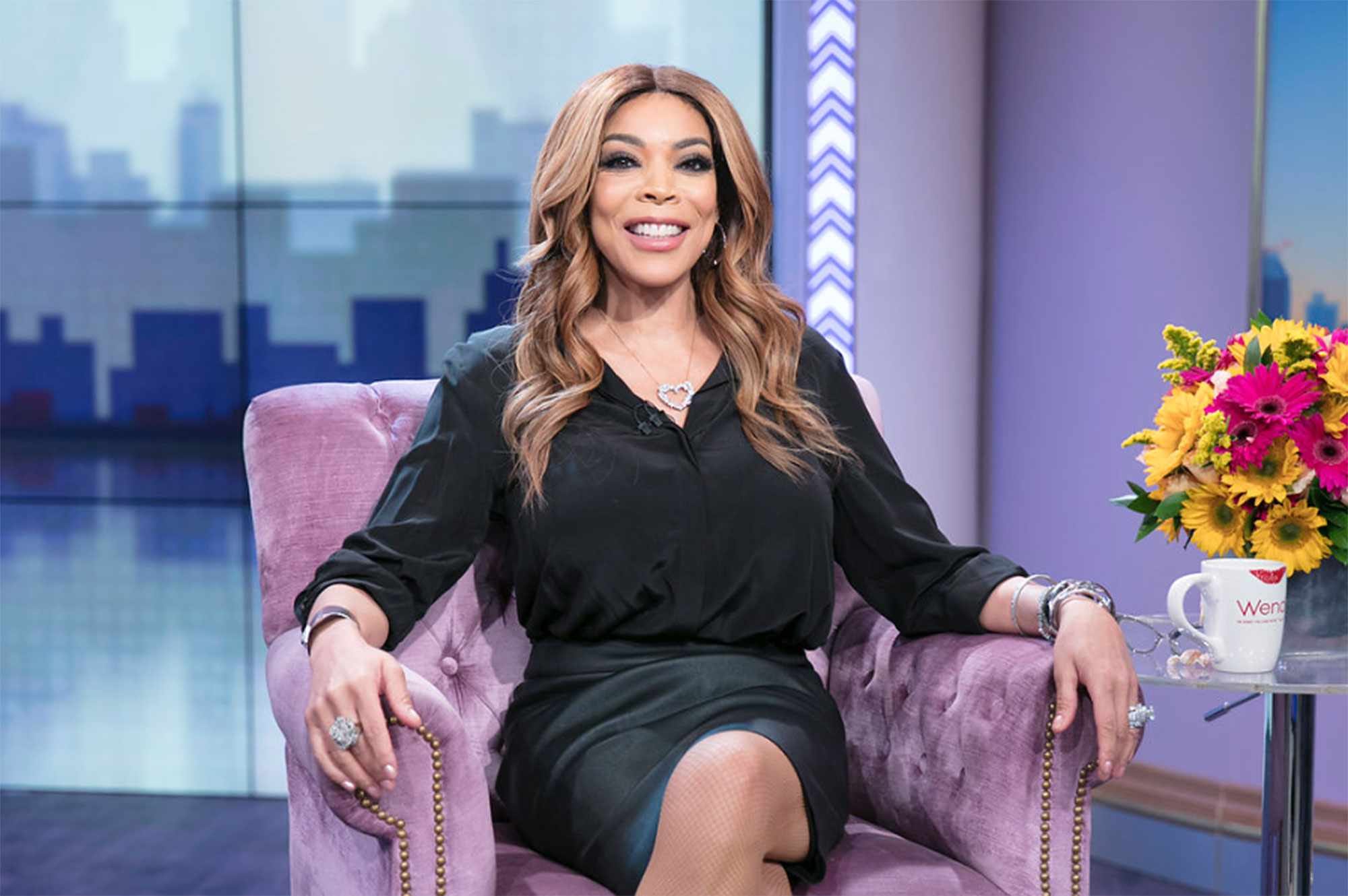
In 1935, Jessica Hill, the sister of Patty and Mildred, authorized the Clayton F. Summy Company to publish a version of “Good Morning To All” with the melody set to “Happy Birthday.” Jessica, as a part owner of the copyright of Song Stories for the Kindergarten, the songbook that initially contained “Good Morning To All,” was authorized to do this. Kind of. While Jessica had a direct claim of ownership over the melody of “Good Morning To All,” nobody actually knows who wrote the words to “Happy Birthday.”
I relied on Robert Brauneis’s 2010 paper “Copyright and the World’s Most Popular Song” because this issue is shockingly complicated. But there is little to no evidence that the Hill sisters composed the words of “Happy Birthday.” Because of that, Jessica Hill should not have been able to authorize publication of the song and claim ownership of it. “Happy Birthday” is a derivative work based on “Good Morning To All.” The Hill’s only had claim to the melody.
This did not stop the Hill family, the Clayton F. Summy Company, or its descendants from claiming ownership over “Happy Birthday.” In fact, it eventually became accepted that Patty and Mildred Hill wrote “Happy Birthday.” Because of that, the owners of the song began to enforce their copyright however they could.
By the 2000s, the song was generating millions of dollars per year. In certain years, the performance rights organization ASCAP claimed that “Happy Birthday” alone was responsible for 1% of its total yearly distributions. That’s wild given that ASCAP has millions of songs in their catalog.
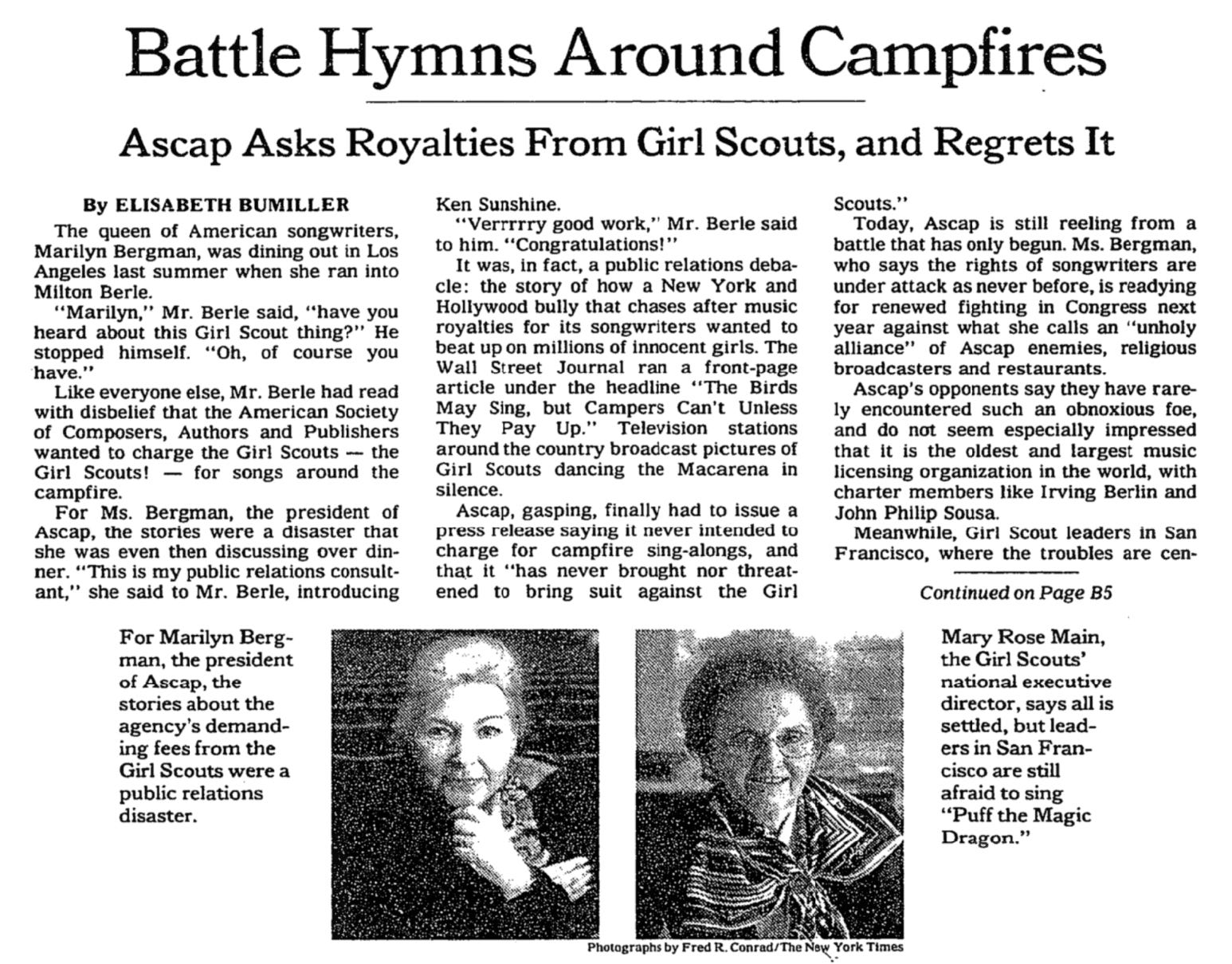
But it’s not hard to understand why it was generating so much money. Anytime someone sings “Happy Birthday” in public, on the radio, in a movie, or on The Wendy Williams Show a fee must be paid to the owners of the “Happy Birthday” copyright. In the 1990s, there was even an effort to make the Girl Scouts pay a licensing fee for the song if it were sang on campsites. This failed, but there have been some strange side-effects of the enforcement. Many chain restaurants, for example, made up their own birthday songs to avoid having to pay a licensing fee.
You might be wondering how a song initially written in 1893 was still generating royalties in the 2000s. Part of the reason was that copyright terms were extended dramatically during the 20th century. Based on the 1935 publication of the song, the owners of “Happy Birthday” claimed that the song would not enter the public domain until 2030.
But people became suspect of the copyright claim to the song. In 2013, a class action lawsuit was filed against Warner Music, the current owner of the copyright, claiming that the song was actually in the public domain. The court eventually ruled that the 1935 copyright was just for a specific piano rendition of the song, not the underlying music and lyrics. Because the music had long ago entered the public domain, and the nobody was really sure who wrote the lyrics, “Happy Birthday” now belonged to the people. Warner had to pay $14 million in damages to those who had previously licensed the song.
Is it fun to rag on “Happy Birthday” because I don’t love the song? Sure. But that’s not really what makes me mad. My anger is based on the fact that giant corporations spent decades collecting royalties on a song that they didn’t own. It’s a good reminder of how intellectual property can be used nefariously, especially when terms last for such a long time.
A New One
"Cry Cry Cry" by King Princess
2025 - Indie Rock
Though she is best known for her burning 2018 single “1950,” I think King Princess is one of the best rock-related artists today. I’m especially fond of the harder edge to her latest record, Girl Violence. That aggressive title comes across clear on “Cry Cry Cry,” my favorite track from the record.
An Old One
"Damn It Feels Good to Be a Gangsta" by Geto Boys
1992 - Gangsta Rap
A few months ago, I watched the movie Office Space for the first time. One of the running gags is a super white-bread character loving hip-hop music from the early 1990s. One of the songs is “Damn It Feels Good to Be a Gangsta” by Geto Boys. I am shocked that I haven’t recommended this song yet in this newsletter. I’ve been addicted to to its laid back vibe. It will likely be one of my most played songs this year.
Thanks for reading. If you enjoy my work, please consider ordering a copy of my forthcoming book Uncharted Territory: What Numbers Tell Us about the Biggest Hit Songs and Ourselves. It’s a data-driven history of popular music that follows my journey listening to every number one hit from 1958 to 2025.
The worst part of happy birthday is when you hear a group of people singing it, say in a restaurant or even your own home. They’re usually meandering all over the place in terms of the melody and are often in different keys entirely.
About a year ago, I heard a group of people in a restaurant singing happy birthday to one of their friends there and it was incredible, everybody was on pitch, they had harmonized it beautifully, everything was perfect. So perfect in fact that I had to go over and congratulate them and they smiled and said “oh, we all sing together in a chorus.“ 😅
When people sing Happy Birthday everybody smiles right before the octave jump because they know it's going to sound terrible.