


This week’s newsletter comes from Catherine Sinow, a regular Can’t Get Much Higher contributor. You may remember her from some of her other delightful pieces, like the semi-viral examination of lostwave and the investigation of a Jessica Simpson song that was scrubbed from the internet. Today’s piece was inspired by a very different question: Why does every record store have so many copies of R.E.M.’s 1994 album Monster? I’ll let Sinow take it from here.
Why are There so Many Used Copies of R.E.M.’s Monster in Record Stores?
By Catherine Sinow
When I was 18, I started dating my first actual boyfriend. He collected CDs avidly and owned about 2,000 of them. Naturally, he wanted to spend every weekend at record stores. As we adventured around San Diego in my car, he shared some words of wisdom: “In every record store, there’s always multiple copies of R.E.M.’s Monster.”
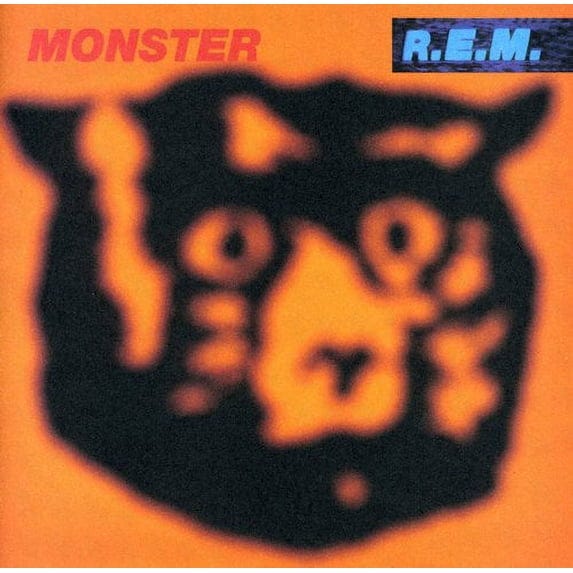
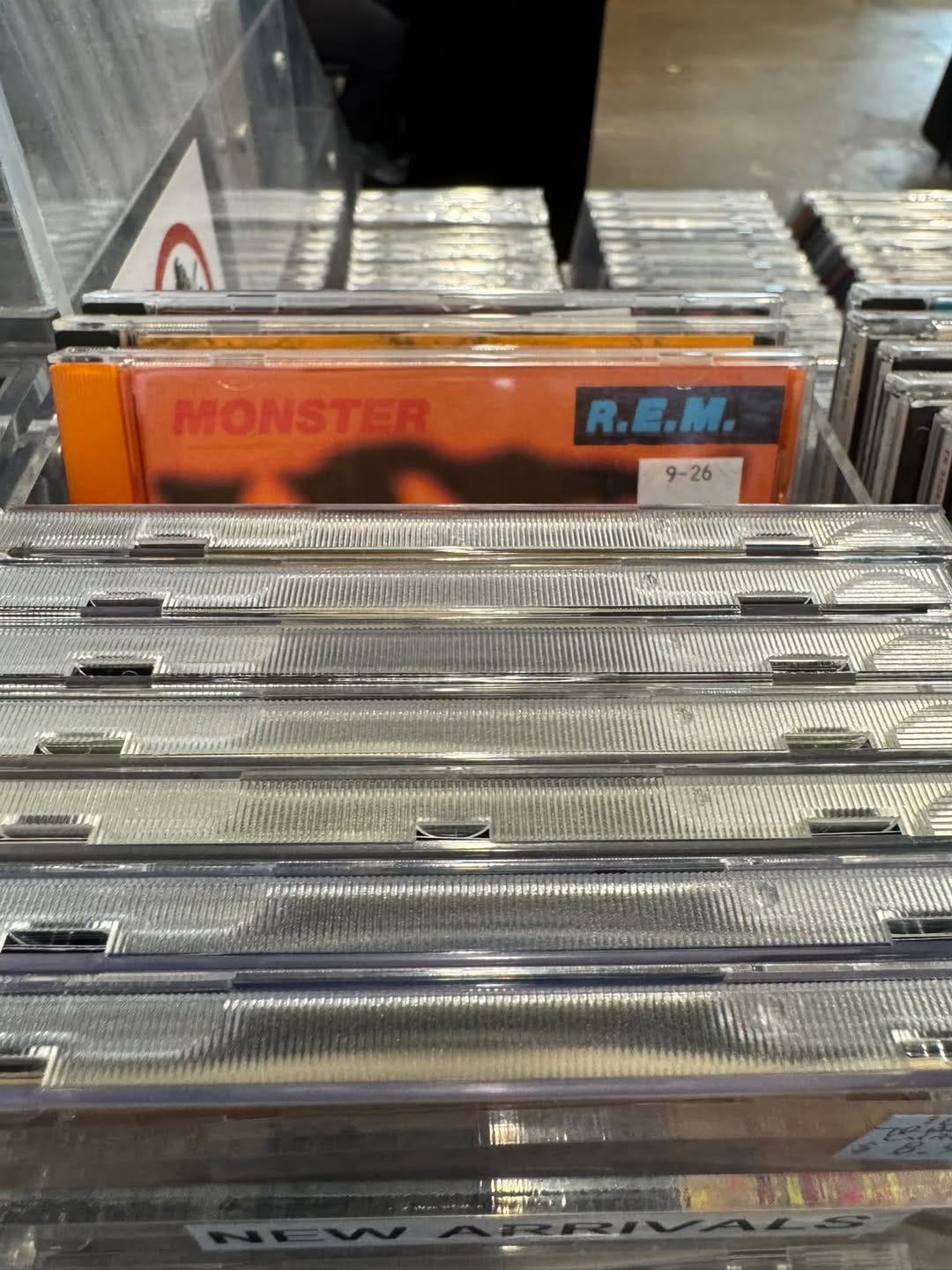
I soon came to believe him. One can always spot Monster’s orange spine in every record store, thrift shop, flea market, and the like. And there are usually three or more copies next to it also for sale. RateYourMusic users affirm this sentiment in the album’s comment box:
“One time I went into a used bookstore and counted seven copies of [Monster]. In fact, whenever I go to a used bookstore or thrift store I always go straight for the CD racks to see how many copies of this they have.”
“This album releases its spores in shelves of used CDs, spawning more and more copies until they will one day overrun every used music store in America”
Steve Cook, owner of Vinyl Resting Place in Portland, confirms this phenomenon. He tells me his excess records “change over the years. Currently it’s the Titanic soundtrack and R.E.M.’s Monster. I have a ton of them in a storage unit.” He’s gotten rid of a lot of them—including sending some to a Seattle artist who makes art from used CDs—but he currently possesses about 60 Monsters.
Meanwhile on Discogs, there are plenty of options to buy the album for under 50 cents. As of writing, there are 1,954 copies of Monster for sale there. Compare that to another rock album that came out the same year: Superunknown by Soundgarden. Superunknown sold over two times what Monster did in the US (6 million vs. 2.9 million), but there are only 627 Superunknowns for sale on Discogs.
During the aforementioned relationship with my first boyfriend, Monster was our cute inside joke. “Ha ha, look, there’s Monster!” we’d quip. “Get the camera!” We can assume that MP3s, streaming, and the discontinuation of disc drives have caused people to shed their CD collections en masse. But collections are shedding Monster more than other albums. Why?
A Mini-History of R.E.M.
Founded in 1980 in Athens, Georgia, R.E.M. slowly built a cult following among alternative rock fans and college radio DJs. Music journalist and former record store manager Lee Gardner tells me, “They were about as important and vital a band as you could get. I mean, even punk rock guys who could be expected to sneer at them—and they did—understood that they were a big deal.”
By the end of the decade, the quartet had moved from the fringes to the mainstream, with top ten singles (e.g., “The One I Love,” “Stand”) and platinum albums to their name. They were only getting started. In 1991, they released Out of Time, which sold four million copies in the US. Their next album, Automatic for the People, did almost as well, moving 3.5 million units. Then came Monster.
Although it debuted at number one on the Billboard 200, its 2.9 million units fell well short of their previous two efforts. And the group’s sales never really recovered. Their final album, Collapse into Now, released in 2011, only sold 142,000 copies. In short, Monster was released at a time when the band was still popular but beginning to lose their mass appeal.
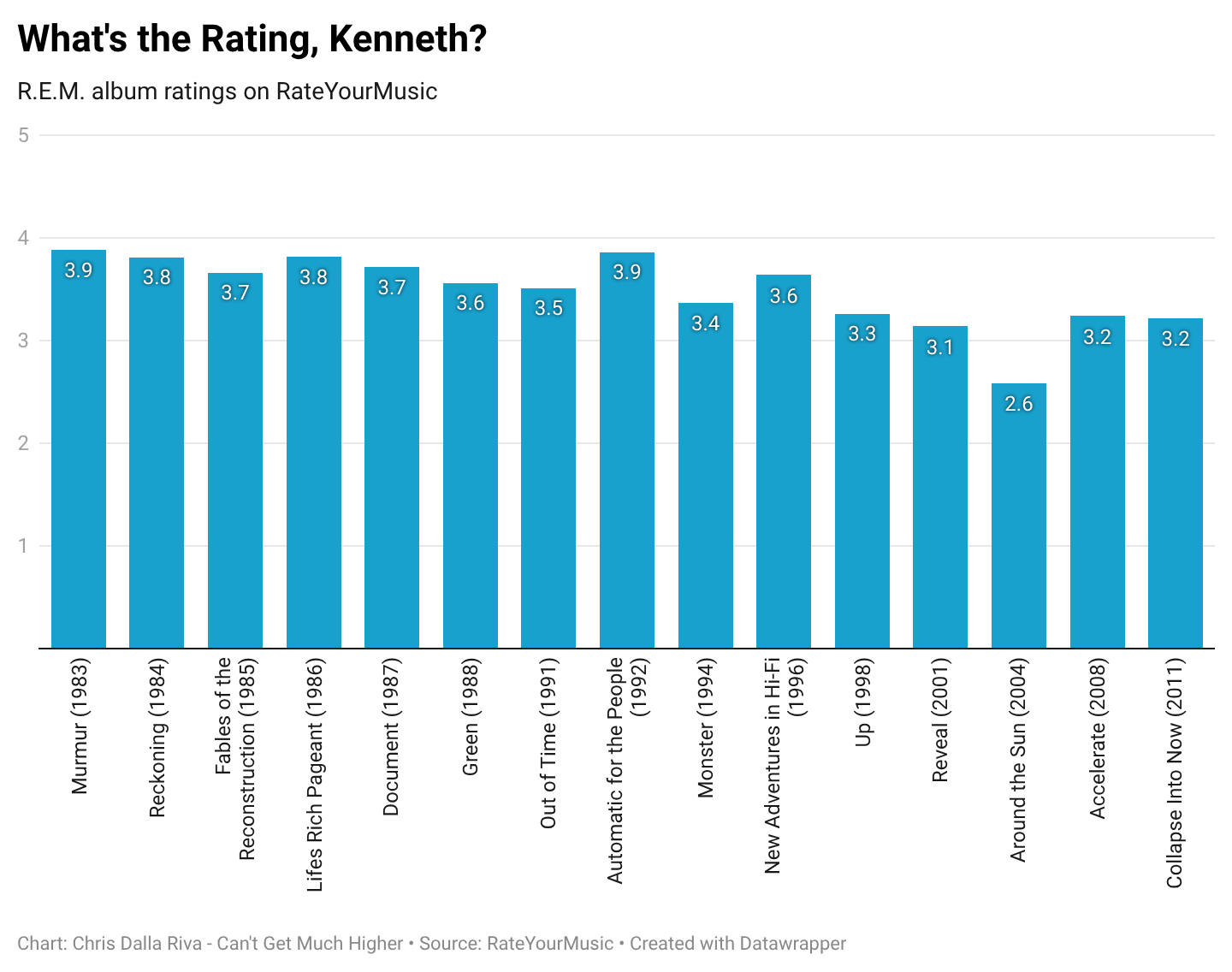
Critical and fan opinion of the group follows a similar trajectory. R.E.M.’s highest rated album on the website RateYourMusic, for example, is Murmur, which has a 3.88 out of 5. Monster ranks tenth out of fifteen with a 3.36. After that, the ratings slowly fall off with 2004’s Around the Sun sitting in the basement.
A Micro-History of Collecting Records
Records can be collectors’ items with unpredictable price changes, sort of like stocks. If you play the market well, you can make some money. The craziest price jump I’ve heard of is that of Salon de Musique by Su Tissue, an avant-garde piano album from 1984. In 2016, it sold for $150. Today it goes for $2,500.
Monster is the opposite—it probably sold for around $16.98 back in the day, about $27 today. Now, a record store would probably give it to you for free. Lee Gardner, the aforementioned journalist and former record store manager, elaborates on the supply and demand of used albums:
You hardly ever see used copies of Dark Side of the Moon. I mean, they’re out there, but you don’t see a lot of them because people don’t sell them. And if they do sell them, someone else buys them right away.
So, people want to sell Monster. And nobody wants to buy it. And there are some extreme examples. One man spent seven years trying to sell his used Monster, with no luck. He writes, “From 2003 to 2005, I tried slipping the CD in with stuff that clerks would definitely buy (new releases, Pink Floyd or Metallica albums). A clerk would fish through the stuff the store would buy and shoot back Monster like it contained a downloadable computer virus.”
The Monster Mystery Theory #1: The Guitar Sound is Weird
When R.E.M. recorded Monster, they were trying to switch things up. Their sound had moved in a pretty yet sophisticated direction over their past few albums, but they hadn’t toured in a while. So they wrote an album of stripped-down rock jams that would be fun to play live.
Contemporary reviews puffed up the record, with Rolling Stone giving it a sparkling 4.5 stars out of 5. Robert Palmer wrote for the magazine, “Monster is a deeply felt, thematically coherent, consistently invigorating challenge to ‘evolve or die,’ with all the courage of its convictions.”
But we know that critical opinion upon an album’s release doesn’t always correlate with how people feel later. My ex-boyfriend put his opinion bluntly, blaming Monster’s record store ubiquity on R.E.M. guitarist Peter Buck: “Pete bought a tremolo pedal and ran every song through it.” Indeed, the album sounds like that.
My friend Ron, an R.E.M. fan from the beginning, does a great job at summing up the disappointment: “[Monster] sold like crazy but it’s not very good. The album featured distorted guitars which felt kind of ‘how do you do fellow kids’ in the face of post-grunge. I saw them on the Green tour, which I loved. But the older fans thought that was too arena rock. So Monster was kind of that but exponentially more.”
Pitchfork captured a similar sentiment in their review of the 25th anniversary release of the record:
Monster was a fatal attempt to return to the band’s roots—to the taut, sparkling rock they made in the ‘80s. By the time they recorded Automatic, the band had traveled far afield musically, into pastoral realms where the strum of a mandolin guided processionals about death and suffering … They needed a dramatic shift … Peter Buck had recently switched to playing Les Paul guitars, and the sounds he pulled out of them made his amps buzz like beehives. They were going to write an album full of punk songs that would be fun to play live. It was supposed to rock.
Despite the tone of this passage, the publication still gave the re-release a score of 8.1 out of 10. The reviewer suggests the album is a misunderstood work combining glam rock influences and deeply intriguing lyrics that play with gender, sexuality, and identity. This reviewer mythologizes the production, portraying the distorted guitar sounds as semi-spiritual experiences.
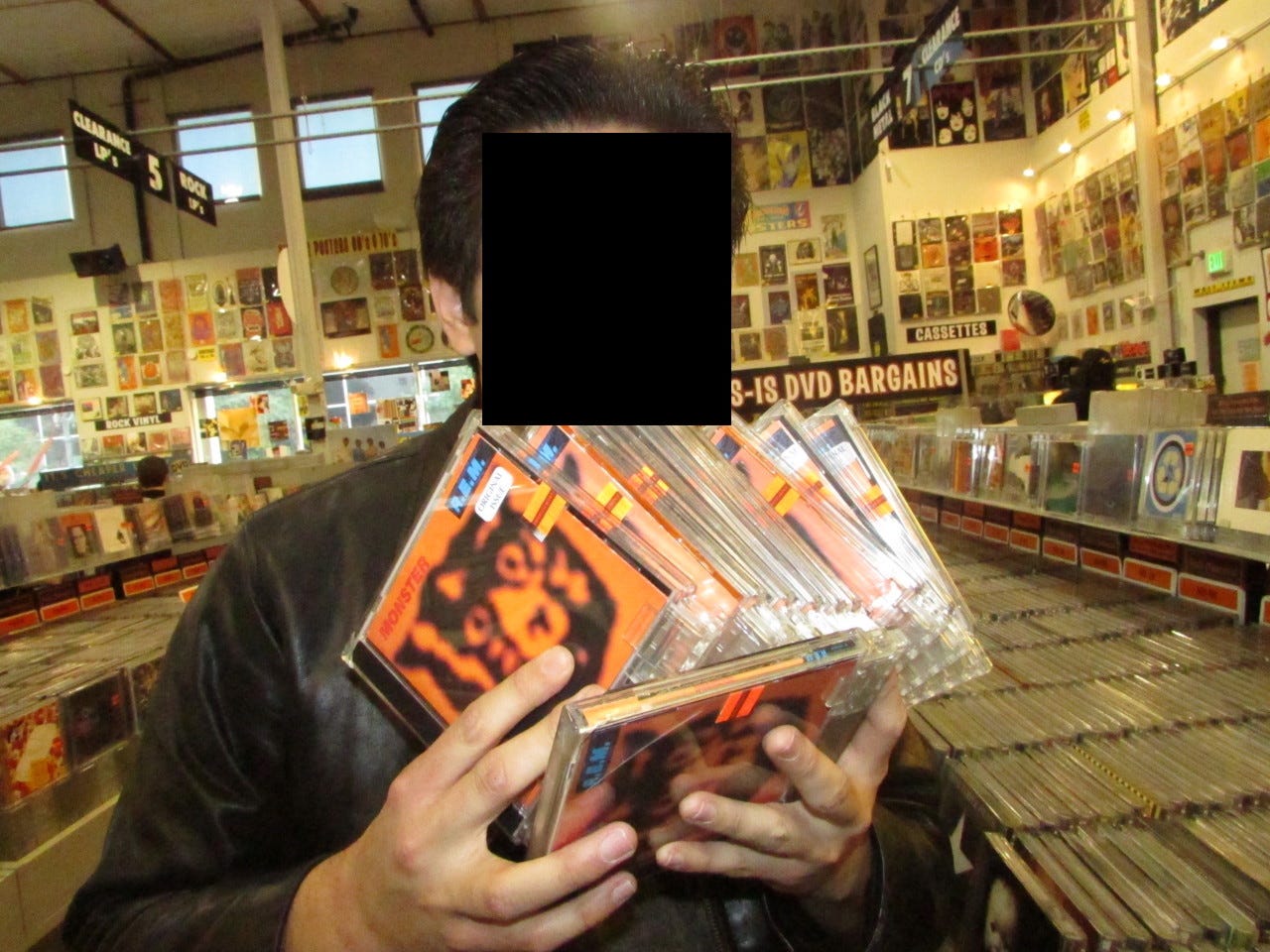
Meanwhile, Monster producer Scott Litt regrets the job he did, and he remixed the album for its 25th anniversary box set. Part of the reason why was because of the abundant presence of used Monster in record stores. As he noted to Forbes:
I used to hate that … go to Amoeba Records and there’s five copies of Monster in there … there’s no Out of Time in there, there’s no Document in there. There’s not even Green or anything. But there’s all these Monsters.
Clearly he didn’t go to Amoeba the time my ex-boyfriend and I went there, because we found twenty-six copies, and we didn’t even look in the dollar bin.
The Monster Mystery Theory #2: People Bought the CD for the Hits, and the Rest of the Album was Mediocre
Monster had some popular singles, like “What’s the Frequency, Kenneth?” and “Bang and Blame.” “Strange Currencies” is legitimately great. And “I Don't Sleep, I Dream” has really grown on me. But the rest of the album wavers between falling short and sounding actively bad. “Let Me In,” Stipe’s ode to the recently deceased Kurt Cobain, is packed with so much noisy guitar that it’s hard to listen to.
Lee Gardner captured some of what I am getting at when we spoke about Monster for this article:
People heard [“Kenneth”] and they really thought it was great, but then they got tired of it. If a bunch of people who buy it aren’t fans, they don’t want to sit through all the sad songs once they’ve listened to the hits. R.E.M. didn’t have quite the same cachet at that point, so they got rid of it. At this point, the record company had pressed more than 9,000,000 copies of it. So they’re just out there.”
The Monster Mystery Theory #3: Record Stores Bought too Many Copies
My interviewees, who are seasoned music industry professionals, gave me a perspective that an ordinary consumer would not consider. They suggested record stores might have purchased a lot of Monster copies in anticipation for massive sales, only to have shoppers pass it by.
Steve Cook, the aforementioned owner of Vinyl Resting Place in Portland, explains that if a popular artist has a hit album, record stores will order many copies of that artist’s upcoming releases. He shows me a vinyl copy of Taylor Swift’s 2024 album The Tortured Poets Department. “We bought a ton of these; every shop did. We all bought hundreds and hundreds of these records because everything else by Taylor sold like that. This one did not.” Originally priced at $30, it now sells for $10.
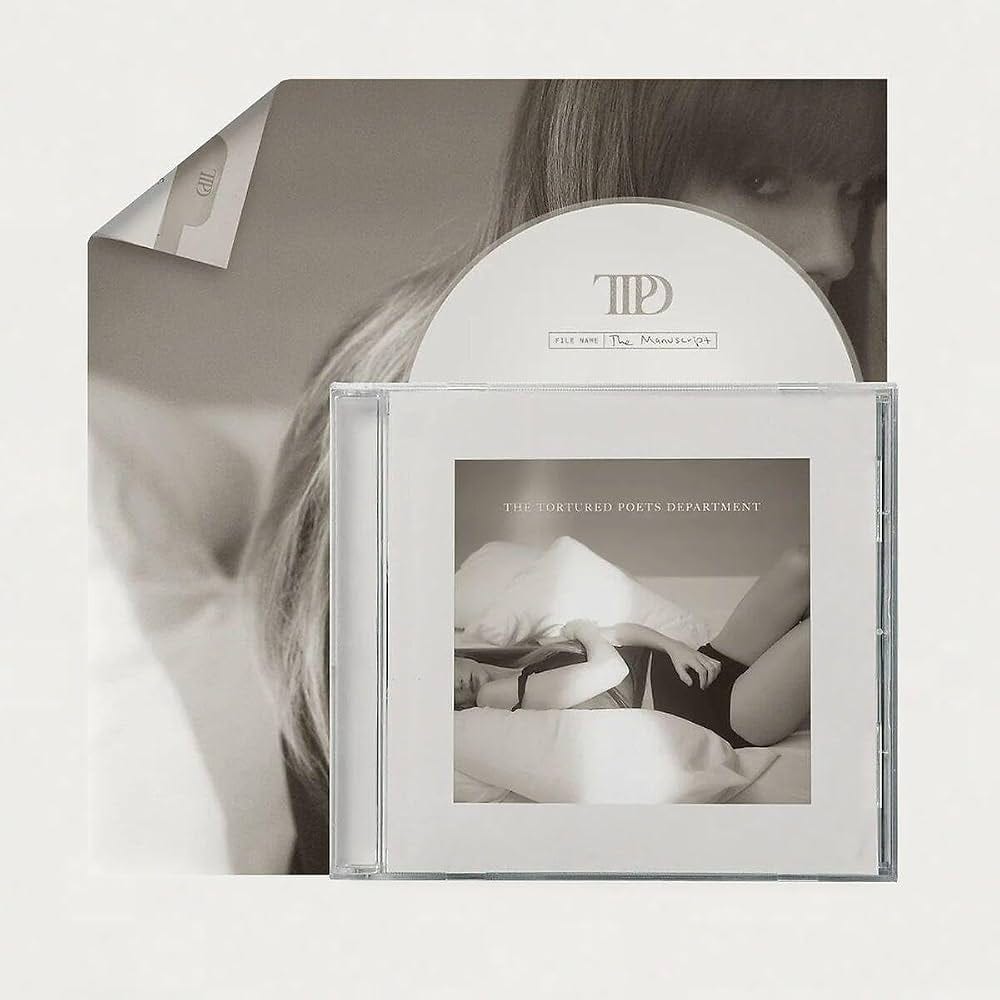
“When we buy it, we can’t return it,” he says. “Once we have them, the record company did their job, they sold it. Monster might have been discounted [after it didn’t sell well], so more people bought them in quantity because they were cheap. But they ended up just going right back into the used rack.”
So, Monster isn’t a bad album. It’s a front-loaded album that’s also confusing and polarizing because of its weird guitar sound. It didn’t produce instant revulsion like that of Lou Reed’s noise album Metal Machine Music (1975)—the most returned album in RCA’s history. Monster’s depressing turnaround was slower, but not that slow. The man who took seven years to sell his copy claims he first became aware of The Monster phenomenon in 2002. This shows that not even ten years had passed before people were dropping it like a hot potato.
Since the reviews were good and R.E.M. was already well respected, we can presume it remained in CD collections for a minute. Perhaps once the MP3 era began, Monsters were first on the collection chopping block.
Coda: Wild Mood Swings vs. Monster
We can look to another 1990s alternative rock flop for insights: Wild Mood Swings by The Cure. Both Wild Mood Swings and Monster have some things in common:
They came out in the middle of the 1990s by beloved alternative rock bands whose sales were beginning to decline
They are both considered somewhere between mediocre and bad
And while Wild Mood Swings can be found in bargain bins—there are 248 CDs of it for sale on Discogs right now—it has not become a record store punchline. Why?
Well, Wild Mood Swings had no hits, so nobody bought it for the hits only to discard it later. This means purchasers were probably already fans of The Cure. Maybe they didn’t resell the album because they felt begrudgingly loyal to the group. Instead of fuzzy guitars, Wild Mood Swings tried something more sophisticated—live strings and horns instead of the usual keyboards. They sound good, but the songs did not.
Finally, far fewer copies of Wild Mood Swings were initially sold. Its 500,000 sales in the US are nothing compared to Monster’s 2.9 million. We don’t know how many were printed, but given The Cure’s previous album moved 1 million copies, smaller than R.E.M.’s 3.5 million for their pre-Monster record, we can assume that fewer Wild Mood Swings CDs made their way to market than Monster.
By comparing these two albums, it becomes clear that the massive popularity of the R.E.M. and the hit singles drove lots of sales. This put lots of Monsters out into the world, only to be discarded later. It’s the result of sheer proportion—the bigger they come, the harder they fall.
A New One
"Someday We’ll All Fall Down" by Tomo Katsurada and Jonny Nash
2026 - Space Rock
In the past ten years or so, Jonny Nash has established himself as a premier ambient guitarist. He has a knack for making music that’s hazy yet sophisticated. On a collaborative album with Tomo Katsurada, he brings out a surprise for the final track: a song that sounds very much like a Spacemen 3 song from the late 1980s, with its driving yet blissed out guitar drifting.
An Old One
"Gold in Them Hills" by Ron Sexsmith
2002 - Singer-Songwriter
When I was a kid, my dad used to put on a sappy, emotional piano song in the car. I thought it was cheesy, but also could not help but be secretly moved by this song. My innocent brain could not handle this cognitive dissonance, and so I shoved it out of my brain. But as I entered adulthood, this song would hauntingly cross my mind every few months. I was too much of a chicken to ask my dad about it. That would involve admitting that not only did I like this cheesy song, but that I was obsessed with it.
Shortly before I turned 32, around 25 years after I first heard the song, I was waiting to get my car washed. I was unbelievably bored, and then the thought came into my head: “It’s time to ask about The Song.” I texted my dad everything I remembered about it: a male singer, piano, slow tempo, lyrics that went something like “Golden mountains, golden hills.” Within five minutes, my dad sent me the name of this song. He knew it right off the top of his head.
And so, finally reunited with The Song, I proceeded to listen to it dozens and dozens of times. It’s just as touching as I remembered it.
If this story doesn’t make Ron Sexsmith a good songwriter, I don’t know what the fuck does.
Today’s piece comes from Catherine Sinow, a writer and photographer in Portland, Oregon. She is interested in how music intersects with society in unusual ways. She has been a contributor to Can’t Get Much Higher since 2023.
Recommended Reading
Needles in Haystacks: The Lostwave Story

Earlier this year, I spoke with Paula Toledo about her whirlwind 15 minutes of fame. Toledo made music in the 2000s that never got too big, and then moved on with her life. The problem? Nobody on the internet could move on. Unbeknownst to Toledo, people online had accidentally stumbled upon her songs and had spent a decade trying to find her.
When Jessica Simpson Said My Name

Catherine Sinow - a past contributor to this newsletter - reached out to me a few weeks ago with a mystery. In 2006, Jessica Simpson released her hit single “A Public Affair” with a curious marketing campaign. Over 500 different versions of the song were recorded with people’s names substituted in where she originally sang ‘baby.’ So, if you were named …

Ive always liked crush with eyeliner
I love Monster and Wild Mood Swings. Must be something wrong with me.