


In preparing for this interview, I noticed that Steve Shelley—Sonic Youth’s legendary drummer—founded his first record label, Smells Like, in Hoboken, New Jersey. Hoboken has a rich musical legacy. Frank Sinatra was born there. Stephen Foster lived there. The city played a vital role for indie rock legends Yo La Tengo and Silver Jews—the former of which wrote a lush song about the city. And scores of bands played in the now-closed Maxwell’s Tavern. So, Hoboken is as good a place as any to found a label. But I had to know why he chose it. I live in Hoboken.
The answer was more practical than anything else. Shelley is a long-time resident of the city. So, we were unknowingly video-chatting just a few blocks apart. Over the course of an hour, my legendary neighbor and I spoke about if he felt like Sonic Youth still had more to do despite their break-up, how running a label has changed over the last few decades, and some great new releases he’s putting out. If you enjoy our conversation, check out the latest releases his current label, Vampire Blues.
You started Smells Like Records in 1993. Do you remember why you felt compelled to start a label? For a lot of people, being the person running the label seems like a headache.
It was a crazy time for lots of new sounds. Sonic Youth was traveling a lot, and we were getting introduced to a lot of new people and new music. I was always making tapes, and later CD-Rs, to share with people. I’d hear something and feel so strongly about it that I wanted to share it with a group of other people.
The first thing I put out was a Lou Barlow seven-inch. He had just sent me a tape of some songs, with no idea of what it might become. I asked him if I could do a seven-inch, and that was the first record I made back in those days.
Over the years, you got to release a lot of very cool records. There’s one I need to ask about before getting to more recent stuff. I love Lee Hazlewood, and I’m thankful that you reissued so much of his music and brought him more acclaim in the 1990s. How were you able to track him down?
It was bizarre finding Lee. We had been collecting his used records as we traveled across America—just the strangest LPs with Lee’s face on them. Between the four band members of Sonic Youth, we had quite a collection.
Then we heard that Nancy Sinatra was playing the Limelight in New York City, and there was this little mention at the bottom of the listing: “with Lee Hazlewood.” We were blown away by the possibility that this guy would be there and that he would be singing. He was such a legendary mystery to us. We all went to the show, and at one point in the set, Lee entered from behind the stage wearing leather chaps. He sang a bunch of the greatest Lee and Nancy tunes with Nancy, and we got to go backstage and meet him.
I think I asked him, “Where have you been? We’ve been looking for you.” And he said something like, “I’m right here.” I told him I was interested in releasing his older records, and he gave me his manager’s number or something. That’s how it started.
But let’s talk about Vampire Blues, the label you’re running now. It seems like a continuation, in a sense, of Smells Like. Can you give me some background on that transformation and what, if anything, differentiates the two?
I was just sick of the name. Smells Like was a lighthearted name, and it went on for too long. So I switched it over and named the new label after a Neil Young song on one of my favorite albums [On the Beach]. To me, the name conveys a little bit about the reissue business and the vinyl business.
If you had told someone 20 years ago that the vinyl business would be getting better in 2020, I don’t think they would have believed you. But stat after stat shows an explosion in vinyl sales, especially among younger people. Has it shocked you that this format just hasn’t gone away?
No. It just seemed like the ebb and flow of that sort of thing. Vampire Blues is more of a vinyl label, whereas Smells Like Records had a lot of CDs, so it did make a little transition there.
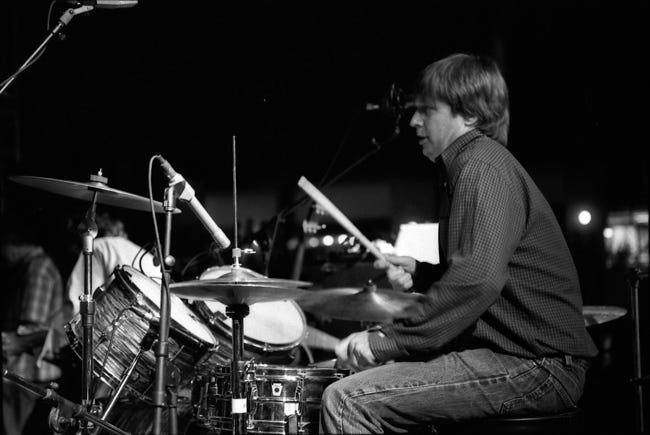
I always like talking to people who have been doing something for a long time. What have been the biggest changes in running a label over the last 30 years?
The numbers have really gone down as far as sales, so things are a lot more modest these days. We’re putting out things not thinking the band is going to make money, but hoping to break even on a project. It’s more about fun and creativity than cash.
I know you are working with Qobuz on some new releases. What drove you to partner with them, and what releases are you focusing on in the near term?
During COVID, I started uploading unreleased Sonic Youth live recordings on Bandcamp. It was really fun and successful. We always planned to eventually move them to the other streamers, but we just hadn’t done that. It was always in the back of my mind.
Then I started hearing more and more about Qobuz. More of my bandmates were sharing music on Qobuz, and I knew Dan [Mackta] was involved there. Dan had been a publicist for Smells Like Records years and years ago. We met in Memphis when Sonic Youth was making Washing Machine. He had an office above Easley McCain Recording there, so it’s all very down home. I didn’t see him often, but I knew him from long ago.
Then I subscribed to Qobuz, and I loved the sound. Streaming sound usually aggravates me, and that didn’t happen with Qobuz. Also, there’s no free plan, so you’ve got to pay to dip in there. And there are no ads. That was such a wonderful thing. Other than the lousy sound, I hate the ads we’re getting on all these subscriptions these days.

People were starting to trade music on Qobuz, and I thought about these records I had on Bandcamp that we were planning on giving to all the streamers. I thought, “What if we did something special with Qobuz and released some of these things as exclusives?” It would shine a light on these records and on Qobuz, which we were enjoying. That’s how this project got started, and Dan and I started talking about it from there. There’s also a playlist coming.
Before getting into the specifics of those releases, where do you host these radio shows?
One of my shows is on WYXR, a Memphis station at 91.7 FM. It’s a volunteer station, and I’ve been co-hosting a show there with Tim Prudhomme for quite a few years. Tim is a Memphis musician I’ve known for a long time. He’s in the band Fuck, whose records I sometimes put out.
The other show is internet-based, out of São Paulo, Brazil. I present it with two buddies I have a band with there called Riviera Gaz. We do a weekly show on Fridays on Veneno Live. Both shows are put together long distance, and that’s why streamers and song files started becoming more important.
I know you mentioned some Sonic Youth rareties, but I believe some of the other stuff you’re putting on Qobuz goes beyond that. Could you tell us about the forthcoming releases?
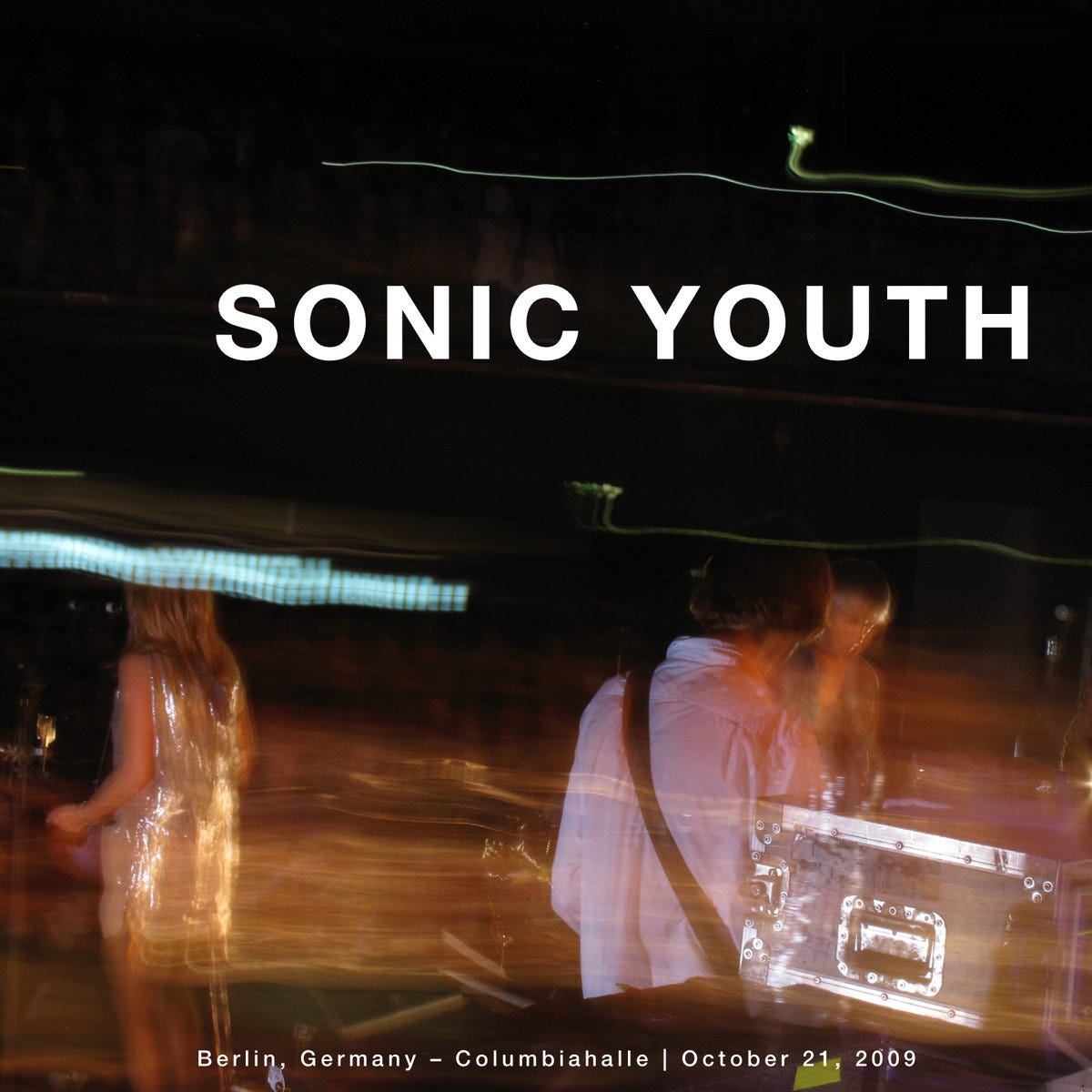
The Sonic Youth record is a live recording from Berlin in 2009. It was recorded by our sound engineer on multitrack Pro Tools, so it’s a really nice recording. It’s not just an audience handheld mic or whatever.
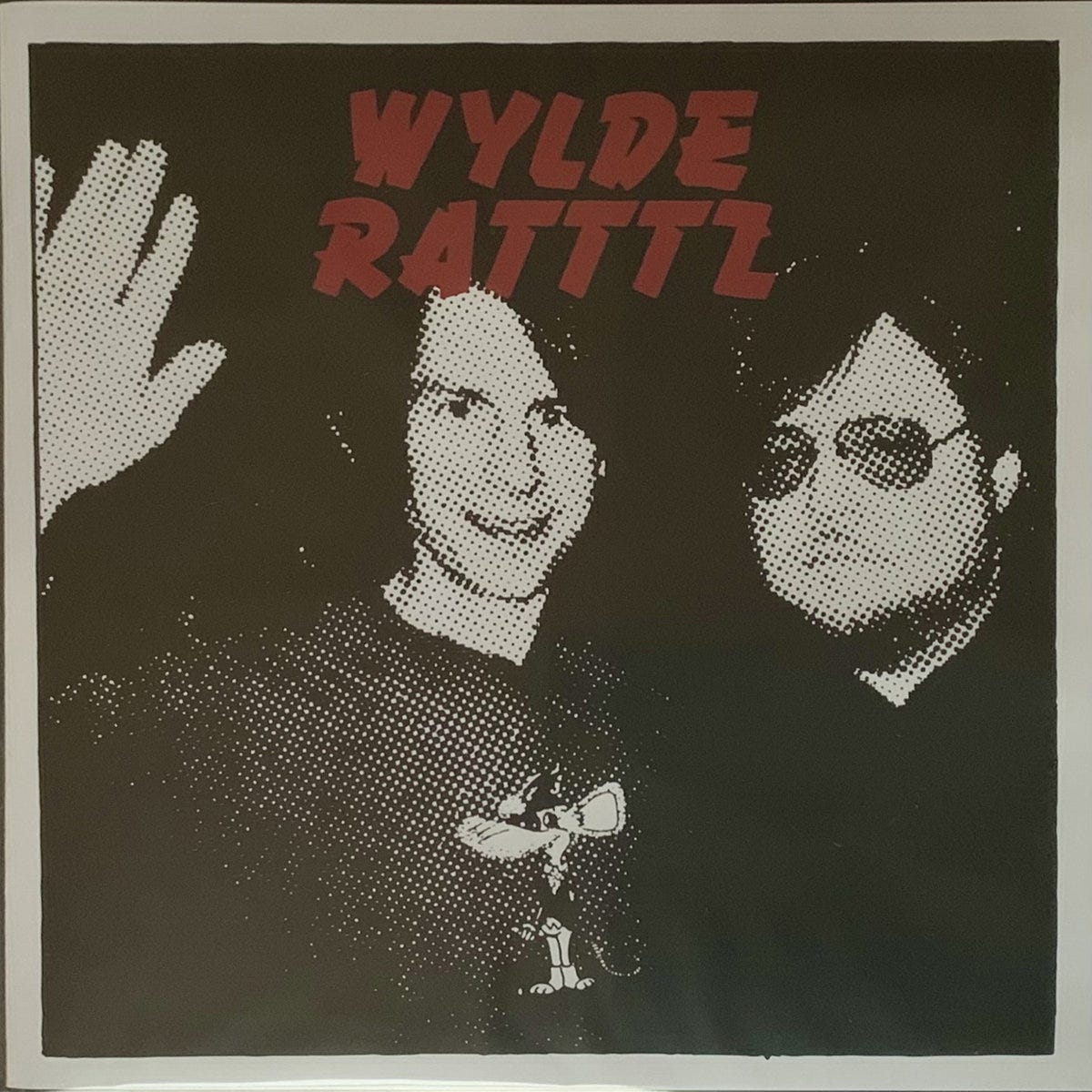
Then there’s the Wylde Ratttz, a project we started for Velvet Goldmine, a movie by Todd Haynes, who recently made that Velvet Underground documentary. We were hired to make soundtrack recordings for that movie with Ron Asheton of the Stooges, Mike Watt of the Minutemen, Thurston Moore, and myself, with Mark Arm on vocals and Don Fleming producing.
We did hours and hours of recording, but we only used one tune for the movie soundtrack, so there was lots of music that was never issued. We put it out a few years ago as a handmade, bootleg-style record, but it’s never been on the wider streamers, so that’s one of the ones we put up. It’s a lot of Stooges-type material and a couple of Pretty Things covers. I think Ron had to play a Pretty Things song when he tried out for the Stooges.
Todd Haynes also made the Dylan biopic I’m Not There, and you were involved with that soundtrack, too. Was that a similar situation to the Wylde Ratttz?
Yeah, that’s a great movie. It was a similar type of situation. Lee Ranaldo was the music director for that one, and he brought in Tom Verlaine on guitar. To play with Tom was amazing. John Medeski from Medeski Martin & Wood played keys, and Dylan’s longtime bassist, Tony Garnier, played bass with us, which was a dream. So we had this killer band.
Unlike the Wylde Ratttz, most of that material was used at the time. We would produce the tracks with different vocalists, like Karen O, Stephen Malkmus, and Eddie Vedder. Tom sang one, too.
Getting to play with Tom Verlaine seems crazy to me. Has there ever been a point where you were with a collaborator and felt starstruck?