



If you enjoy this newsletter, consider ordering a copy of my debut book, Uncharted Territory: What Numbers Tell Us about the Biggest Hit Songs and Ourselves. It’s a data-driven history of popular music covering 1958 to 2025.
Usually, this newsletter goes out only twice a week, but on this Halloween, I’m bringing you a bonus edition from contributor Catherine Sinow. Sinow is the most frequent outside contributor to this newsletter. She’s written about Kidz Bop, a Jessica Simpson mystery, ballet music, and lostwave. So, when she pitched me a piece on jumpscares in popular songs, I knew I needed to learn more. If you like what you read, check out her blog.
Too Scary, Didn’t Listen
By Catherine Sinow
If you’re into horror, you have experienced a jumpscare. It’s a narrative technique in which something suddenly appears with the purpose of startling the viewer. Found in movies, video games, live haunted attractions, and many other places, jumpscares are often grotesque and accompanied by screeching music. Many say that they’re used both lazily and excessively, but I’ve always been a fan.
Over the course of my music listening career, I’ve noticed jumpscares in songs twice: “Subway Song” by The Cure and “Strange Air” by Woob. To celebrate Halloween, I set out to write an article about jumpscares in music, but I quickly found that they basically do not exist. I browsed numerous threads about musical jumpscares, only to find people talking about songs with sudden, non-horror changes in volume, like “It’s Oh So Quiet” by Björk.
In short, jumpscares aren’t really used in music. Why? Even knowing that, is there any music that could sufficiently be called “horror” outside of soundtracks for horror films?
The Art of the Jumpscare
First, I want to paint a picture of what jumpscares actually look like throughout other media. David Lynch’s classic surrealist film Mulholland Drive has a scene where a soot-caked figure slides out from behind a dumpster. It’s great because you can clearly tell something scary is about to happen—yet when it does, it’s still jolting. Video games are also known to use jumpscares. The Japanese game The Witch’s House, for example, runs on jumpscares; there are dozens, and they’re both funny and freaky.
Perhaps the most viral jumpscare is an ad for the German energy drink K-Fee. It was an early YouTube hit that was uploaded in 2006 under the title “Relaxing car drive.” This ride ends with a zombie throwing its face into the frame accompanied by a screaming sound. The tagline for the drink shown after translates to “You’ve never been this awake before.” Though the K-Fee ad generated a ton of internet traffic, jumpscare ads are generally frowned upon. In 2018, for example, YouTube discontinued an ad for the movie The Nun after an uprising on Twitter.
The Prerequisites for a Jumpscare
Given their prevalence in other forms of media, it’s puzzling why jumpscares aren’t used in music. Music seems like a decent format for one because, like movies, the consumer experiences music in a strict linear fashion. Plus, the turns are blind. You have no idea what’s around the corner. By contrast, books don’t have this characteristic due to their “laid out” nature. (Sadly, there are no jumpscares in audiobooks either—I looked.)
Linearity alone won’t cut it, though. There’s another prerequisite: narrative. Jumpscares come in the middle of a horror story, using shock to advance the plot and punctuate the mood. Storytelling certainly exists in music. It’s a lot less common than the typical first-person love song, but it’s there. “Eleanor Rigby” by the Beatles is a classic example. Mentioned earlier, “Strange Air” by Woob has no lyrics, but it creates a pseudo-narrative through sonic textures. Simply put, jumpscares are a narrative device, and popular music, especially in the last few decades, is not a narrative medium.
In the article “The Epistemology of the Horror Story,” Susan Stewart writes about the connection between horror and narrative:
Nowhere are narratives’ images of unfolding, of hesitation, of the step and the key more thematically profound and more clearly worked on the level of effect than in the horror story. Because the horror story is adaptable to narrative techniques of face-to-face communication, the printed text, the cinema, and the simulated events of the amusement park, we might suspect that this form operates by a manipulation of narrativity itself, that its common effect works through the possibilities offered by information unfolding in time.
We can take from this that horror is uniquely entrenched in the narrative arts. Because music is not strictly a narrative medium, horror isn’t particularly at home there.
Is There “Horror Music”?
The final prerequisite for jumpscares is an obvious one, one that I stated from the start: the genre of horror. “Horror,” as Wikipedia succinctly describes, “is a genre of speculative fiction that is intended to disturb, frighten, or scare an audience.” Although the vast majority of music isn’t scary, does horror music exist? Furthermore, do these works ever utilize musical jumpscares?
Again, “Subway Song” by the Cure contains, as far as I can tell, the only actual jumpscare in rock music. On top of a mysterious bassline, vocalist Robert Smith whispers the story of a woman walking through the subway, followed by an unknown entity. The jumpscare suggests that the entity killed her. The Cure abandoned the story-song format soon after, focusing almost exclusively on first-person lyrics about love and despair.
Perhaps the most famous “scary” rock song is a 12-minute work by Suicide called “Frankie Teardrop.” Released in 1977, it’s one of the first examples of minimal synth music. In a tragic and breathy voice, vocalist Alan Vega tells the story of a broke factory worker who snaps and kills his wife and baby, and then himself. While you might consider the scream in this song a jumpscare, I don’t think it counts because there’s not enough surprise. In fact, it doesn’t really contrast with the rest of the mood the way a jumpscare does in a horror film.
As someone who primarily writes about rock and ambient music, it’s easy for me to forget that there are entire genres revolving around scaring people. No genre has better embraced horror than metal, which revolves around extremes and even has a long-standing intertwinement with horror flicks. Depending on which of the many subgenres you choose to listen to, you’ll find lyrics about violence, fear, alienation, death, Satan, and whatever other dark topics you can think of.
Early metal artists like Judas Priest (e.g., “Nightcrawler”) and Ozzy Osbourne (e.g., “Black Sabbath”) were targets of the ‘80s Satanic panic. The Norwegian black metal scene (e.g., “Where Cold Winds Blow”) of the 1990s is known for its affiliation with real-life crimes, most famously Varg Vikernes’s murder of fellow musician Euronymous. At the moment, the sludge metal band Chat Pile is embracing horror with brutal songs like “Dallas Beltway.” Similar to “Frankie Teardrop,” “Dallas Beltway” is about a person murdering their kid.
Hip-hop also has its share of scary music, often grouped under the moniker “horrocore.” Initially arising in the 1990s, horrorcore embraces morbid lyrics that go beyond descriptions of inner-city life heard on many hip-hop tracks. Some of these narratives are so gruesome and disgusting that I cannot bring myself to read them, let alone print them here. If you are looking to be spooked, some examples worth your time are Three 6 Mafia’s “Live By Yo Rep (Bone Diss),” Eminem’s “Stan,” and Gravediggaz’s “6 Feet Deep.”
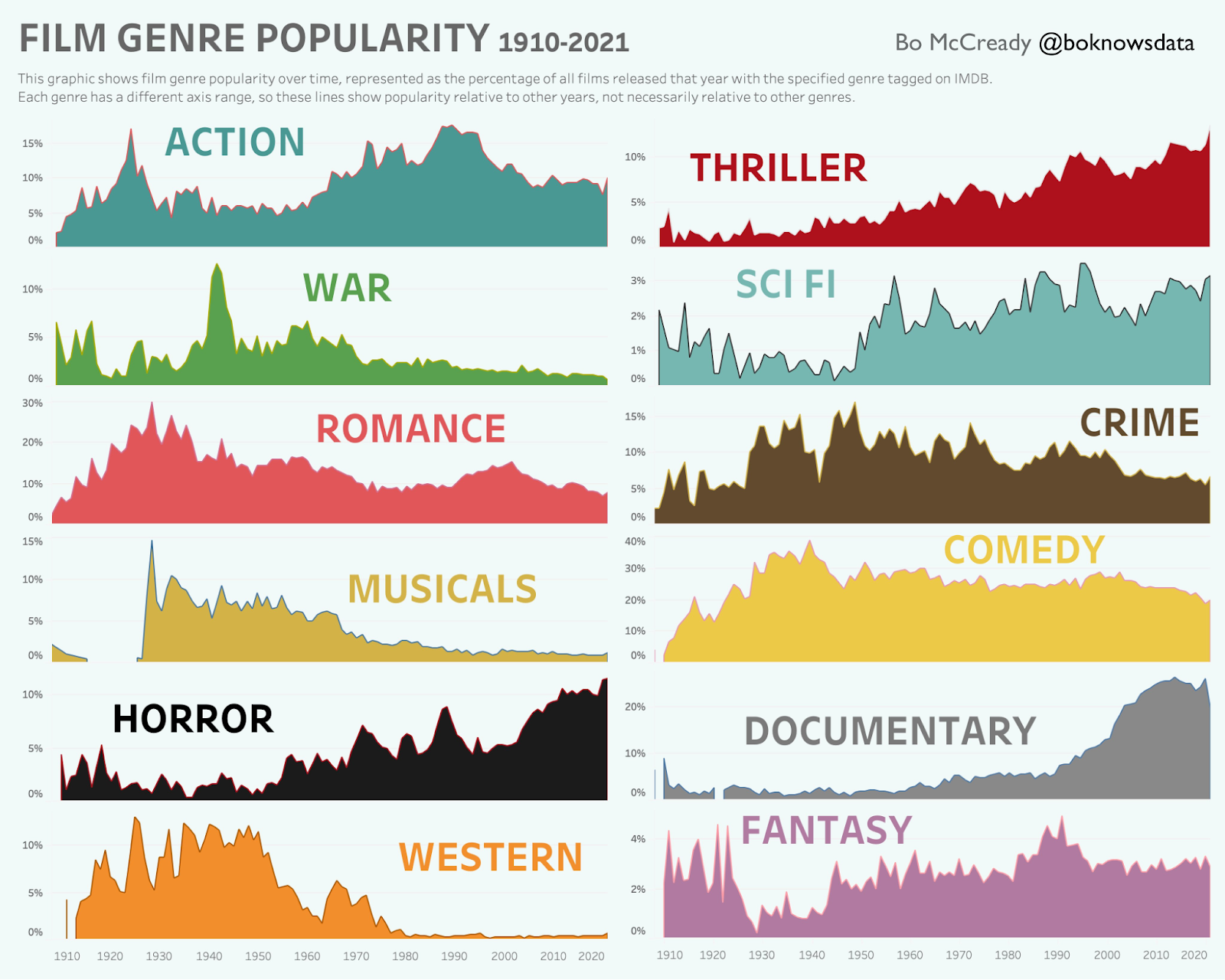
While scary musical genres can have huge, dedicated fandoms, especially in the world of metal, they seldom crossover into the mainstream. This is particularly fascinating given that horror movies have been in the midst of a modern renaissance, with films like Get Out and Hereditary attracting mainstream audiences.
A Pleasurable Emotional Tapestry
As we’ve established, there definitely is “scary” music, mostly confined to particular musical genres. But are there jumpscares in them? None that I can find.
Again, I believe this is for a few reasons. First, modern popular music is not very narrative-based. Second, even when there is a scream in a song, there often isn’t much contrast when the scream happens. In films, jumpscares often happen after a tense silence with the contrast being the key to the fright. Music is not a medium known for silence—in most genres, the space is pretty much filled.
As Emery Schubert writes in his article “The Fundamental Function of Music,” “Music can be defined as an auditory stimulus whose fundamental function is to produce pleasure in the listener … neural displeasure centres are inhibited during these experiences, allowing the activation of rich and numerous memories and emotions.” If most people are looking for a pleasurable emotional tapestry from their music, then it’s not a shock that most people don’t want a scream in the middle of whatever they are listening to.
But if there’s any day to give a jumpscare a try, it’s today. On this Halloween, I invite you to play “Subway Song” and “Strange Air” wherever you end up in your costume. The guests will love it.
A New One
"Like Clay" by Lucy Gooch
2025 - Ambient Pop
The 1980s group Cocteau Twins has a sound so ethereal that it’s a meme at this point. Many subsequent acts have been compared to them, but how many of them are actually good? A lot of them imitate the singing and production style without understanding what made the Cocteau Twins special.
Lucy Gooch, who recently released her first full-length album, is capturing and furthering the essence of Cocteau Twins’ album Victorialand. Gooch’s song “Like Clay” is both dark and airy with carefully layered vocals. Her music is the emotional “dream” that dream pop really ought to sound like.
An Old One
"Cups" by Underworld
1999 - House
Underworld is known for bringing a rock star persona to dance music. Frontman Karl Hyde possesses an aggressive, sexy delivery and lyrics that are deeply affecting despite being kind of nonsense. House songs texturally evolve, sure, but the surprising arc of “Cups” with its transcendent ending feels closer to a progressive rock song than anything else.
This piece was by Catherine Sinow. Sinow is a Californian living in Oregon. Her writing explores how music intersects with society in unusual ways. If you want to check out more of her writing, check out her blog.

“Subway Song” is such a great one. Even today, after listening to that album for decades, if I have it on in the background it sometimes still gets me.
In terms of horror in music, it often comes down to lyrical themes for me. A good example is Lowest of the Low’s “7th Birthday”. If you weren’t paying attention to the lyrics you might find it a pleasant song with the verse “Happy birthday, happy birthday, happy birthday fun” resonating happy vibes. But once you hear the follow up line “don’t tell anyone”, go back and listen and realize what the song’s about, it’s disturbing: https://youtu.be/XCl7xqz2_Mk?si=LbzWFtw5xMZ5ZV9E
No mention of Joseph Haydn's Symphony No. 94 in G Major... LOL