


When I published an essay a few weeks ago titled “Is the Album Dead?”, I was thrilled so see many of my favorite writers sparking great conversation in the comments. Mark Richardson. Carl Wilson. Gabbie. But among all those comments, one stuck out to me. It was from Keith Jopling:
Dear Chris + those on thread. You can deep dive into the phenomena behind the album’s success in ‘the digital age’ in my book Body of Work: How the Album Outplayed the Algorithm and Survived Playlist Culture. Website here: https://www.songsommelier.com/body-of-work - get in touch if more curious about how and why I wrote it! - K
“That sounds like an interesting book,” I thought to myself. So, I told Mr. Jopling to shoot me an email. After his name appeared in my inbox, we set up some time to talk about why the album feels eternal in a world where everything is changing. If you enjoy our conversation, pick up either of Jopling’s books: Body of Work: How the Album Outplayed the Algorithm and Survived Playlist Culture and Riding the Rollercoaster: How Artists Survive the Music Business to Become the Legends We Love.
The album format has been the dominant format for serious bodies of music for decades now. Can you start by giving us a bite-sized history of how the album format emerged? Was its development driven by technology, listeners, or artists?
Development was driven first by listeners and technology and then artists. Early collectors of 78 RPM records kept their collections (i.e., classical & jazz) in ‘books’ that looked like photo albums. In 1948 Columbia then manufactured the first 33 RPM that could hold 20 mins per side.
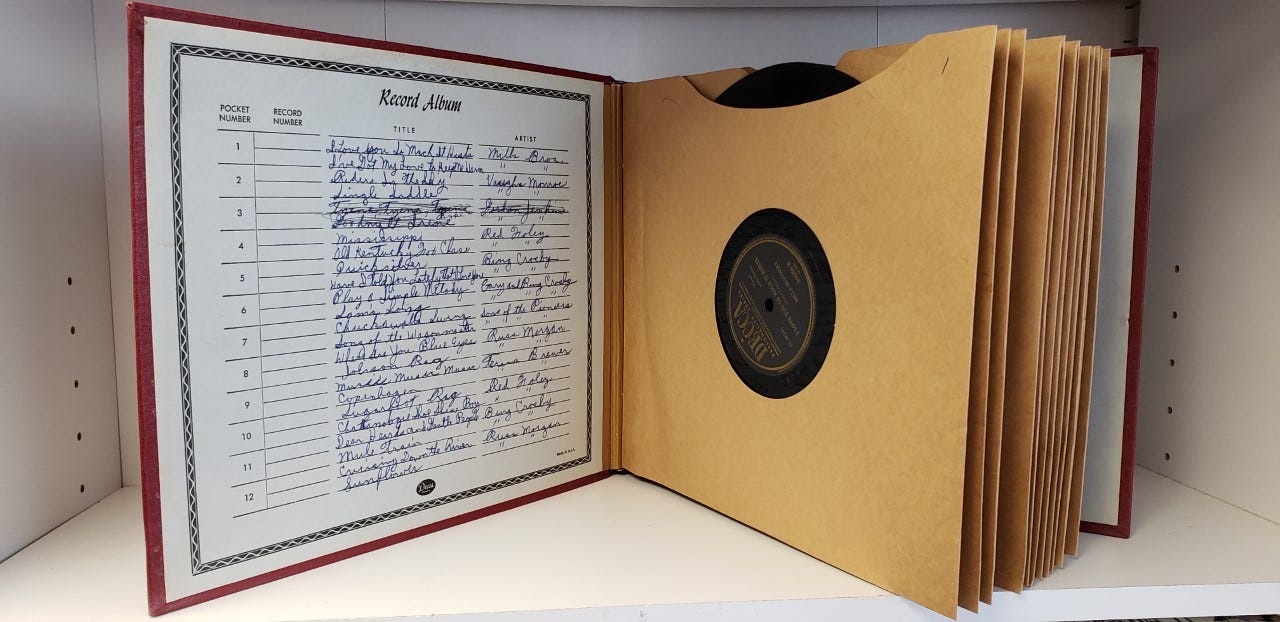
This is when record companies invented products. Imagine that! When artists realized they had this format to work with, that’s really when the album came full circle. In my book Body of Work, I point out the debate about who really utilized the format for breakthrough releases. Sinatra, The Beatles, and Led Zeppelin all played critical roles.
The internet, and subsequently streaming, was supposed to kill the album, yet it continues to exist. Just this week, Drake released three albums that have people talking. Why do you venture the format has persisted even though there’s no technological reason for it to?
That’s why I wrote Body of Work. Explaining why (and how) goes beyond data analysis and defies logic. But first, artists stuck with albums because songs come in batches in a way. And it provides a container whereby the songs can be arranged thematically while also cherry-picking singles. All experiments and attempts to break away from the album cycle—from the artists perspective—have failed.
A song is not a story. They are chapters—extracts. It turns out the artistic format won out over commercial pressures, technological innovation and—right now—our attention spans. That’s why I’m so optimistic. I feel like right now, there is a great creative race to make really great albums by artists of all levels and genres. There is a desire to add to the catalogue of great works down the years. After all that’s why they create, not to be on playlists or viral videos.
I feel like this is their “antidote” to the platform tech world in which no one is quite comfortable. We call them artists, after all. Ultimately, we are the beneficiaries of this if we care to notice!
You and I both grew up with albums. So, it makes sense that we would still care about them in the digital age. Why do you think the album will live on even for kids who grew up their whole lives with streaming?
Because those kids want the artists’ histories—their trajectories and, indeed, bodies of work. And it’s all told in album form. Take Michael Jackson, who’s been back in the culture via a bad movie. He has amazing songs, but if want to dissect his creative career, you go one album at a time. Kids are discovering it—and guess what?—they get it.
For the last decade, people in the industry have talked about the primacy of the playlist. And there have been playlists that have grown followings, like Spotify’s lorem and Rap Caviar playlists. Even so, neither of those have the staying power of an album. Why?
I agree. Playlists were huge. They ate radio, then retail, and then the album. Almost. All three remain. And so are playlists, but they feel a little passé, I think because they always kept on getting bigger and became unwieldy. I think mixtapes will soon be back in cassette format! Those “old” formats were perfect vessels. We enjoy them.
Do you see any ways that streaming services could better enhance album listening?