


Welcome back to Can’t Get Much Higher, the internet’s favorite place for music and data. If you enjoy this newsletter, check out my book Uncharted Territory: What Numbers Tell Us about the Biggest Hit Songs and Ourselves. It’s a data-driven history of popular music that I wrote as I spent years listening to every number one hit in history. Now, let’s talk albums.
Is the Album Dead?
By Chris Dalla Riva
You should always be on a quest. No, it doesn’t have to be death-defying quest to destroy the Ring of Power, but there’s something healthy about going on a long but accomplishable journey. Let me give you an example.
If you’re a regular reader here, you’ll know that my friend Ken de Poto and I are listening to an album every day this year. A 365-day listening program represents a substantial amount of time, but I don’t think anybody will be shocked when we finish it. It doesn’t require much endurance or brain power. It just requires you to carve out around 45 minutes each day to listen to music.
Even using the term “carve out” is overstating things. You can listen to music passively while you’re at work, in the car, or at the gym. Still, there is something psychologically powerful about a long but attainable quest like this.
It Gives You Purpose: Even on the most boring day, you know you have something to do.
It Keeps You Social: While you can go on a quest alone, I suggest bringing along a friend. Assuming the quest requires daily work, it forces you to talk to at least one person each day.
It Makes You Think: A good quest requires at least a little bit of thought. For my current album quest, each week has a theme. Even when the theme is simple (e.g., an album you’ve never heard by an artist you love), you’ve still got to use your noggin.
One side effect of a quest is that you usually end up learning something unexpected. Just a few weeks ago, for example, our album quest had us listening to records released before 1950. I wasn’t expecting this to result in anything beyond gaining familiarity with the Bing Crosby and Woody Guthrie catalogs. But something strange happened. I realized that the album as we know it didn’t really exist before 1950.
Albums were not common before 1950: What we know as the “album era” really only began after Columbia Records invented the 33⅓ rpm long-playing record, or LP, in 1948. Before that, an “album” was a collection of 78s sold in something that resembled a photo album. (That’s actually where the term album comes from.) But because of this technological limitation, albums were not common.
Even if a pre-1950 album exists, it’s likely not on streaming services: Because popular music pre-1950 was more focused on individual songs, many of those original collections have not made it to streaming. To be clear, the songs are on streaming services, but they are usually packaged as retrospectives or greatest hits records.
In short, though the album feels like a very natural format for recorded music, it was enabled by technology. Artists and listeners were constrained by physical media. But I soon realized there was one problem with my epiphany: It wasn’t true.
Not long after publishing that, I was talking to jazz critic and historian Will Friedwald. It’s actually a misconception, he told me, that the album was a technological invention of the late 1940s and early 1950s. He details that in his book The Great Jazz and Pop Vocal Albums:
The concept of the album had a long and respectable run. We know of pop albums going back to at least 1926, when the dominant format—virtually the only format—was individual 78 rpm discs. The 10-inch LP medium, introduced in 1948, was the next step forward, succeeded by the 12-inch LP, which became the standard, in America at least, about 1955, and then the compact disc (from 1985 on). The CD would be, so far, the last physical format for which artists would put together programs of creative and interesting music. In the post-physical age of listening to music, the album is more or less passé: kids primarily download individual tracks, and pay attention to entire albums only secondarily. Thus the age of the pop music album is finite, stretching for roughly eighty years, picking up speed slowly from the mid-1920s onward and then losing momentum quickly in the mid-“aughts.”
So, the album age did have a beginning. It was just a few decades earlier than I originally thought. But what Friedwald’s writing got me thinking was that the album age ended with the rise of digital online music in the 2000s.
The Reports of My Death Have Been Greatly Overstated
You don’t have to look far to find people prognosticating about the death of the album. People tweet about the album’s death. They write about about it on their personal blogs. They do the same in major publications. They are even litigating the matter on Wikipedia.
To be clear, there is no doubt that the relationship between the artist, the listener, and the album has changed dramatically since the rise of the internet. As I write in my book, “If you wanted to listen to ‘Honey’ by Mariah Carey when it came out in 1997, you’d likely have to buy her entire album Butterfly even if you disliked everything else on the record.”
Much to the chagrin of the music industry, this is no longer the case and hasn’t been for a long time. Not long after the release of Carey’s Butterfly, you could illegally rip your favorite tracks from the album on Napster. If you were a law-abiding citizen, in a few years you could buy those same tracks on iTunes for $0.99. Now, things are even simpler. Just open up your favorite streaming service and click play. Mariah Carey and her vocal histrionics are all yours. The single is supreme in the streaming age.
The problem with this narrative is that it actually doesn’t seem to be true. If the album were truly dead, I would expect stadiums to be sold out by artists who have multiple songs that go viral on TikTok. That’s not the case, though. The graveyard of TikTok hits is lined with artists whose names you’ve never heard of. If you want a career, you need to make great albums.
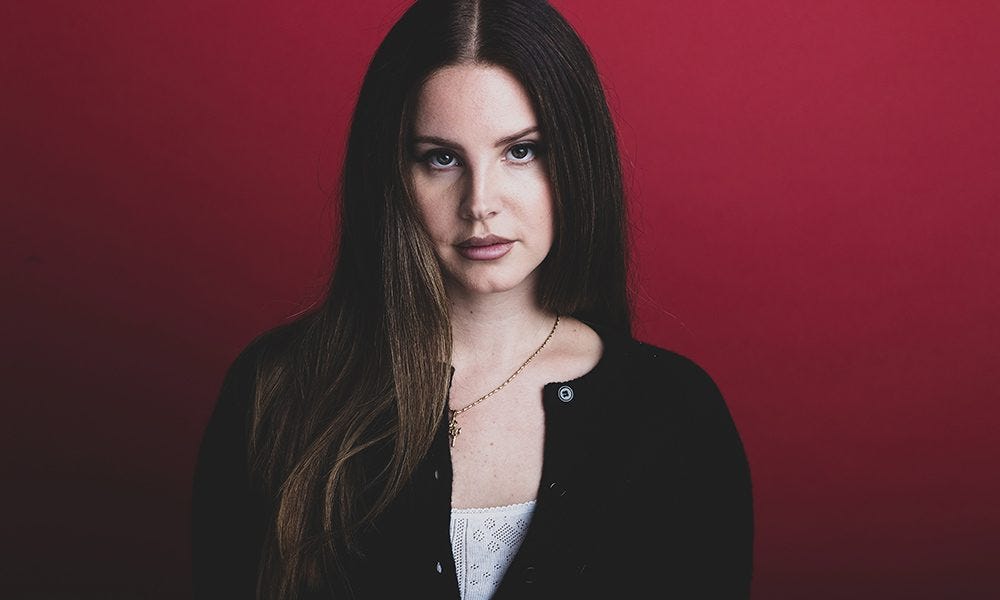
Lana Del Rey proves a great example of this. Despite having not released a top 40 single since 2014, Lana Del Rey is currently the 29th most popular artist on Spotify. Her albums are packed with structurally atypical songs often stretched over five minutes. Her audience is also more dedicated than anyone who’s scored a few viral hits on TikTok.
When you look at the biggest pop stars over the last decade, the thing that unites them is a dedication to the album format:
Taylor Swift’s record breaking Eras Tour was built around celebrating her career one album at a time
Geese, the most talked about indie rock band, grew a fanbase by releasing consistently quality albums rather than singles
In 2025, LP sales in the US crossed $1 billion in revenue for the first time since 1983
I’d go so far as to argue that if there is an artist consistently selling out arenas that they have built their name around albums rather than singles. That’s not to say that the album is held up as sacrosanct in the streaming age. If you look at the stream counts on, say, Billie Eilish’s WHEN WE ALL FALL ASLEEP, WHERE DO WE GO, you’ll see that the first track—a 13-second introduction—has only 241,000 streams. The most streamed has billions. If people were listening to the album straight through, those numbers would be much closer.
But were people always listening to albums straight through during the true album era? No. You couldn’t pick albums apart as easily as you can on your streaming service of choice, but albums have been sliced and diced for generations.
In the radio age, singles were given primacy over the album cuts
In the vinyl age, you could choose to start with Side B if you didn’t like Side A or drop the needle on a specific song
In the cassette age, mixtapes were made and traded by recording songs from the radio
In the CD era, you could easily skip to specific tracks on albums
Older technology made it more natural to play an album front-to-back, but the human desire to hear specific songs is nothing new. As Glenn McDonald notes in his book You Have Not Yet Heard Your Favourite Song:
[M]ost of the albums released during the LP/CD era were not so artistically albumesque. Most of them didn’t come in gatefolds, and most of them were not ‘concept albums’ … Most popular albums were just commercially strategic packaging of groups of popular songs, or more accurately, of carefully planned combinations of popular and not popular songs …
So, while the album in 2025 is different than the album in the 1975, it is still the vital force in an artist building a career that lasts. If you ignore it, you’re bound for the discount rack—or whatever the digital equivalent of that is.
A New One
"Too Easy" by Tig3r Lewis
2026 - Neo-Soul
Despite releasing his latest single “Too Easy” just a few days ago, Tig3r Lewis seems to be following a well worn path for artists in every genre. A few buzzy songs were followed by a record deal. His debut EP will follow next month. If he wants to have a long career, he is sure to release an album after that. His husky voice is one that could stick around if he’s got a great collection of songs in him.
An Old One
"Cinnamon Girl" by Prince
2004 - Power Pop
“Albums,” Prince intoned when he stepped to the stage to present Album of the Year at the 2015 Grammys, “still matter, like books and Black lives.” The Minneapolis musician lived by those words for the entirety of his all-too-short life. A Prince album was always a cohesive statement.
I recently listened to Prince’s underrated 2004 album Musicology for the first time. Though it is mostly an exploration of R&B, it reminded me how Prince could toss off pop rock songs better than most musicians strictly working within the genre. “Why You Wanna Treat Me So Bad?” “When You Were Mine.” “I Could Never Take the Place of Your Man.” On Musicology, he breaks off another: “Cinnamon Girl.”
Shout out to the paid subscribers who allow this newsletter to exist. Along with getting access to our entire archive, subscribers unlock biweekly interviews with people driving the music industry, monthly round-ups of the most important stories in music, and priority when submitting questions for our mailbag. Consider becoming a paid subscriber today!
Recent Paid Subscriber Interviews: Pitchfork’s Editor-in-Chief • Vinyl Specialist • Spotify’s Former Data Guru • Hall of Fame Songwriter• John Legend Collaborator • Broadway Arranger • Indie Label Founder• Fender Exec
Recent Newsletters: Two-Hit Wonders • The Lostwave Story • Forgotten Artists • Album Cover Colors • Bad Ways to Die • A Frank Sinatra Mystery • Slop Problems
Want more from Chris Dalla Riva? Get a copy of his book Uncharted Territory: What Numbers Tell Us about the Biggest Hit Songs and Ourselves wherever books are sold.
Good overview. The persistence of albums has as much to do with artists and the industry as it does listeners. Albums are a way to measure greatness, and artists want to be part of that lineage, to prove themselves. Albums are a way to focus attention and provide structure for conversations. I don’t think they’re going anywhere any time soon.
A nitpick: In the cassette era(s), people made tapes at least as much from albums (records, CDs, and other tapes) as they did from the radio. I would guess more. It was partly to cherrypick the best tracks from albums, but also for social exchange, for portability (if you had the album at home, you'd tape it so you could listen on your walkman without rebuying it) etc etc.
In general: It seemed so logical a decade ago to predict the demise of the album in favor of loosie singles and playlists. Didn't happen. And I agree with Mark that it's probably artists who are the biggest influence - they still want to *make albums. It will be interesting to see if that changes in the future, with artists who didn't grow up with physical media, but for now.