


My friend Ken and I decided to listen to an album every day this year. Each week is themed. At the end of each week, we rank what we listened to. To be clear, we aren’t ranking every album that fits the theme. We are only ranking what we chose to listen to during the last seven days.
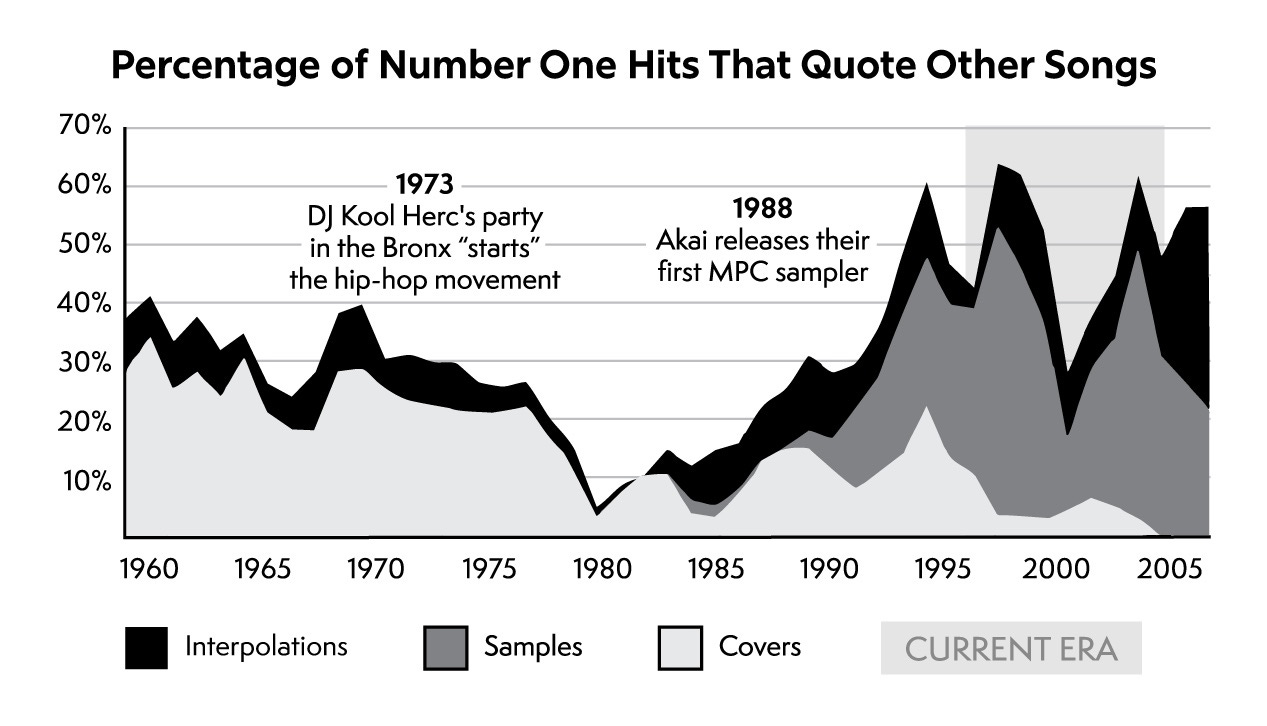
This week’s theme is “21st century covers,” meaning albums released on or after January 1, 2000, that feature at least one cover. The cover song was a staple throughout the 20th century. The Beatles first few albums are filled with them. Of course, you can find scores of covers across YouTube today, but they are no longer a common element on studio albums by popular artists. Why? Well, you’ll have to turn to my book for that.
#7 Immortalized by Disturbed (2015 - Cover: “The Sound of Silence” by Simon & Garfunkel)
I let my friend Denny know that I was about to listen to Immortalized by Disturbed. He’s an expert in whatever genre you’d class them under. I am not. His response did not leave me with much hope: “Why? That album sucks.”
And it does suck! Sure, Disturbed can clearly play. The musical performances are all well-executed across this album. But David Draiman’s raspy baritone drove me nuts. When you combine that voice with lyrics that capture what seems to be a divorced guy going through a midlife crisis in the most stereotypical way possible, I just can’t do it (e.g., “Save Our Last Goodbye,” “Who,” “Fire It Up”).
Was the cover better than the original? Disturbed’s cover of “The Sound of Silence” gives you hope. It begins with an eerie piano before Draiman intones the iconic “Hello darkness, my old friend.” And he delivers these opening lines well.
Despite my gripes, Draiman’s got some vocal chops. But then as the intensity builds, the song almost becomes cartoonish. If you sing “And the people bowed and prayed / To the neon god they made” with as much force as Draiman, Paul Simon’s poetry is hard to take seriously. In other words, this cover is not better than the original, and it will give you a deep sense of longing for Art Garfunkel’s close harmony.
#6 Oops!… I Did It Again by Britney Spears (2000 - Cover: “(I Can’t Get No) Satisfaction” by The Rolling Stones)
You don’t have to be a fan of Britney Spears to know that her sophomore record, Oops!… I Did It Again, was a clear attempt to recapture whatever made her debut album, ...Baby One More Time, go diamond in less than a year. The songwriters and producers are mostly the same. Some lyrics mention songs from the first record (e.g., “Stronger” → “...Baby One More Time”). When their aren’t overt lyrical references, the musical choices are pulled also from a similar bag of tricks. I mean both album titles even contain an ellipse.
Again, that debut album sold a lot of copies. So, something must have worked there. And when the recreation hits the mark, it works well. The title track has an infectious groove. “Lucky” has a chorus that will get lodged in your head for days. But when everything doesn’t line up, these songs aren’t more than silly teen pop confections (e.g., “Dear Diary”).
Was the cover better than the original? Spears’ debut had a cover of Sonny & Cher’s “The Beat Goes On,” so it’s no surprise that her team turned to another 1960s hit on her sophomore record. Sadly, her rendition of “(I Can’t Get No) Satisfaction” is not only horrendous but inexplicable. I wish I could been in the room to understand how it got made.
I wouldn’t even list “Satisfaction” as one of my top twenty favorite Stones’ songs, but Rock Hall inductees still take this one. If you insist on a cover of the classic, please turn to Otis Redding’s live version. If you insist on hearing Britney Spears cover a song, I guess her version of “The Beat Goes On” is a better choice.
#5 Gettin’ Old by Luke Combs (2023 - Cover: “Fast Car” by Tracy Chapman)
Here is how Pitchfork described Luke Combs 2026 album The Way I Am:
Big and bright, balanced between ballads and sports-bar anthems, The Way I Am plays like an hour of prime contemporary country radio … There are songs about whiskey, Saturday night, and Daytona; tunes about cowboys, loneliness, and everlasting love. These are hand-me-down stories, delivered in a familiar fashion, distinguished by an expert sense of craft.
This description could well apply to every album in the Luke Combs catalog, including Gettin’ Old. I don’t mean that as an insult. I enjoy some Luke Combs songs (e.g., “Beer Never Broke My Heart”). He’s got a great country voice, and he’s always backed by top-notch musicians. But you don’t come to Luke Combs for anything ground-breaking. You come for “The Beer, the Band, and the Barstool.”
I think this lack of sophistication is laid bare when you hear Combs cover Tracy Chapman’s “Fast Car.” “Fast Car” is a song built around plain language and simple storytelling. In that sense, it resembles a Luke Combs song.
But the way “Fast Car” is able to create a dense, layered tale of dreams and desperation with that simple language is so far beyond what Combs and his collaborators are able to accomplish on Gettin’ Old. Lucky for us, he does have the option to just cover songs like these rather than try his hand at writing them.
Was the cover better than the original? Luke Combs’ cover of “Fast Car” is about as faithful as a cover can come. Basically, nothing is added or taken away. And while I think Tracy Chapman’s original version is great, I have no particular attachment to it. I’d be just as fine listening to Combs’ cover as I would be the original.
#4 Echoes of Silence by The Weeknd (2011 - Cover: “Dirty Diana” by Michael Jackson”)
The Weeknd is a rare pop star in that he arrived more or less fully-formed. Before he’d even dropped a single, the Canadian singer put out a trio of albums (or mixtapes) in a year. The last of those albums was Echoes of Silence. It’s got everything you’d come to hear on his biggest hits.
You’ve got the sensual R&B (e.g., “Montreal”). You’ve got the beats that make you feel like you’re in a haunted house (e.g., “XO / The Host”). And, of course, you’ve got the crisp upper vocal register seamlessly shifting between falsetto and head voice (e.g., “Next”). If you want The Weeknd without any of the baggage that comes with the hits you’ve heard 1,000 times, this is a great place to turn.
Was the cover better than the original? The Weeknd’s cover of “Dirty Diana” is hidden on Echoes of Silence. It’s listed as “D.D.” I’m happy it’s titled like this. It allows you experience the cover without any preconceived notions. And it’s a nice take on the song. It’s got the intensity of Jackson’s original while updating the production for the 2010s. I’d take either version.
#3 Anti by Rihanna (2016 - Cover: “New Person, Same Old Mistakes” by Tame Impala)
It’s a shame that Rihanna traded music for make-up after releasing Anti—assorted features and songs for movies aside. Unlike earlier single-driven efforts, Anti is a cohesive statement, characterized by downtempo rhythms and emotional distress (e.g., “Desperado,” “Consideration”).
My only gripe with the record is that its momentum is slowed by closing the album with three consecutive ballads. Yes, “Love on the Brain”—the soulful number that shows Rihanna’s voice at its best—is among those ballads. But they would have worked better in a different sequence.
Was the cover better than the original? Although performed under a slightly different name (i.e., “Same Ol’ Mistakes”), Rihanna’s rendition of Tame Impala’s “New Person, Same Old Mistakes” is a faithful cover. In fact, it’s so faithful that I would believe it if you told me that they just removed Kevin Parker’s voice from the original and had Rihanna re-sing it. In that sense, the cover works, but it’s kind of pointless. I’ll give Tame Impala the victory here.
#2 Lianne La Havas by Lianne La Havas (2020 - Cover: “Weird Fishes” by Radiohead)
Lianne La Havas is a sophisticated musician. On her self-titled album—supposedly a concept record detailing the entire arc of a failed relationship—you’ve got both sophisticated rhythms (e.g., “Can’t Fight”) and harmonies (e.g., “Please Don’t Make Me Cry”). And La Havas puts these sophisticated rhythms and harmonies to use across an array of genres.
Frankly, I found this album so musically rich that I didn’t really care about or connect with the fact that La Havas was trying to tell a cohesive story across each song. That’s not an issue. The album works whether or not you care about the narrative. But as with other concept records I listened to this year, the story does not announce itself loudly.
Was the cover better than the original? I’m sorry to say that I’ve never been a big Radiohead fan. Lianne La Havas’s voice on “Weird Fishes” is much more pleasant to me than Thom Yorke’s yowl.
#1 A Sailor’s Guide to Earth by Sturgill Simpson (2016 - Cover: “In Bloom” by Nirvana)
The most common question I get in this column is some variant of “Why didn’t you listen to [INSERT CLASSIC ALBUM] this week? It’s much better than [HORRIBLE ALBUM] you listened to.” Sure, I would have loved to listen to John Lennon’s Plastic Ono Band during murdered musicians week, but I’ve heard that album too many times to count. We try to listen to things we’ve never heard before here. I’m happy I made an exception for A Sailor’s Guide to Earth, though.
I was into A Sailor’s Guide to Earth when it came out in 2016. In fact, I was so into it that I was rooting for it to win the Grammy for Album of the Year after getting a surprise nomination. But for whatever reason, Sturgill Simpson’s album fell out rotation in my house. Because I hadn’t heard it in a decade, I figured I could count it as new. And this new/old album was just as good as I remembered.
A Sailor’s Guide to Life is a loose concept record that sees Simpson using oceanic metaphors and imagery (e.g., “Breakers Roar”) to provide advice to a newborn (i.e., “Brace for Impact”). Simpson is usually classed as a country—or alternative country—artist. But his ambitions are bigger here. His seafaring journey is as indebted to rock and soul as it is to the southern genre.
Was the cover better than the original? Simpson’s “In Bloom” is a clever reimagination of the Nirvana classic. And I tip my cap to him for that. It’s hard to breathe new life into a song you’ve heard many times. But it’s also hard to best Cobain, Grohl, and Novoselic. The Seattle trio take the victory here, but Sturgill’s version will never make me mad.
Shout out to the paid subscribers who allow this newsletter to exist. Along with getting access to our entire archive, subscribers unlock biweekly interviews with people driving the music industry, monthly round-ups of the most important stories in music, and priority when submitting questions for our mailbag. Consider becoming a paid subscriber today!
Recent Paid Subscriber Interviews: Pitchfork’s Editor-in-Chief • Vinyl Specialist • Spotify’s Former Data Guru • Hall of Fame Songwriter• John Legend Collaborator • Broadway Arranger • Indie Label Founder• Fender Exec
Recent Album a Day Themes: Artists with Honorifics • Not that Guy • 1977 • The Song is the Album is the Artist • Murdered Musicians • Random Rolling Stone • American Idol Disappointments • Butt Rock • Q but No Queens • 1990s Hip-Hop • Trading Favorites • Concept Records • Peaked at 200
Want more from Chris Dalla Riva? Get a copy of his book Uncharted Territory: What Numbers Tell Us about the Biggest Hit Songs and Ourselves wherever books are sold.
I have to disagree on the original of "The Sound of Silence" being better than the cover. In theory I shouldn't like the cover. I'm a big fan of vocal harmony - the original is an excellent duet and the cover is sung as a solo. I generally dislike (and in many cases despise) nu-metal or grunge or whatever genre it is that Disturbed falls in.
But I think the cover here is better. I suppose you could make the argument that the contradiction between the pleasant harmonies of Simon and Garfunkel and the bleak imagery of Simon's lyrics is what makes the song work, but I think it just dilutes it. The original drags; the cover builds. It takes the lyrics seriously. Musically, the cover is stronger too. Draiman has some real range, and he shows it off here. He's singing with power, but it's still singing and not screaming. I like the piano and strings better for this song than the original's acoustic guitar and snare drum. Overall it's just an improvement in almost every way.
Chris, thanks!