
Pop Stars are Disappearing
But not in the way you think
After the longest break I’ve ever taken from anything ever, I am newly wed, freshly honeymooned, and back to tell you about all things music and data. Today’s piece is one that I have had kicking around for a while.
If you enjoy this newsletter, check out my book Uncharted Territory: What Numbers Tell Us about the Biggest Hit Songs and Ourselves. It’s a data-driven history of popular music that I wrote as I spent years listening to every number one hit in history.
Pop Stars are Disappearing
By Chris Dalla Riva
Earlier this year, my sister put on some music when we were hanging out. I was really vibing with one of the songs, so I asked her who the artist was. “I,” she paused, “I don’t know.” I don’t expect my sister to have encyclopedic knowledge, but this was a song she specifically saved on Apple Music. “What do you mean you don’t know?” I asked. “You’re the one that put it on.”
She quickly explained. She heard the song in the background of a TikTok. She clicked the song, and then pressed the button within the app to save the song on Apple Music. From that point forward, she only heard it when she was shuffling her saved songs. In other words, she wasn’t lying. She both enjoyed the song and had no idea who performed it.
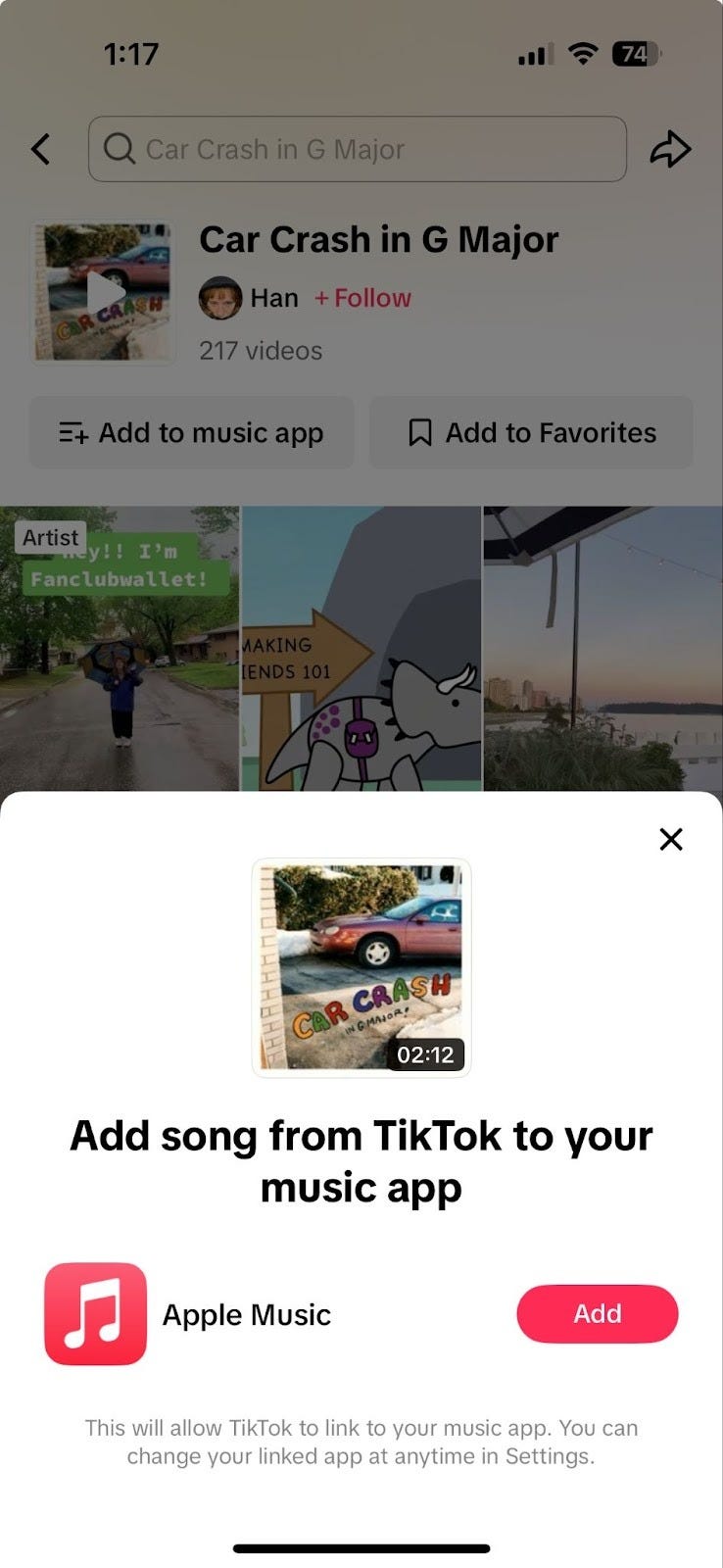
Though this situation struck me as strange, I came to realize that my sister wasn’t really at fault. Many people engage with music like this. Anonymous pop stars are lurking among us.
The Anonymization of the Pop Star
You’ve probably experienced what my sister described many times. You recognize a popular song from TikTok but have no idea who performed it. But it’s not just on the short-form video app. There are scores of artists on Spotify with hundreds of thousands who would struggle to sell out a 50-person venue. And the same effect has even crept up to the superstar level. Imagine Dragons has three of the top 100 most streamed songs in Spotify history (i.e., “Believer,” “Thunder,” “Demons”). You probably can’t name two members of the group.
It may sound like I’m nitpicking, but this is very strange when compared to the last 60 years. I, for example, am not a huge Kiss fan. But I can name every member of the group. And that’s the case if you talk to most adults who grew up during the 20th century. You knew who members of popular bands were even if you were not an active listener.
The reason for this is that even if you were listening passively, music was always being contextualized for you. Tune in to your local pop radio station in 1975 and not only would you be told what you’d just heard, but your ears would be met with trivia and interviews. MTV functioned much the same a decade later. You could not watch a music video for something in, say, Michael Jackson’s catalog and fail to associate the song with The King of Pop.
Even the physical copies of albums that you purchased were packed with context. My copy of Bruce Springsteen’s Born to Run not only lists the musicians that performed on each track and the instrument that they played but miscellaneous information about where the songs were recorded and who designed the cover art. The credits listed inside my copy of Queen’s A Night at the Opera are just as exhaustive but also packed with personality. Freddie Mercury, for example, is credited with “vocals, vocals, Bechstein Debauchery and more vocals.” The group also notes that the album was created with “No Synthesizers!”
This context could go even deeper than credits, though. My copy of Dave Brubeck’s classic album Time Out has an essay by a musician on the back where he breaks down the rhythmic complexities of each song (e.g., “Everybody’s Jumpin’ opens without any precise feeling of a key, but with a vague impression of 6/4 time, and a strong beat. Joe Morello’s brief drum solo shows again what a superb colorist he is on the canvas of percussion tone.”) Then if you pull out the record sleeve, you’ll see other related releases from the label, each complete with a short description.
Can you still find information like this today? Of course. From the glossiest magazine to the lowliest blog, music writing is in absurd supply. And Wikipedia has got more information than even the most thorough album notes. But these sources are divorced from the music itself. Because songs are often separated from larger context it can leave artists as anonymous cogs. Tech platforms are largely to blame for this.
Bringing Context Back to a Contextless World
Let’s return to the story that I told about my sister at the beginning of this piece. She discovered a song on TikTok, saved it to Apple Music, listened to it a handful of times, enjoyed it, and had no idea who performed. Part of the problem is that her initial exposure to the song on TikTok had nothing to do with the group that performed the song. It was just background noise for some trend.
But even if you save a song to a streaming service, context isn’t guaranteed to come into focus. You may only hear it when shuffling a thousand-song playlist. Sure, you can click to the artist’s profile. But whereas every CD or cassette you picked up had some flair unique to the artist, every profile is the same. And those profiles usually don’t provide much beyond a short biography.
This assumes you have taken some active interest in locating the artist’s profile, though. If you are letting the service’s personalization algorithms blindly decide what you listen to, you will likely have no idea whose songs you are enjoying.
As someone who works at a music streaming service, I worry about this problem often. And those worries have become more frequent as generative AI music platforms allow people to create scores of songs in a matter of minutes.
But we don’t have to let this world persist. There is no directive that social media platforms and music streaming services have to function like this.
At Audiomack, the streaming service that I work for, we’ve been building out a first-of-its-kind tastemaker program so musical experts can help educate you on the vast sonic world.
At Qobuz, they’ve added the ability to browse music by label.
At Bandcamp, they have a robust editorial platform that highlights artists of all shapes and sizes.
Right here on Substack, Cantilever is building out a platform with a limited catalog that is all contextualized.
Even Spotify–a platform that I often think encourages contextless listening more than anyone else–has rolled out a new feature called The Drop Weekly, where human curators break down their favorite releases of the week.
There is a better way forward for artists and listeners alike. But we need to demand it.
Shout out to the paid subscribers who allow this newsletter to exist. Along with getting access to our entire archive, subscribers unlock biweekly interviews with people driving the music industry, monthly round-ups of the most important stories in music, and priority when submitting questions for our mailbag. Consider becoming a paid subscriber today!
Recent Paid Subscriber Interviews: Pitchfork’s Editor-in-Chief • Vinyl Specialist • Spotify’s Former Data Guru • Hall of Fame Songwriter• John Legend Collaborator • Broadway Arranger • Indie Label Founder• Fender Exec
Recent Newsletters: Two-Hit Wonders • The Lostwave Story • Forgotten Artists • Album Cover Colors • Bad Ways to Die • A Frank Sinatra Mystery • Slop Problems
Want more from Chris Dalla Riva? Get a copy of his book Uncharted Territory: What Numbers Tell Us about the Biggest Hit Songs and Ourselves wherever books are sold.


Welcome back! There was quite a lot of variation in how much information was included with a cassette or CD. Sometimes you'd get the full credits, lyrics, photos of the band performing, glamour shots, and dedications from all the band members thanking their Jr. High music teacher and Aunt Suzy (who was deaf) for letting the band practice in her basement. Other times you were lucky to get a track list. IIRC, Boston's Greatest Hits album had a whole essay on the deficiencies of MIDI synthesizers.
Okay, but what was the song? I promise to learn more about the artist!