


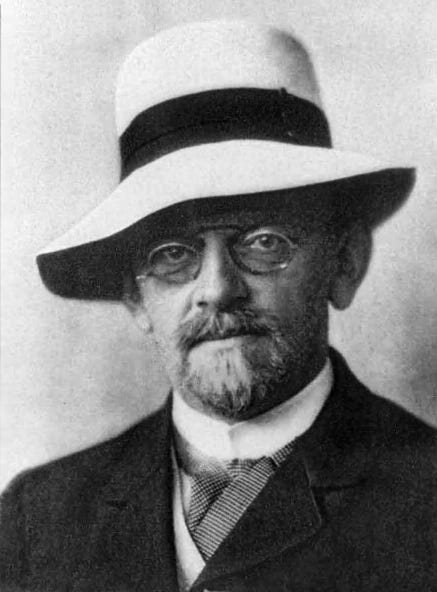
In 2000, the Clay Institute of Mathematics announced a series of seven unsolved math problems with the goal that they would both increase mathematical awareness in the public eye and encourage mathematicians to work on the deepest problems. These problems were inspired by a series of 23 then-open problems that the legendary mathematician David Hilbert enumerated around 1900.
Hilbert’s problems drove a good deal of mathematical development in the last century, so the Clay Institute was hoping to follow in his footsteps. They added some extra motivation too: The correct solution for any of the seven problems came with a million-dollar bounty.
Thus far, only one problem—the Poincaré conjecture—has been solved. That is, until last week. Mere days ago, OpenAI announced that their frontier artificial intelligence model cracked another one, often referred to as Navier-Stokes.
This set off a firestorm in the mathematics community. Part of that firestorm was driven by the fact that two prominent researchers claimed that OpenAI stole some of the work from them. Another part was that mathematicians felt like artificial intelligence was destroying their vocation. Here is what UCLA professor Terence Tao recently wrote on the topic:
Over the last few months, the mathematical capabilities of LLMs have improved dramatically, to the point that they can solve major outstanding problems in many fields of mathematics. However, the push by AI companies to solve mathematical problems as a benchmark is detrimental to the science of mathematics, and to the mathematical community. The goals of the AI companies and the goals of the mathematical community are severely misaligned. We see these as part of broader alignment issues impacting other scientific and creative professions, as well as the whole of society.
In mathematics circles, Terence Tao is very famous. I’d venture that if you were to ask a random person on the street to name a living mathematician, the only name they might conjure—and “might” is doing a lot of work in this sentence—is Terence Tao.
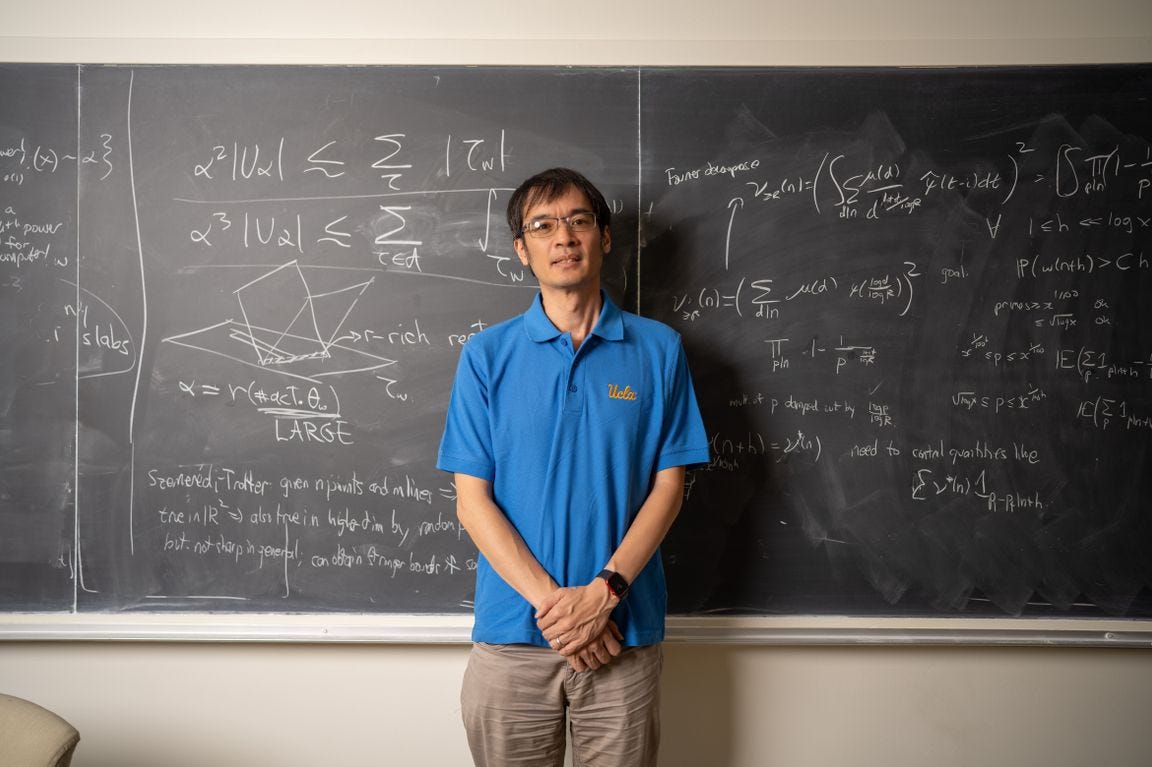
Tao was a math prodigy, taking university-level courses at age 9 and getting his PhD at 21. In the years since, he’s won basically every mathematics prize, including the Fields Medal, sometimes called the “Nobel Prize of Mathematics.” His abilities are probably best illustrated by fellow Fields Medalist Charles Fefferman once joking, “If you’re stuck on a problem, then one way out is to interest Terence Tao.”
Even if math hasn’t been your thing since you learned long division, Tao’s words are easy to identify with. I’m sure there has been some AI-related technology that has troubled you over the last few years. Tao, an intellectual behemoth, is just being humbled like the rest of us pea-brained plebeians were much earlier. Right?
I don’t think so. Classing Tao’s response purely as an AI-induced meltdown isn’t fair. He’s getting at something much deeper, something that AI’s involvement in many other fields, academic or artistic, also touches on: The process is the point.
The way OpenAI’s involvement with Navier-Stokes left Terence Tao feeling is how Suno’s involvement with music making left me feeling a few years ago. Suno, as we’ve often discussed in this newsletter, is the artificial intelligence company that, among other things, lets you generate entire songs with just a text prompt. Ask for a silly gangsta rap song about a cat befriending a dolphin, and they will get it to you in moments.
I am not a professional musician, but I’ve been writing songs, releasing music, and playing in bands since I was in middle school. The idea of generating a song with the click of a button made me feel sick. Why had I spent a decade trying to improve my musical skills when artificial intelligence was going to run laps around me?
And, exceedingly, it looked like those laps would be run with the approval of the music industry. Though there are still scores of pending lawsuits, more labels and publishers are signing licensing deals with AI companies. Not long after the Navier-Stokes debacle, Suno announced their V6 model, which was trained on fully licensed music.
I am not against artificial intelligence. I am not even against artificial intelligence in music. The last century has taught us that even as new technology reshapes music, music remains. Yet Suno continues to upset me. In a recent post on Mastodan, Terence Tao, though talking about mathematics and artificial intelligence, incidentally captured why:
But modern AI tools, when directed without such expert supervision, can now be aimed all too easily at the ostensible goals of the field, without any incentive to take the slow, whimsical path. The flag is captured, the goal scored, and the problem is solved; but at the cost of lessons learned, insights gained, collaborations formed, and new targets located.
Mathematics is about solving problems. But it is also about process. It is about a way of thinking. It is about collaborating with fellow practitioners. Music is much the same. Yes, we want to make great songs. But the joys of music often come from the creative process, from working with our friends, from singing songs together. Optimizing musical output is a misunderstanding of why we write and sing songs.
Suno and its competitors don’t seem to get this. Even as I expect AI tools to become more integrated into the music-making process—just as they will become more integrated into the mathematical process—the idea of generating an entire song via text prompt continues to disgust me. The process, as I noted, is the point. And if we have completely eliminated the process, we have lost our way.
Shout out to the paid subscribers who allow this newsletter to exist. Along with getting access to our entire archive, subscribers unlock biweekly interviews with people driving the music industry, monthly round-ups of the most important stories in music, and priority when submitting questions for our mailbag. Consider becoming a paid subscriber today!
Recent Paid Subscriber Interviews: Pitchfork’s Editor-in-Chief • Vinyl Specialist • Spotify’s Former Data Guru • Hall of Fame Songwriter• John Legend Collaborator • Broadway Arranger • Indie Label Founder• Fender Exec
Recent Newsletters: Two-Hit Wonders • The Lostwave Story • Forgotten Artists • Album Cover Colors • Bad Ways to Die • A Frank Sinatra Mystery • Slop Problems
Want more from Chris Dalla Riva? Get a copy of his book Uncharted Territory: What Numbers Tell Us about the Biggest Hit Songs and Ourselves wherever books are sold.